 *novel, Bridge on the River Kwai, and the *film of the same name tell the true story of the Allied POWs who were captured by the Japanese after the fall of Singapore in February 1942 and brought to Thailand to work on the infamous “Death Railway”. Most of the POW camps and historical sites marking it are located in and around Kanchanaburi, and visiting them is a powerful and somber reminder of the Second World War in Thailand.
Remembering the Second World War in Kanchanaburi
The Thai-Burma Death Railway
Allied War Cemetery (Kanchanaburi War Cemetery)
The Kanchanaburi Allied War Cemetery is located right in the center of town, near the train station and across from the town’s old Catholic church. The remains of 6,982 allied soldiers, mostly Australian, British, and Dutch (remains of Americans were repatriated after the war) are buried in this beautifully maintained and peaceful cemetery.

unknown soldiers
Thai-Burma Railway Centre
Next to the cemetery in the town’s center, you’ll find the excellent Thailand-Burma Railway Centre Museum. Entry costs 80 baht, and is well worth it.
The two-floor museum is full of interesting displays and artifacts from the workers on the Death Railway. Particularly moving are the letters and diaries of the prisoners, that have been donated by the veterans themselves and their families.
The second-floor has a small cafe and beautiful views looking out over the cemetery. Pay special attention to the magnificent stained-glass windows depicting the lives of the POWs and laborers on the railway. These windows are an ongoing project by artists who volunteer their time to preserve the history of the Death Railway.
 Website: https://www.tbrconline.com/
The Bridge on the River Kwai
During the Second World War, Allied prisoners of war, mostly British, Australian, and Dutch, along with captured Asian laborers from Singapore, were forced under extremely brutal conditions to construct a railway across Thailand to Burma, which the Japanese occupied.
The bridge still stands, although two sections of it were destroyed in an Allied bombing during the war. Those two sections are constructed with straight spans, rather than curved, to differentiate between the original bridge and the sections that have been rebuilt.
 *The Railway Man (or read the true *memoirs upon which the film is based), you will be especially moved by seeing the bridge in person. Knowing a bit about the hardships and terrible conditions of the prisoners makes it feel much more real when you step onto the old bridge.
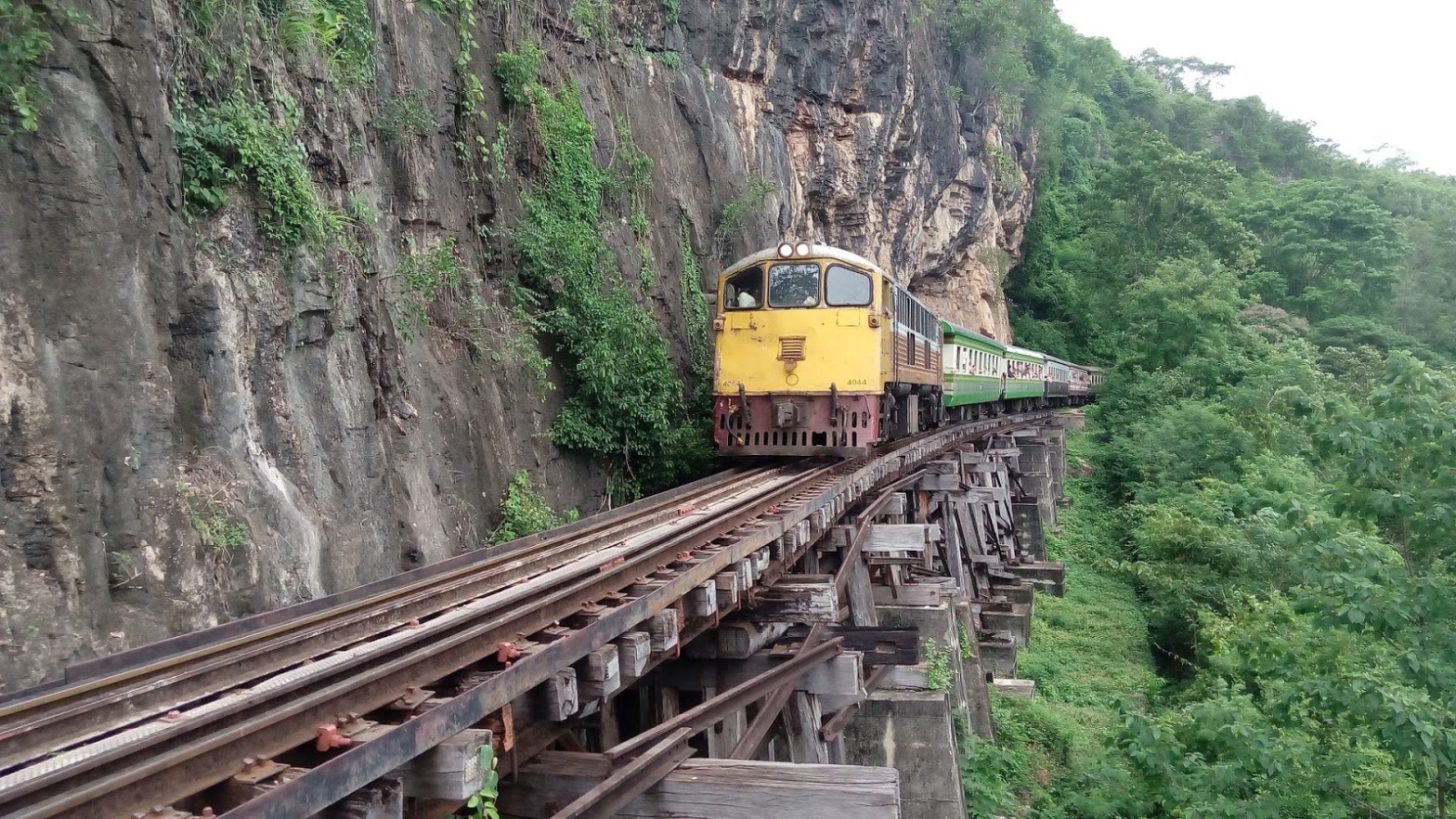
Wang Po Viaduct (Wampo or Wang Pho)
Another amazing site outside of the town is the Wang Po Viaduct, the most scenic stretch of the Death Railway. The Viaduct is a rail built on wooden trestles on the cliff side above the River Kwai.

Wang Po, Kanchanaburi
Tham Krasae Cave
Krasae (Kra Sae) Cave is a small natural cavern in the cliff along the Wang Po wooden trestle rail. During the war this cave served as an emergency field hospital for the prisoners working on the Death Railway.

Krasae Cave
Hellfire Pass
The most brutal and deadly stretch of the Death Railway was at Hellfire Pass, specifically Konyu Cutting, a dangerous and remote camp where the POWs and captured Asian (mostly Indian and Malayan) laborers were forced to carve for up to 18-hours a day straight through a mountain for the construction of the rail. The sight of emaciated prisoners illuminated only by torchlight digging through the mountain with only hand tools gave Konyu Cutting it’s name.

Hellfire Pass
It’s the site of several annual remembrance services, and all along the cliff walls, people have left flags, medals, pins, and old photographs of loved ones who worked on the Death Railway.

WW2 POW memorial
 LB convert