Be yourself; Everyone else is already taken.
— Oscar Wilde.
This is the first post on my new blog. I’m just getting this new blog going, so stay tuned for more. Subscribe below to get notified when I post new updates.
Be yourself; Everyone else is already taken.
— Oscar Wilde.
This is the first post on my new blog. I’m just getting this new blog going, so stay tuned for more. Subscribe below to get notified when I post new updates.
This is an example post, originally published as part of Blogging University. Enroll in one of our ten programs, and start your blog right.
You’re going to publish a post today. Don’t worry about how your blog looks. Don’t worry if you haven’t given it a name yet, or you’re feeling overwhelmed. Just click the “New Post” button, and tell us why you’re here.
Why do this?
The post can be short or long, a personal intro to your life or a bloggy mission statement, a manifesto for the future or a simple outline of your the types of things you hope to publish.
To help you get started, here are a few questions:
You’re not locked into any of this; one of the wonderful things about blogs is how they constantly evolve as we learn, grow, and interact with one another — but it’s good to know where and why you started, and articulating your goals may just give you a few other post ideas.
Can’t think how to get started? Just write the first thing that pops into your head. Anne Lamott, author of a book on writing we love, says that you need to give yourself permission to write a “crappy first draft”. Anne makes a great point — just start writing, and worry about editing it later.
When you’re ready to publish, give your post three to five tags that describe your blog’s focus — writing, photography, fiction, parenting, food, cars, movies, sports, whatever. These tags will help others who care about your topics find you in the Reader. Make sure one of the tags is “zerotohero,” so other new bloggers can find you, too.
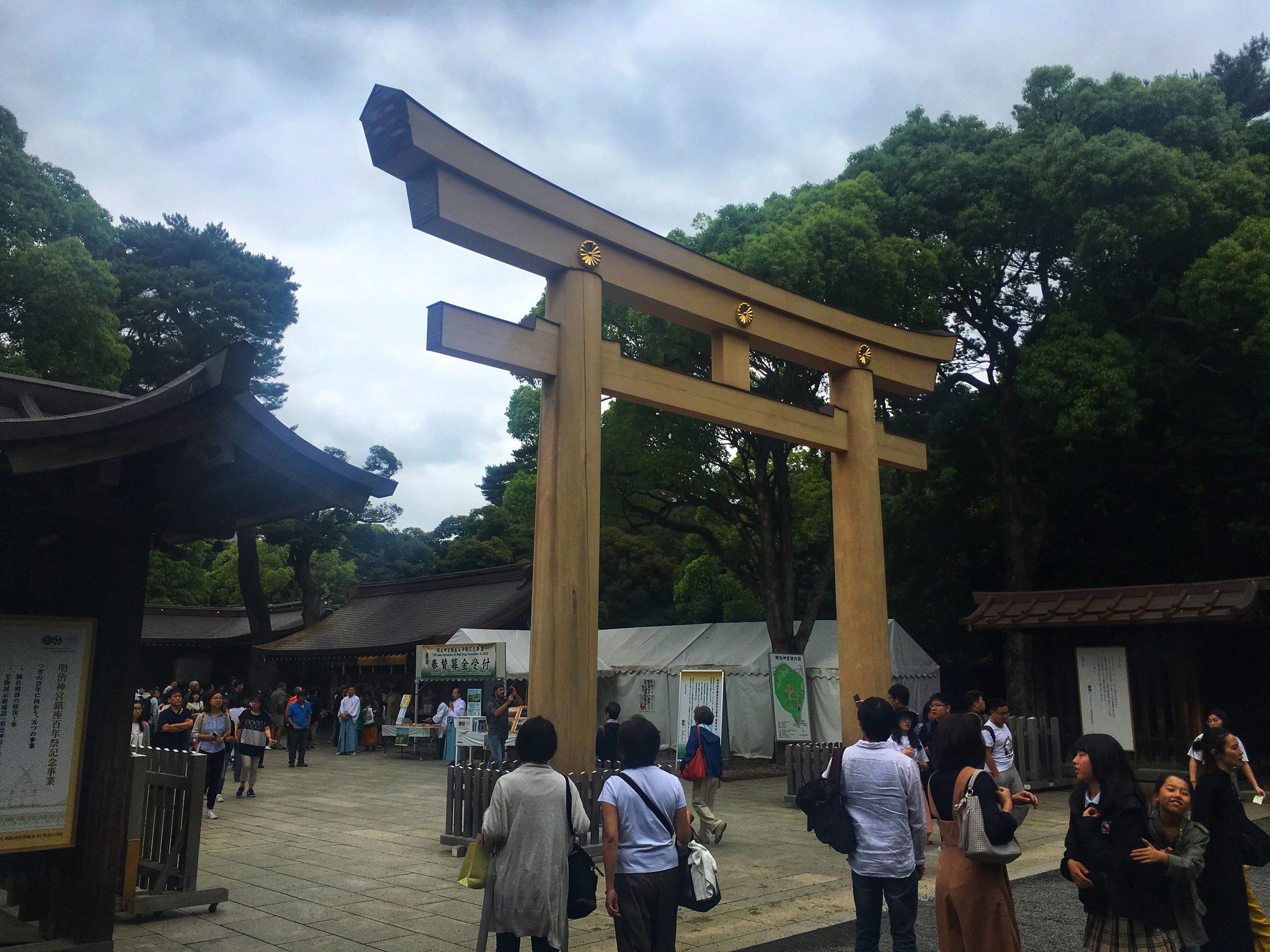
Located right in the heart of Tokyo’s busy, wild, and mega-hip Shibuya neighborhood, the historic Meiji-jingu (Meiji Imperial Shrine) is surprisingly peaceful and reverent. The shrine, one of Tokyo’s most important spiritual sites, is dedicated to the spirit of Emperor Meiji (1867-1912), and is free to visit.
Here, visitors can receive a cosmic blessing from one of the city’s most famous “Power Spots”, discover offerings from Japan’s traditional sake brewers, and maybe get the chance to witness a very traditional Japanese wedding!
The Meiji Shrine was constructed between 1915 and 1921 following the death of Emperor Meiji. The Meiji Shrine is not the tomb of Emperor Meiji and Empress Shōken, who are buried at an imperial tomb near Kyoto. Instead, the Meiji imperial Shrine in Tokyo is dedicated to the enshrined spirits of the Emperor and Empress.
The original shrine was destroyed in the bombing of Tokyo during the Second World War, but was rebuilt according to the original design in 1958.
Meiji-jingu is made up of several sections and set amid a beautiful garden. The grounds surrounding the shrine are so quiet and peaceful that it’s almost hard to believe that you’re just a few steps away from Shibuya, one of the busiest and most crowded places in the entire world!
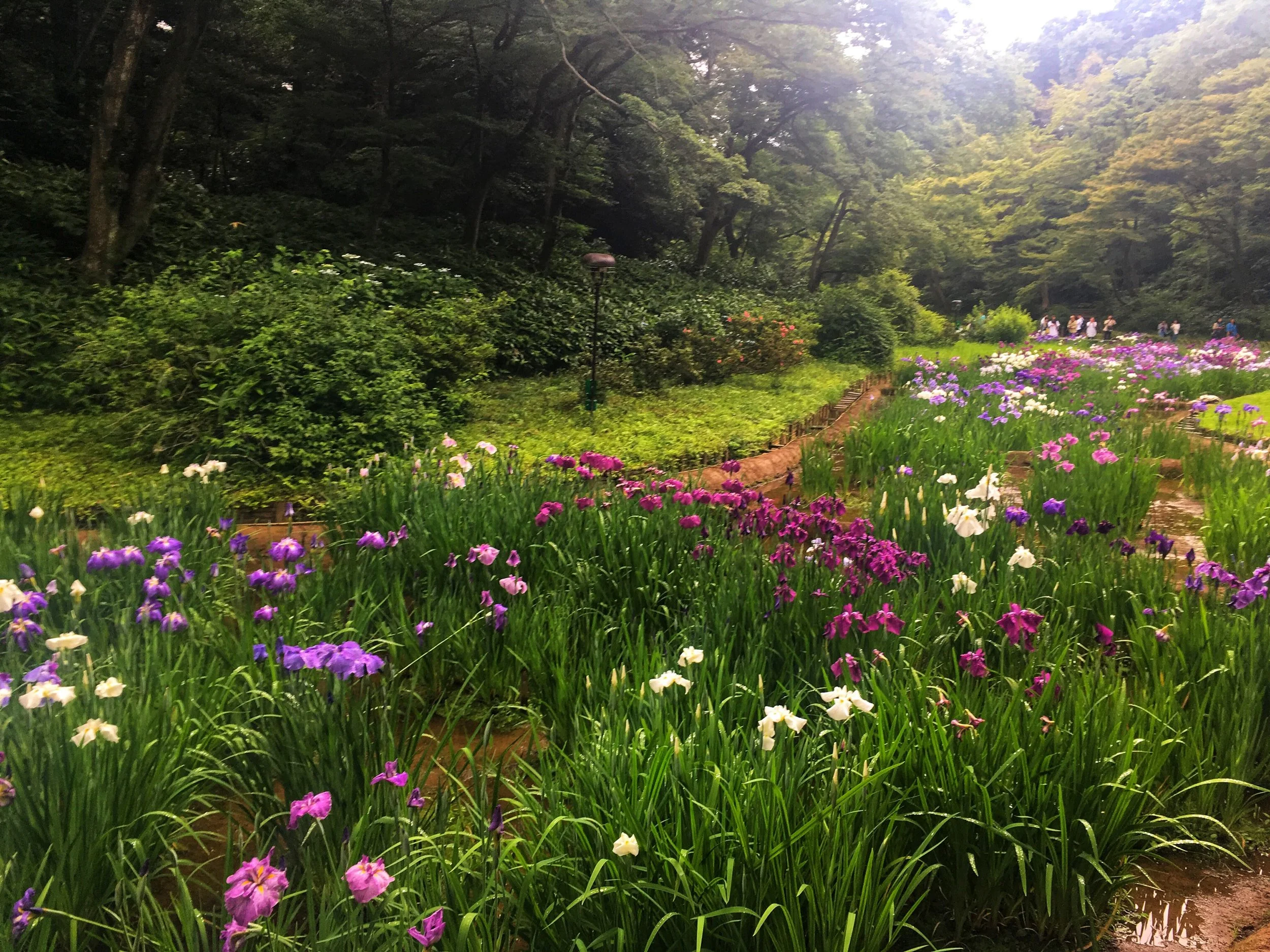
Though it’s free to visit the shrine, visitors can pay an extra 500 yen to enter and explore the Inner Garden, the site of the shrine’s famous iris gardens. A path winds through the gardens, and is so well laid out that even when it’s crowded, it almost feels like you are nearly alone.
Within the Inner Garden, you’ll also find Kiyomasa’s Well, a supposedly magical power spot where visitors can receive a blessing from nature.
If you’re lucky, you may get to witness a traditional Shinto wedding. The Meiji Shrine is a popular place to get married in Japan, and there is a wedding held nearly every day. You can watch some of the proceedings from outside, but I encourage you to be respectful to those getting married by refraining from taking photos or being intrusive on their wedding day.
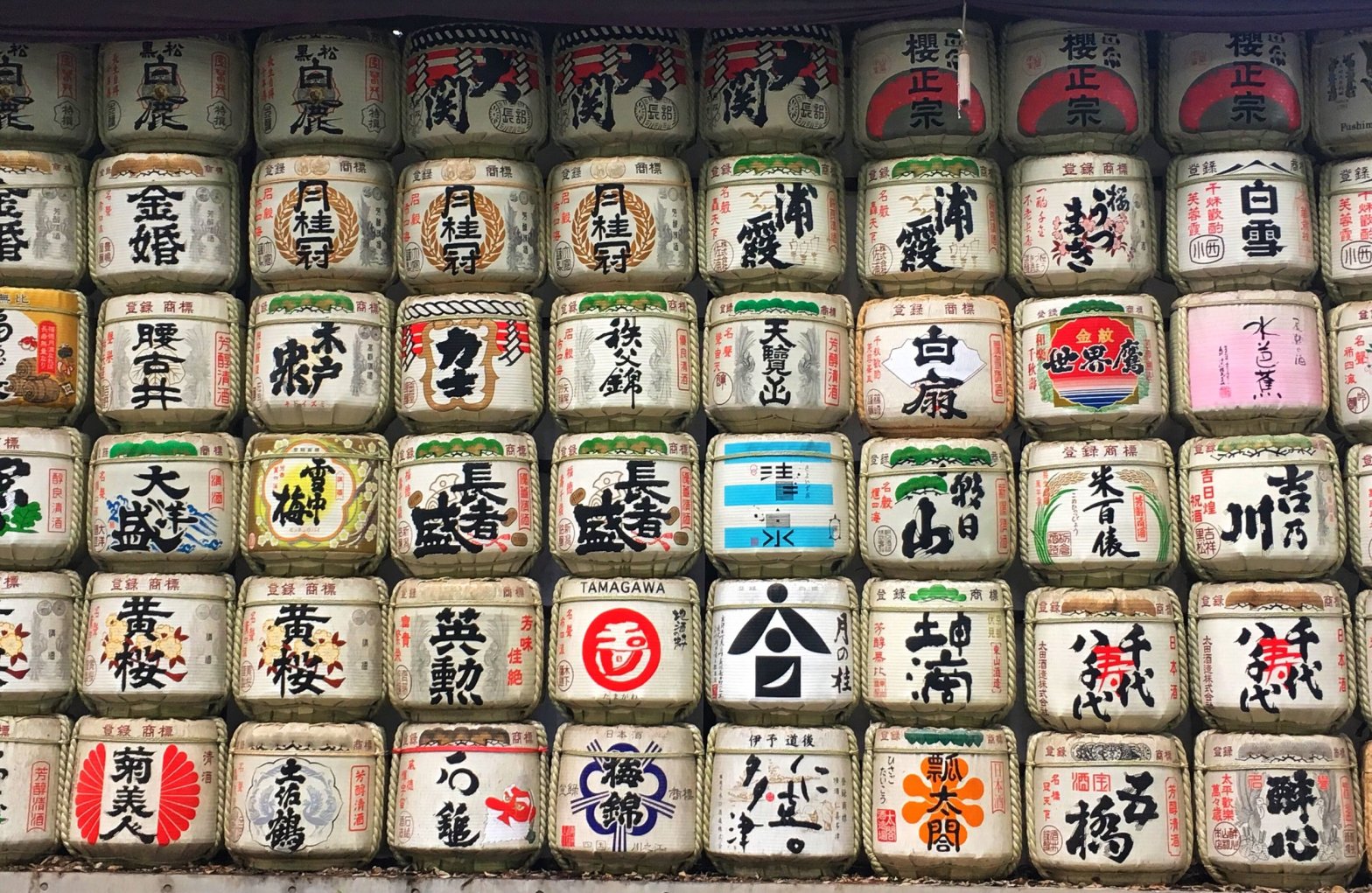
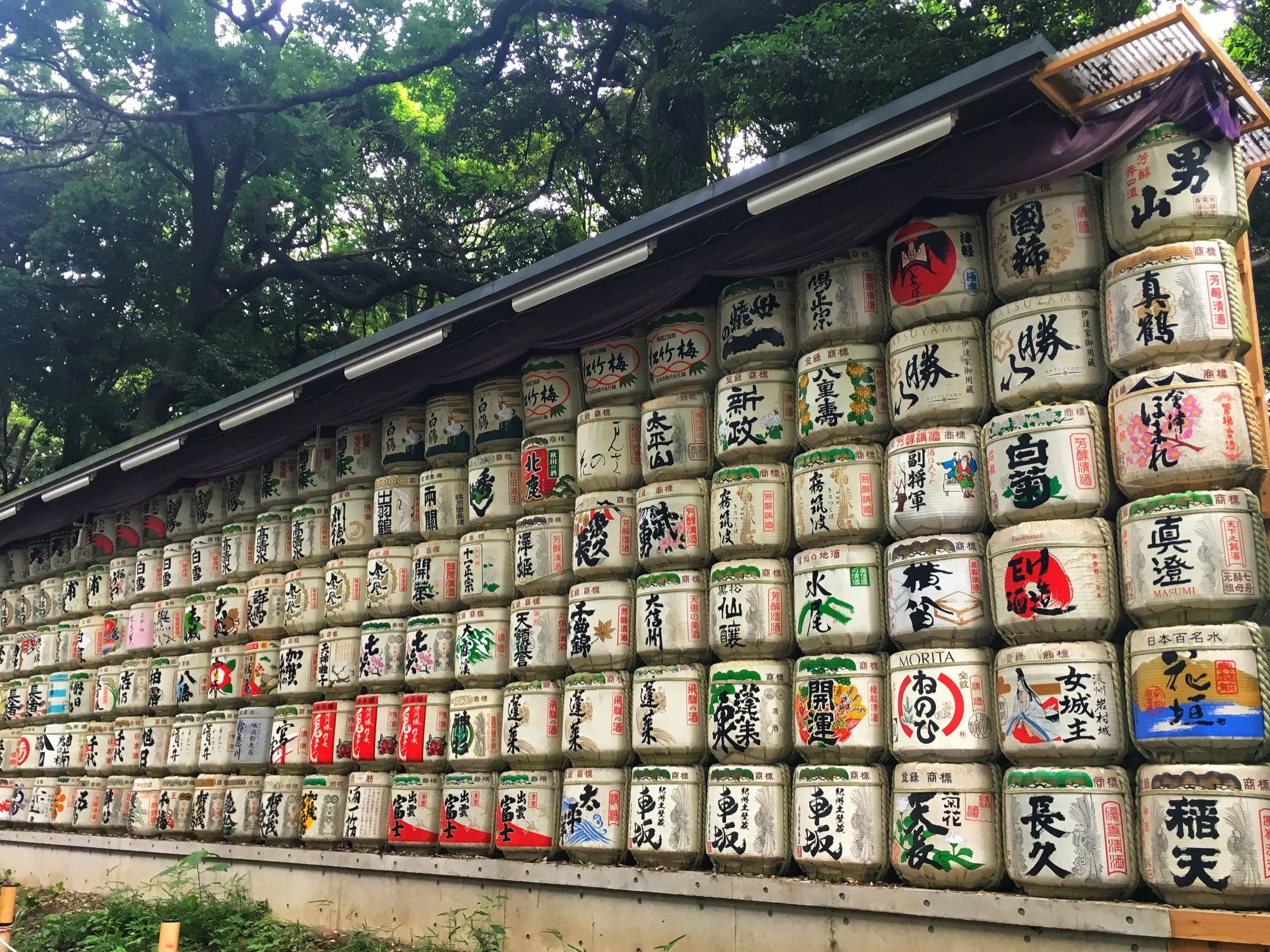
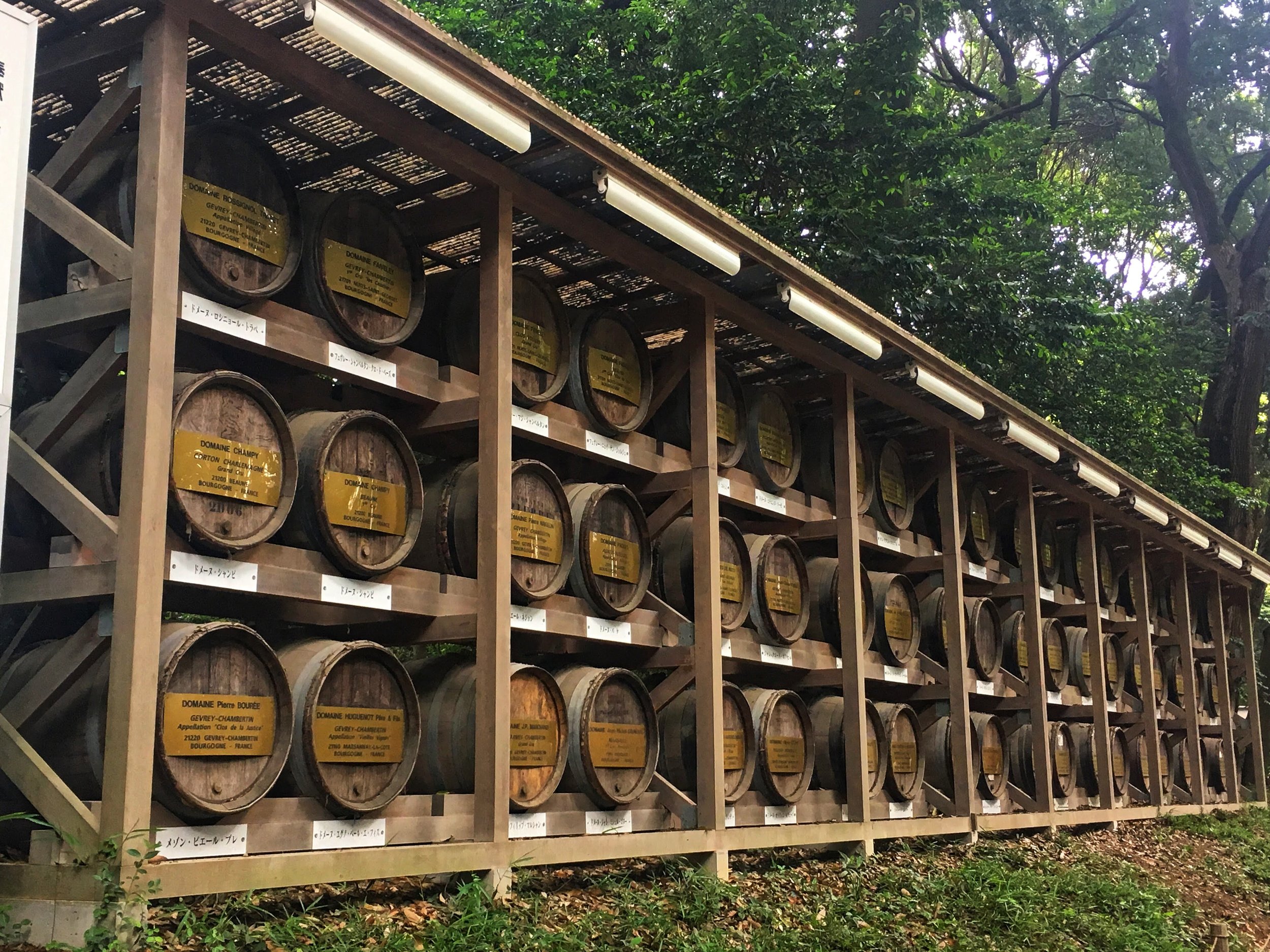
As you’re approaching the shrine, you’ll pass a segment of the path that is lined on one side by colorful barrels of sake and on the other by large barrels of French wine. Every year, Japan’s great sake brewers each donate barrels of sake to the shrine to be used in traditional ceremonies.
Sake has long been seen as a connection between the people and the gods in Japan, so every year, the country’s sake brewers donate barrels of their rice wine to the enshrined spirits who are believed to reside at the shrine. The sake is used throughout the year in rituals and festivals.
The kanji character for sake is a combination of the words “god” and “wine”. In Japan, drinking sake at a shrine or temple is supposed to bring you closer to the gods and spirits.
Emperor Meiji is celebrated as being the emperor to open Japan’s borders after its centuries of isolation. He is viewed as a relatively Western, progressive, and forward-thinking Emperor, and was reportedly fond of French wine.
To celebrate this, the great vineyards of Burgundy, France have joined in the offerings along with the sake brewers of Japan by donating barrels of their finest wines to the shrine every year too. It’s a symbol of friendship between the two countries.
The shrine is conveniently located just off of Shibuya Station in Tokyo. You can easily access it by JR or Tokyo. From the station, it’s just a short (and clearly-marked) walk to the Meiji Shrine.
The shrine is open daily from sunrise to sunset (the hours change depending on the season).
It is free to visit the shrine, but entering the Inner Garden to see the iris gardens and Kiyomasa’s well cost an additional 500 yen.
When you are planning a visit to Japan, you will likely see certain areas described as “Power Spots”. A Power Spot is a sacred place in Japan where it is believed that the gods, or kami, have come down to earth and focused their energies. These spots are usually beautiful natural features where one can feel attuned with the powers and energies of nature.
Power Spots can be found all over Japan, and most have myths and legends attached to them. These spots are often used for meditating, or just for receiving a blessing from nature. Some such power spots have legends about how one can best harness the spot’s powers and receive its natural energies.
Sound a bit “New Age”? Japan is a deeply spiritual country, and these Power Spots are popular attractions for those looking for spiritual energy, curious tourists, or just those who are interested in taking a good picture of a beautiful or unique place in nature.
One of the most accessible and popular Power Spots can be found right in the heart of Tokyo!
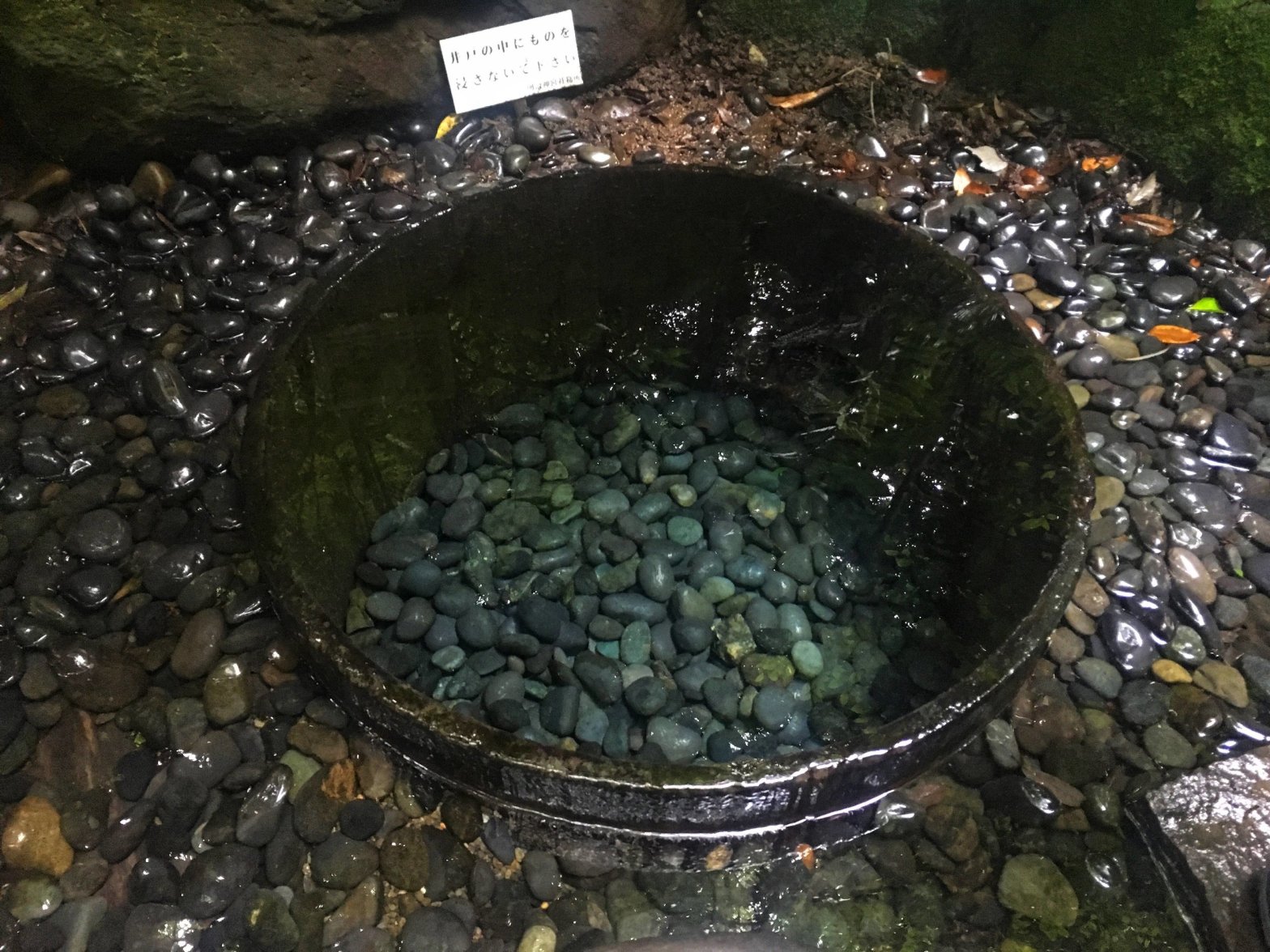
Kiyomasa’s Well is a natural spring of cool, clear water which flows out of the ground at Meiji-jingu (Meiji Imperial Shrine) in downtown Tokyo.
The well is said to have been constructed by famous Samurai warlord Kato Kiyomasa (1562 – 1611), who lived during the Edo Period.
When visiting the Meiji Shrine, you’ll almost always see crowds of people queuing up in front of the well for a chance to receive some blessings from the famous Power Spot.
While the Meiji Shrine is free to visit, visiting the Inner Gardens where Kiyomasa’s Well is located requires an admission ticket. Tickets cost 500 Yen (about $5), and are worth the cost just to see the beautiful gardens alone.
You can visit the Inner Gardens from 9:00 – 16:30, but I recommend visiting earlier (or visiting on a weekday) to avoid crowds.
The Well is located near the exit of the gardens, and will be one of the last places that you stop before heading into the main shrine itself. You can’t miss it! Dozens of people will be queuing up for a chance to see the well. Fortunately, this being Japan, the queue is quick and orderly. There is even a guard directing people into the queue and making sure that it moves quickly and efficiently.
When you approach the well, just dip your hand into the clear water to receive a blessing.
Kiyomasa’s Well is a very 21st century Power Spot, though. Legends have sprung up around the well since at least 2010 about a new, modern way to receive the spot’s cosmic power. Japanese celebrities have begun saying that in order to receive the most blessings, you have to take a photo of the clear water in the well and set it as your phone’s lock screen and background. This way, every time you look at your phone, you will receive a bit of luck and spiritual energy.
Does it work?
Try for yourself! Here’s a picture of the well:
Kiyomasa’s Well can be found at the Meiji Imperial Shrine in Shibuya, downtown Tokyo.
The best way to reach the shrine and the well is by taking the JR or Tokyo Metro to Shibuya Station. From there, it’s just a short (and clearly-marked) walk to the Meiji Shrine, where you’ll find this magical power spot.
Visiting Kamakrua, the site of a medieval Japanese shogunate, is one of the most popular day trips from Tokyo, Japan.
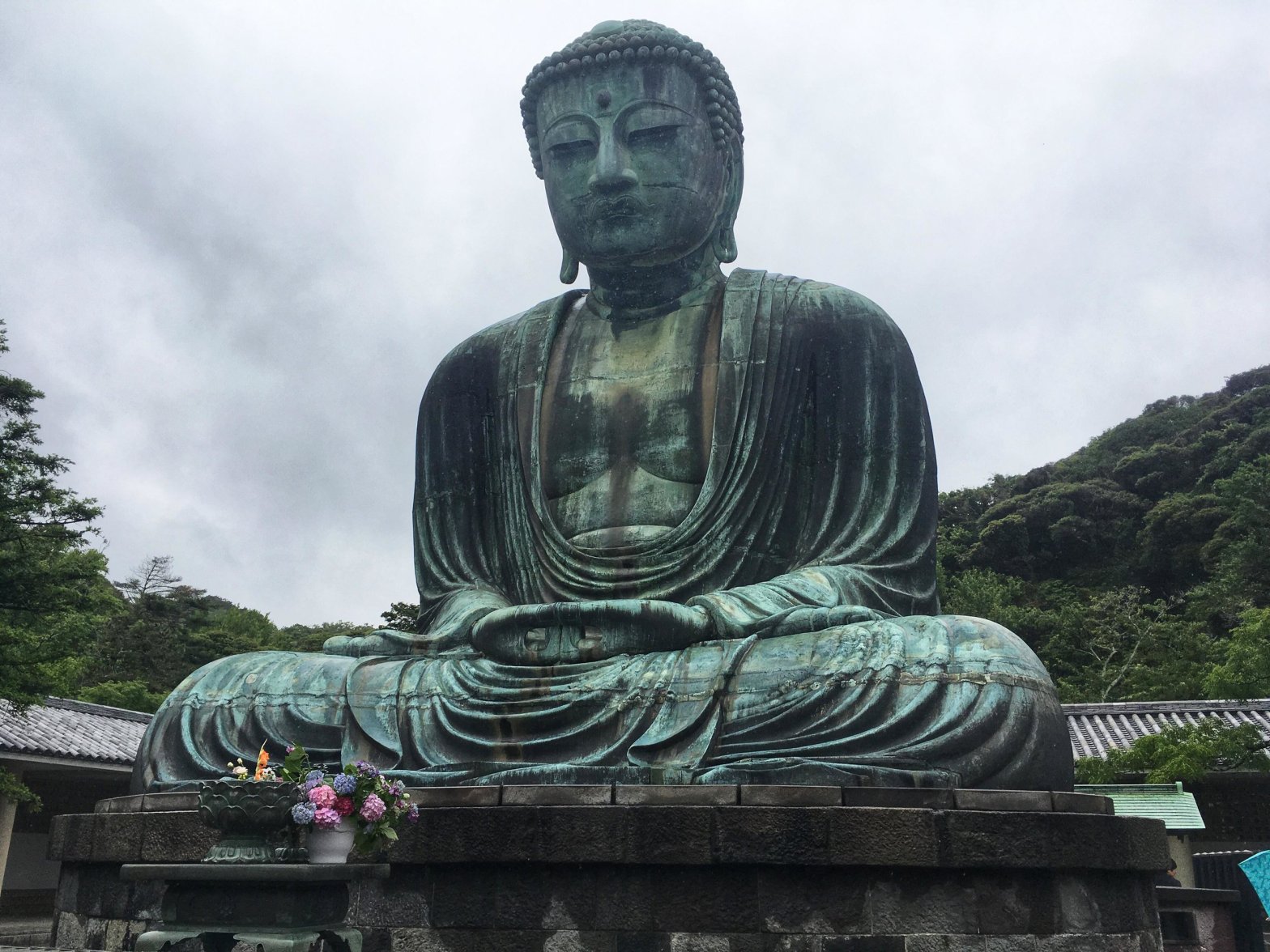
This ancient city just outside of Tokyo is full of historic Buddhist temples, Shinto shrines, and the famous 13th-century Great Buddha of Kamakura.
It’s easy to get from Tokyo to Kamakura by train, and the trip takes around 1.25 hours. Here’s what you need to know:
Start at Tokyo Station.
From Tokyo Station, purchase a ticket from one of the ticket machines for Kamakura Station. The fare is 920 yen (around $9) for a one-way ticket.
Trains depart frequently, approximately every half-hour throughout the day.
Follow the signs inside Tokyo Station to the JR Yokosuka Line (dark blue line) platform. Tokyo Station is big and can be confusing, the the signs are clearly marked. The platform for the JR Yokosuka Line is down on the lower levels of the station near the platform for the train to Narita Airport.
Make sure you board the train heading towards Zushi.
The trip between Tokyo and Kamakura takes around 1 hour and 15 minutes, and passes through Yokohama.
When you arrive at Kamakura Station, pay a visit to the tourist information center to pick up a map. Kamakura is a small town, and it’s possible to see all of the major sights and attractions by foot.
So I’m a big fan of beer. Whenever I’m traveling, I like to visit a brewery whenever I can.
>>The Beer Lao Brewery in Vientiane, Laos
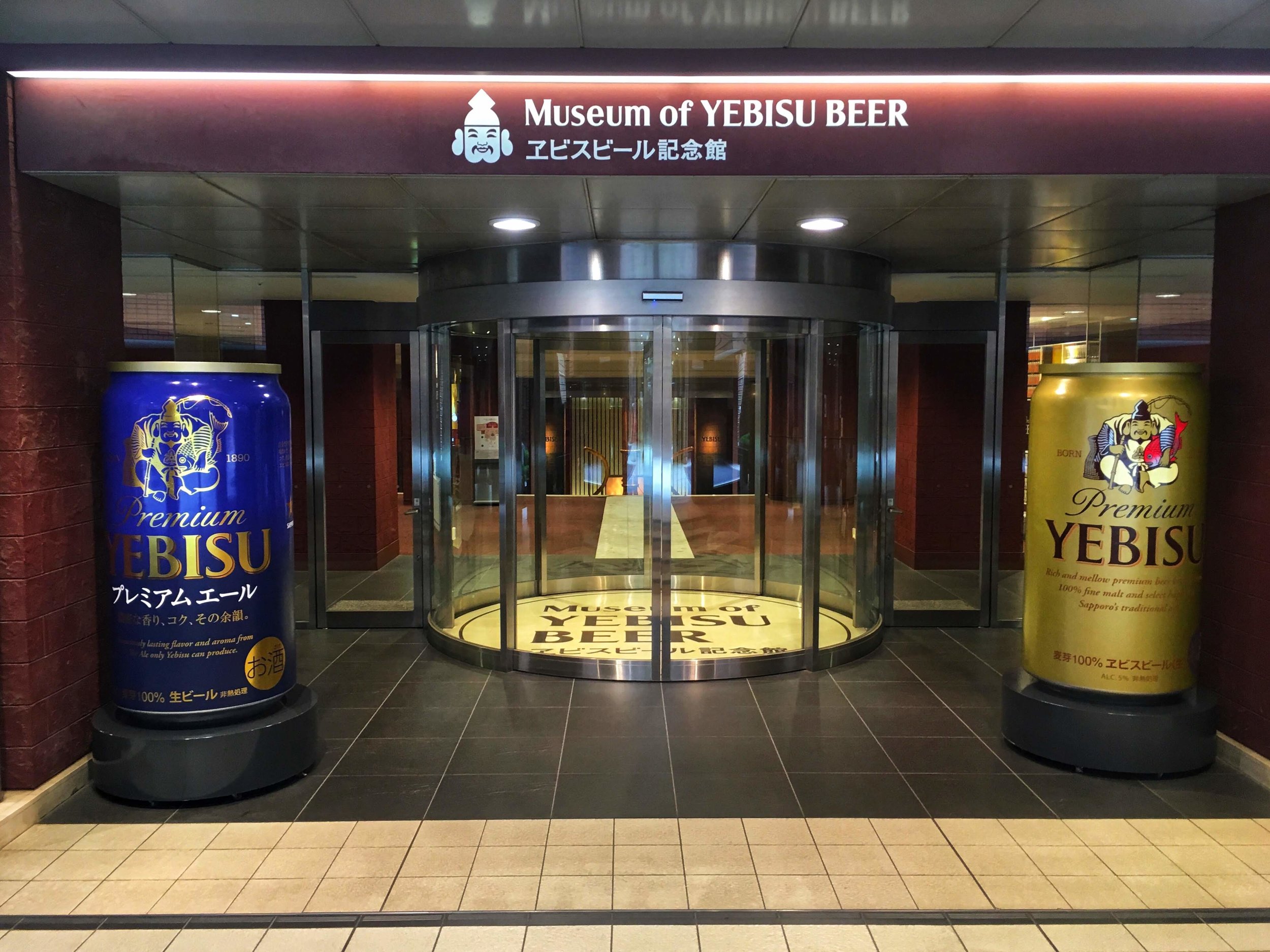
When you are in Tokyo, Japan, don’t miss the FREE Museum of Yebisu Beer, where you can learn all about Japan’s oldest brewery, take an informative tour, and try several varieties in the tasting salon.
Yebisu Beer is Japan’s oldest brewery. It was founded in Tokyo’s Ebisu neighborhood (the neighborhood was named after the brewery, and the brewery was named after the Japanese god of luck) in 1890. The brewery hired a German brewmaster in order to try to create a European-style beer, and by 1900, the brewery had already won awards in international beer festivals.
Tours of the museum cost 500 yen ($5) and include a beer tasting session with an expert. Tours depart from the main hall frequently, although they are only offered in Japanese. If you can’t understand Japanese, you can take a self-guided tour of the small exhibition hall for free. There, you can learn all about the history of Yebisu Beer.
After taking the tour, or visiting the gallery, don’t forget to stop by the gift shop and the Tasting Salon.
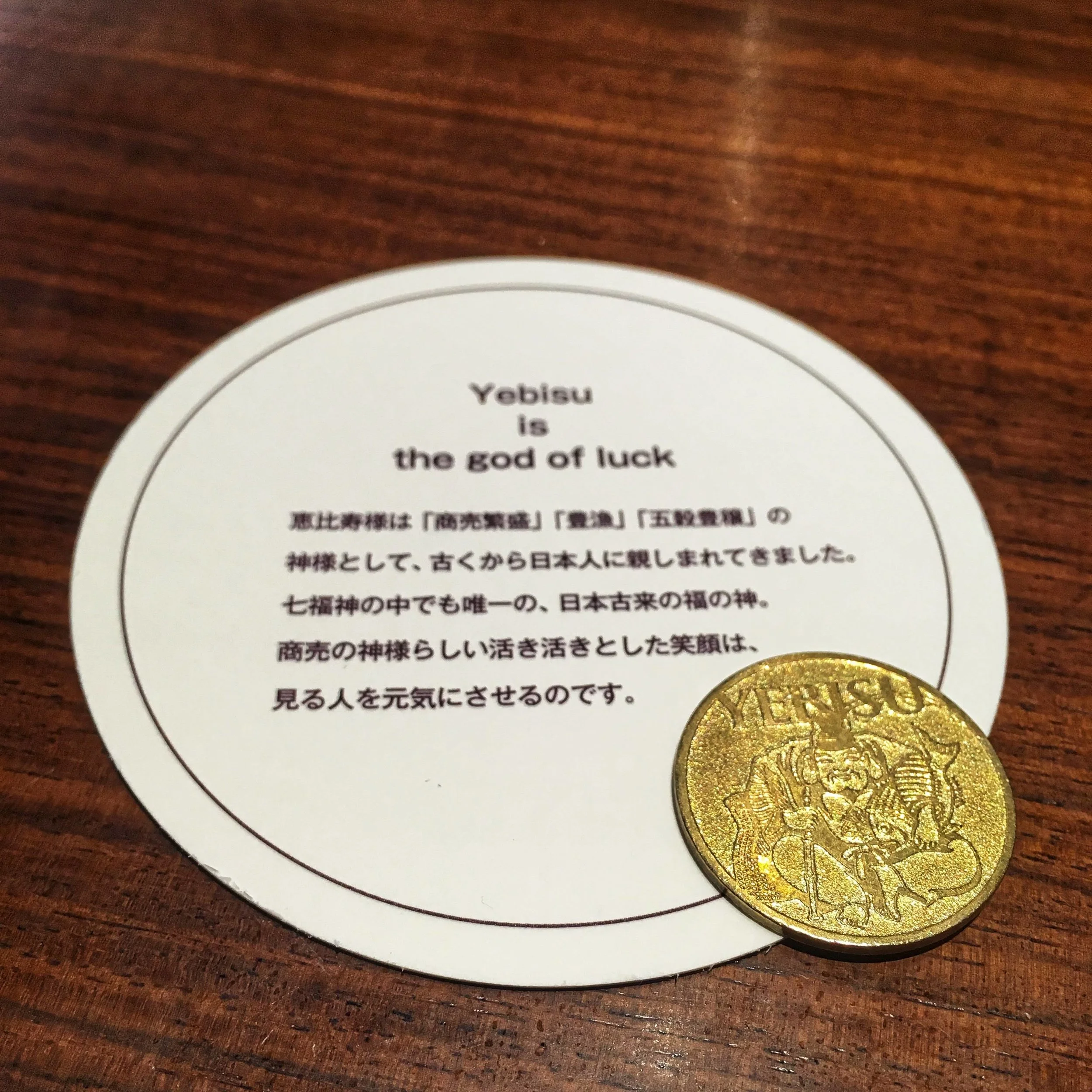
The Tasting Salon has a unique way of buying and tasting beer. You can’t just hand over yen for a glass; instead, you have to exchange 400 yen ($4) for a Yebisu Coin, which can be redeemed in the Tasting Salon for a beer. Yen can be exchanged for Yebisu Coins at coin exchange machines, although make sure you use the right amount of money, as your coins cannot be exchanged back into yen. If you buy too many coins, don’t worry… a Yebisu coin makes for a decent souvenir of your visit to the museum! (I may have kept an extra Yebisu coin for myself).
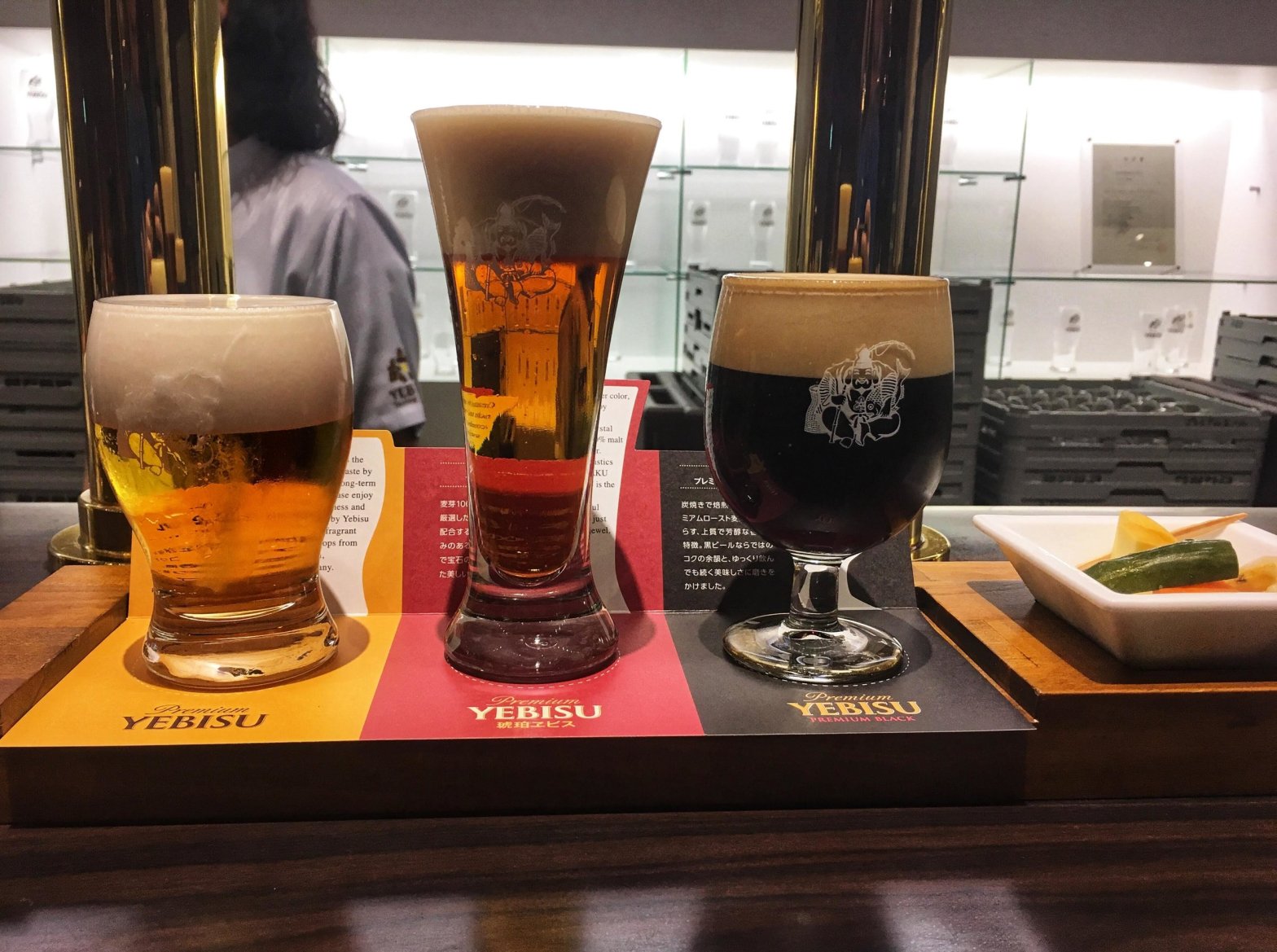
You can order from a range of Yebisu beers that are not available in stores, including “The Hop”, “Meister”, “Premium Black”, and more. One beer costs one Yebisu Coin.
In my opinion, the best way to try a few different beers is to order the tasting set. One Yebisu tasting set costs 2 Yebisu Coins, and comes with three beers and a small relish tray.
The Yebisu Beer Museum is located in Tokyo’s Ebisu neighborhood in an open-air shopping center called Garden Place. The neighborhood was actually named for the brewery that was founded there!
The Museum of Yebisu Beer is easy to reach from Tokyo Metro Ebisu Station (H02). The Museum is just a short walk from the station. The way is clearly marked.
Yebisu Garden Place, 4-20-1 Ebisu, Shibuya-ku, Tokyo 150-8522
Tuesday – Sunday 11:00 – 19:00
Closed Mondays
Official Website: https://www.sapporobeer.jp/yebisu/english/
Tokyo is one of the world’s biggest cities, and traveling through it can be overwhelming, especially if it’s your first time there.
The city has two international airports. Sometimes travelers who are on their way to Thailand, China, or other Asian destinations will need to take a layover in Tokyo, and sometimes this layover involves a transfer between Tokyo’s two airports. Fortunately, Tokyo is fairly easy to navigate, and it’s not hard to get from one airport to the other.
Narita Airport is the newer and bigger of Tokyo’s two airports. It is actually located outside of Tokyo in Narita Town.
The older and smaller of Tokyo’s tow airports in Hanaeda. Hanaeda Airport is located close to Tokyo’s city center. If you are traveling into the city, it’s much easier and quicker to get there if you are going to be landing at Hanaeda.
Recently, I had a short layover and a rushed transfer from Narita Airport to Hanaeda. Although I didn’t have very much time, the transfer was easy and relatively quick. Here’s what you need to know if you are going to be making this transfer as well:
When you arrive in Japan, you need to go through Immigration and Customs and collect your luggage before transferring to the other airport.
Once you have cleared Immigration and are in the arrivals hall, look for the bus transfer counter. If you are unable to find it, both airports have excellent information desks with friendly English-speaking staff who are happy to help confused and jetlagged travelers.
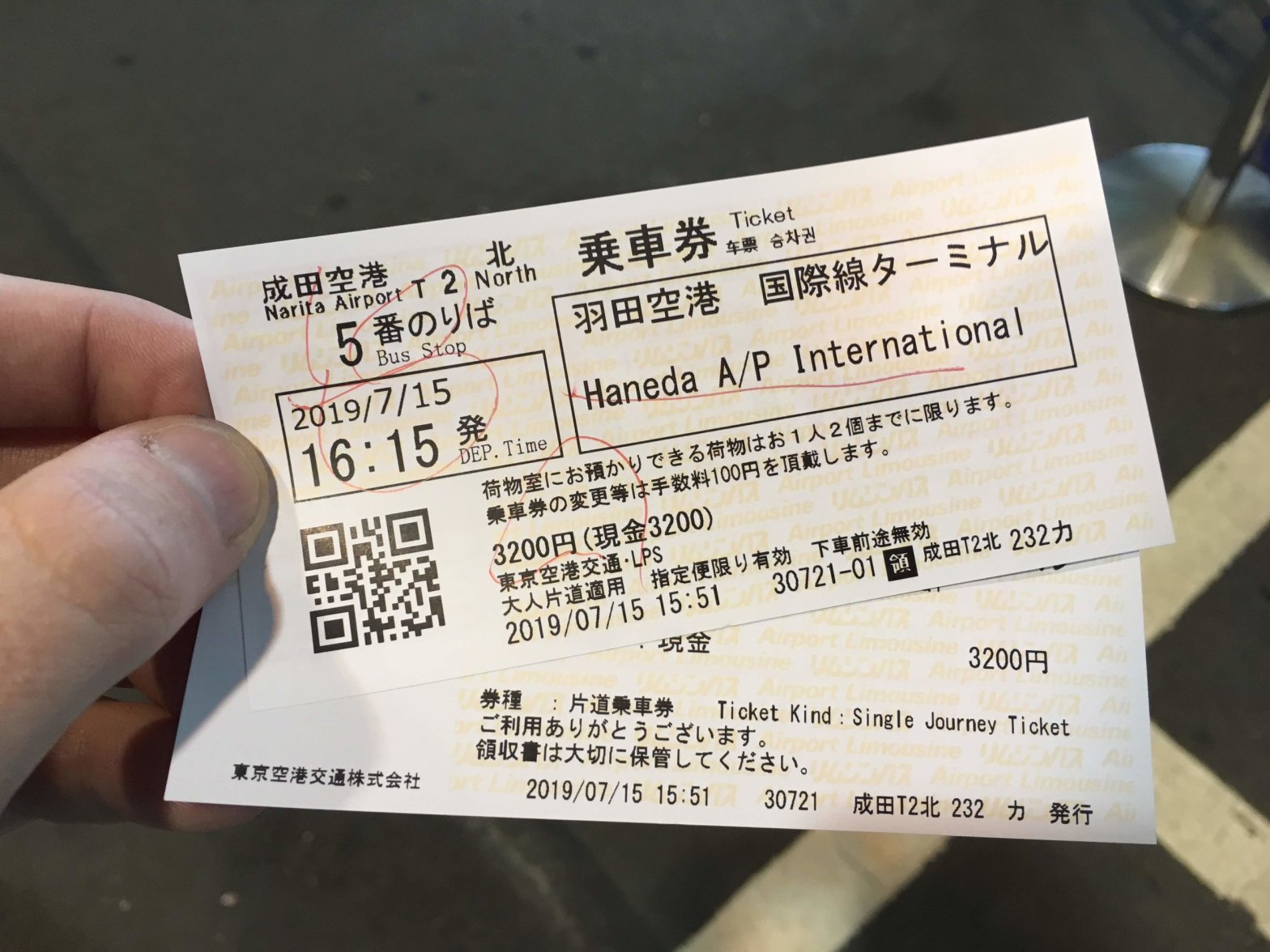
A one-way ticket from one airport to the other costs JPY 3200 (about $32 USD) and departs approximately every 15-20 minutes.
Follow the information on your ticket to head to the correct bus station. Information will be displayed in both Japanese and English. Once you arrive, staff will check your ticket and help you with your luggage.
The trip takes 1-1.5 hours (depending on traffic).
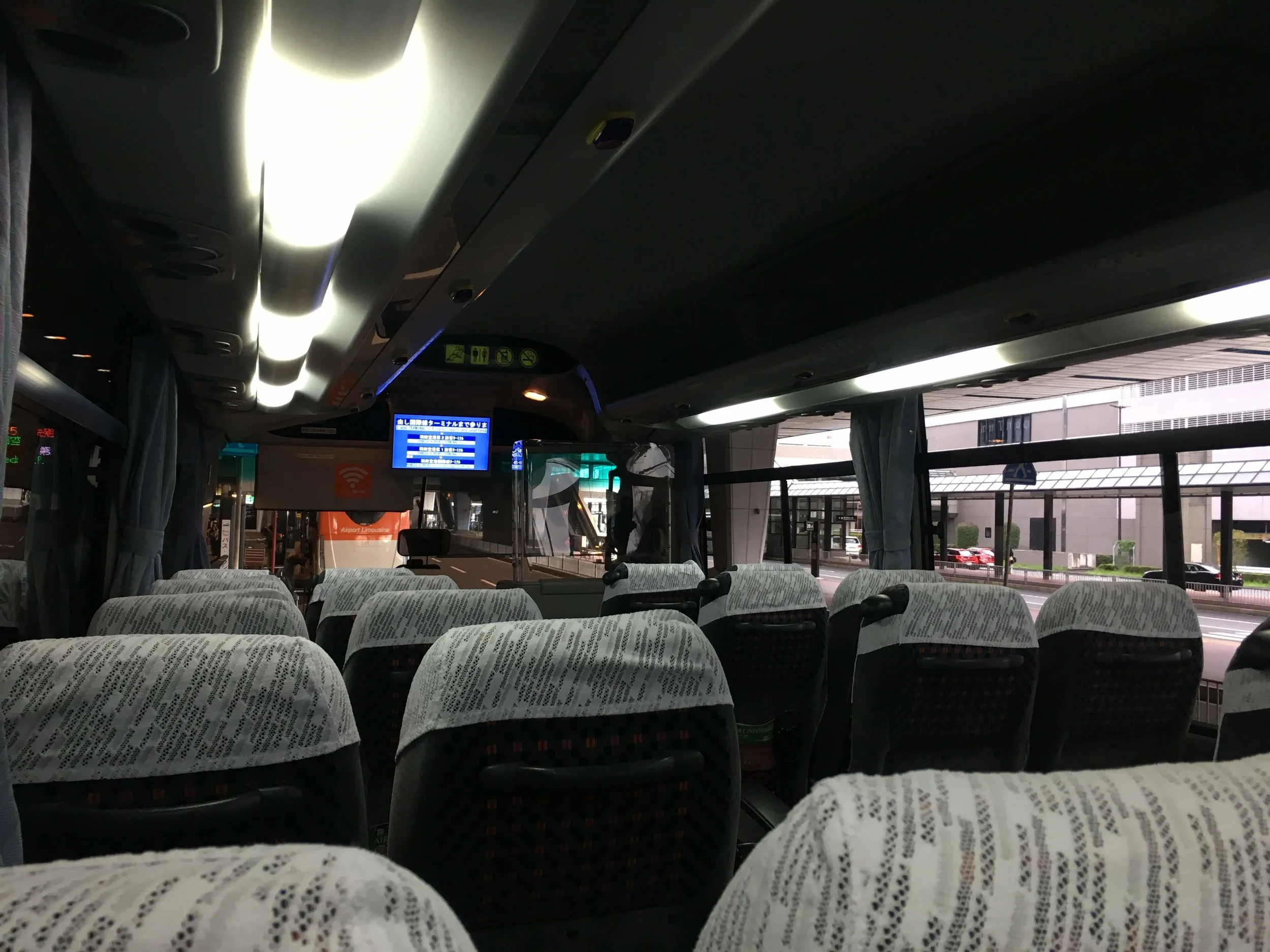
The bus is clean and comfortable, with good air conditioning and free (and fast!) on-board WiFi.
The bus has a toilet for passengers to use.
If all goes well, you’ll be enjoying a beer in the departure hall just about an hour later!
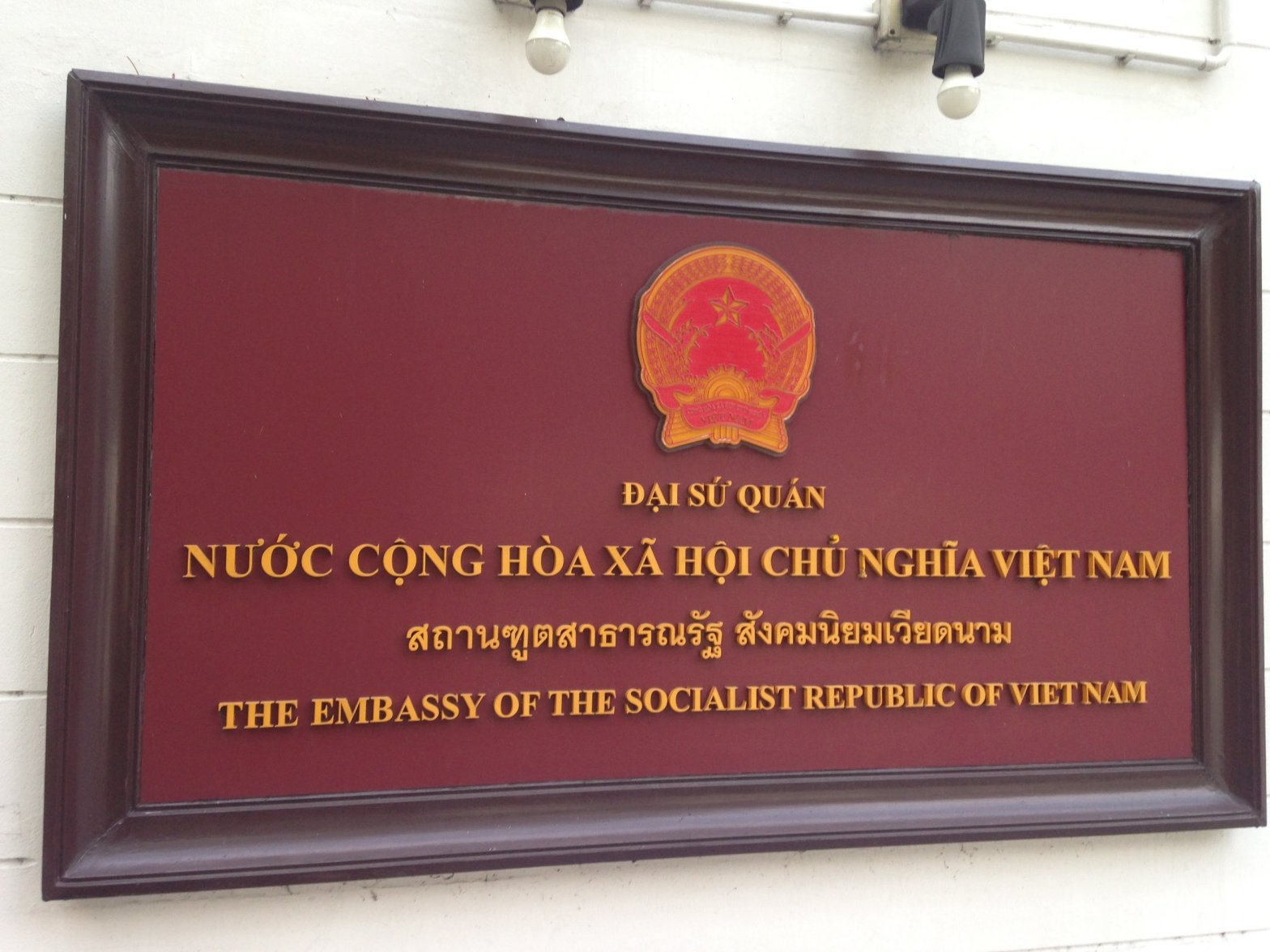
Visitors to Vietnam from most countries are required to have a valid Vietnamese visa in their passport before arrival. This should be arranged in advance. If you are already traveling in Southeast Asia, the Vietnamese embassies in Bangkok or Phnom Penh are the quickest and most reliable places to secure a visa.
The Vietnamese embassy in Bangkok is especially efficient and rarely crowded. Simply fill out the one-page application form, submit your fee, and come back in two or three days to collect your passport. The embassy can issue one-month or three-month single or multiple-entry tourist visas.
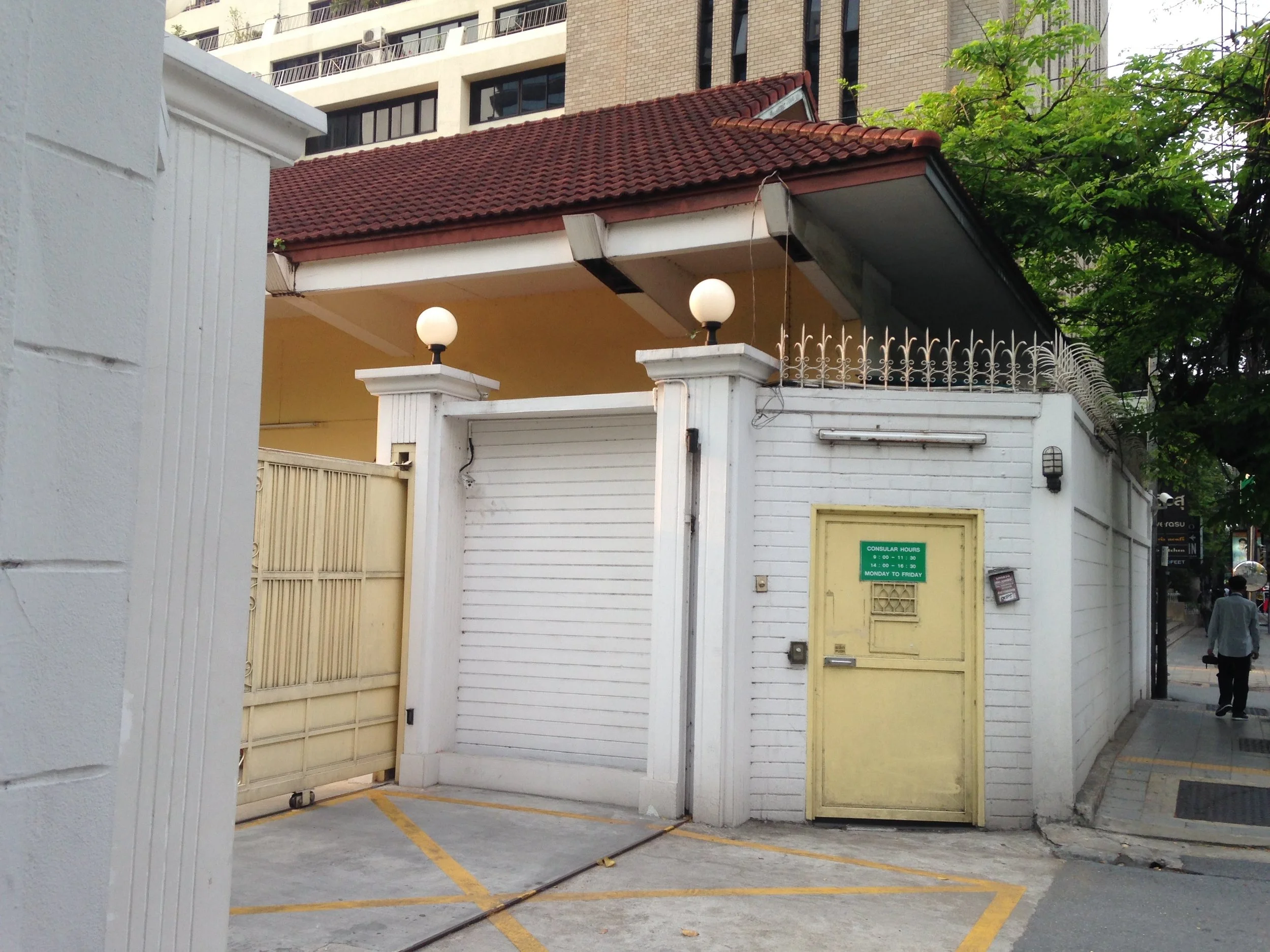
The embassy of Vietnam in Bangkok is located just down the road from the US embassy at 83/1 Wireless Road, Lumphini, Pathumwan, Bangkok 10330, Thailand (near BTS Ploenchit Station).
Make sure that you have passport photos with you, as they are required to submit the application.
The embassy opens from 9:00-11:00 to submit visa applications, and I recommend getting there early.
The embassy is open for visa pickup from 14:00-17:00.
A one-month single-entry tourist visa (the most common visa type) costs 2400 THB for 4-day service, and 3000 THB for next-day service.
There is a new government e-visa website, but I have not used it yet. If you have successfully used the new Vietnamese e-visa, please let me know!
As of 2019, there are signs posted at the embassy informing visitors that the popular “visa upon arrival” program that is offered by a number of agencies in Vietnam is not endorsed by the Vietnamese government. While people do have success using these companies, I cannot recommend them.
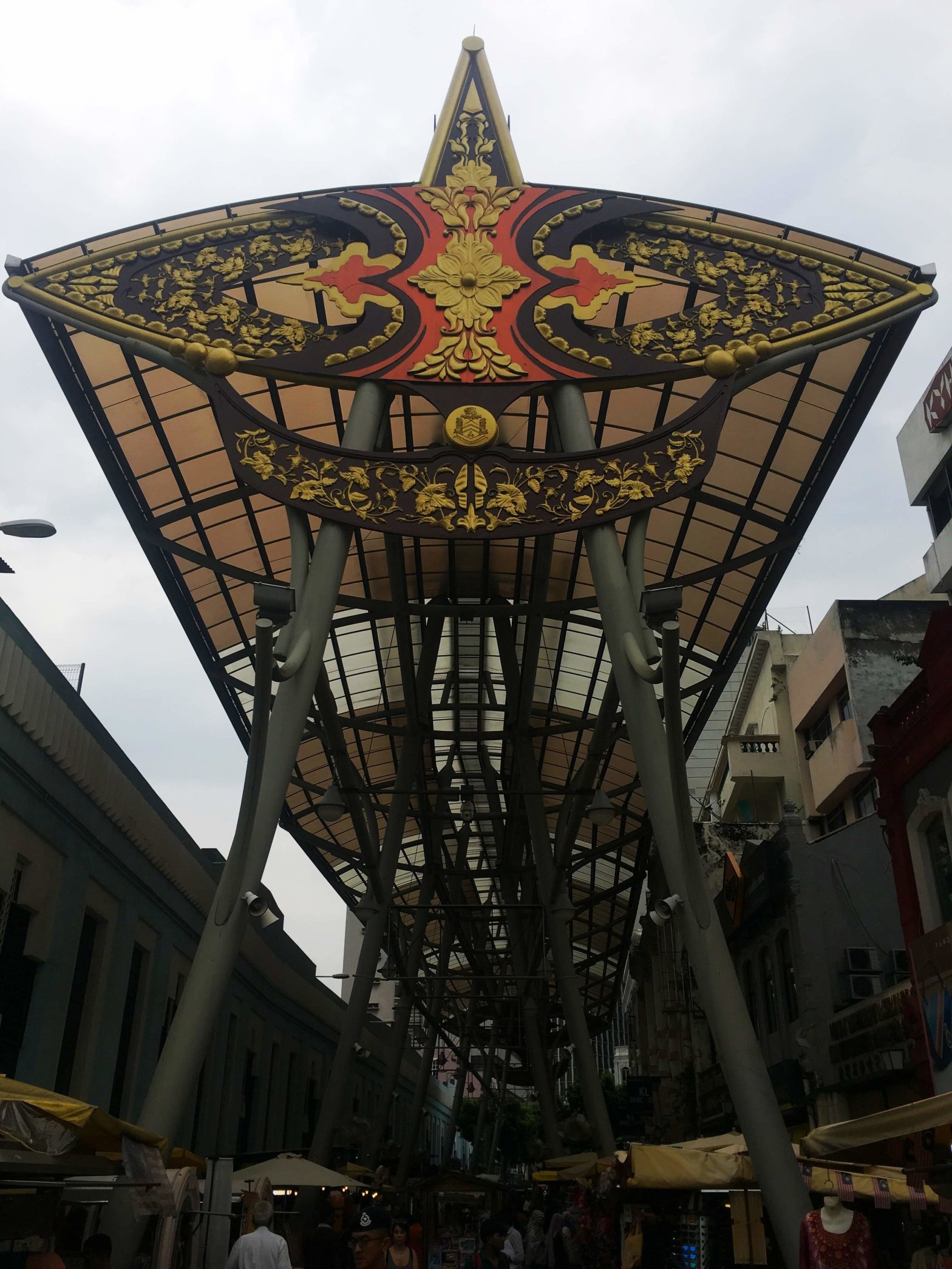
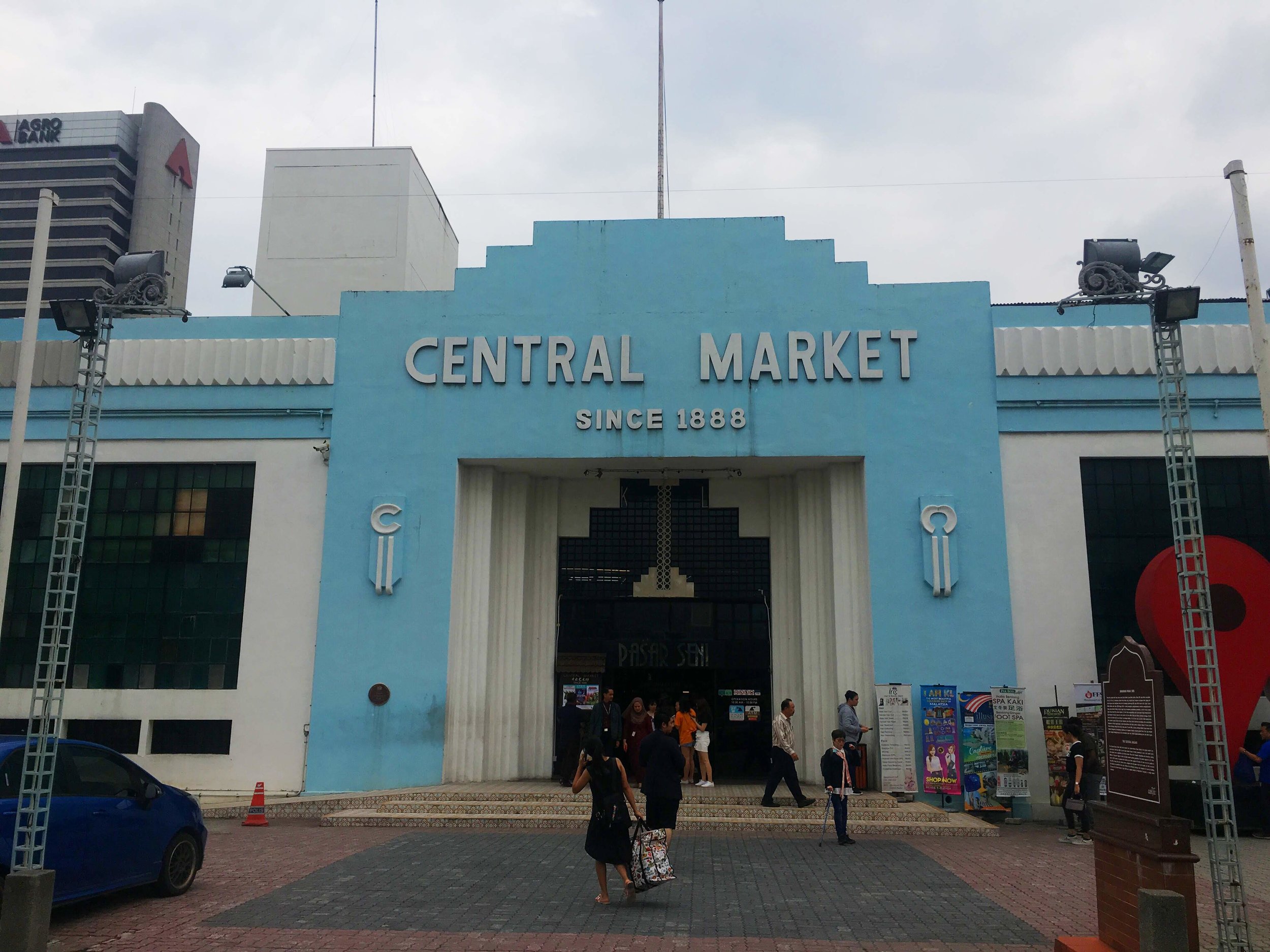
If you need to do some souvenir shopping in Kuala Lumpur, Malaysia, there’s really nowhere better to go than Central Market. Founded in 1888, Central Market is sort of a proto-shopping mall. Today, it’s full of food, souvenirs, and other cheap products that any visitor will want to take home.
Central Market is the most famous market in all of Kuala Lumpur. The market itself dates back to the late 19th century, but the current blue art-deco building was designed in 1937. Originally a wet market, today, Central Market is the best place to buy souvenirs and cheap, delicious food.
When I visited Central Market, I took the opportunity to try Nasi Lemak, the national dish of Malaysia. This dish consists of boiled peanuts and spicy anchovies, and a scoop of rice topped with a fried egg. Of course, I washed the whole thing down with a kopi tarik, the classic “pulled coffee” that is the national drink of Malaysia.
After shopping inside the market, don’t forget to explore the streets outside. The surrounding roads have been closed off for pedestrians, and there are more shops and stalls outside surrounding the market.
Though it’s a mark of Malaysia’s colonial period, the market has been co-opted in a very positive way into a Malaysian cultural site. In fact, Central Market was recognized by the Malaysian government as a cultural heritage site in the 1970s after the country gained its independence from Britain.
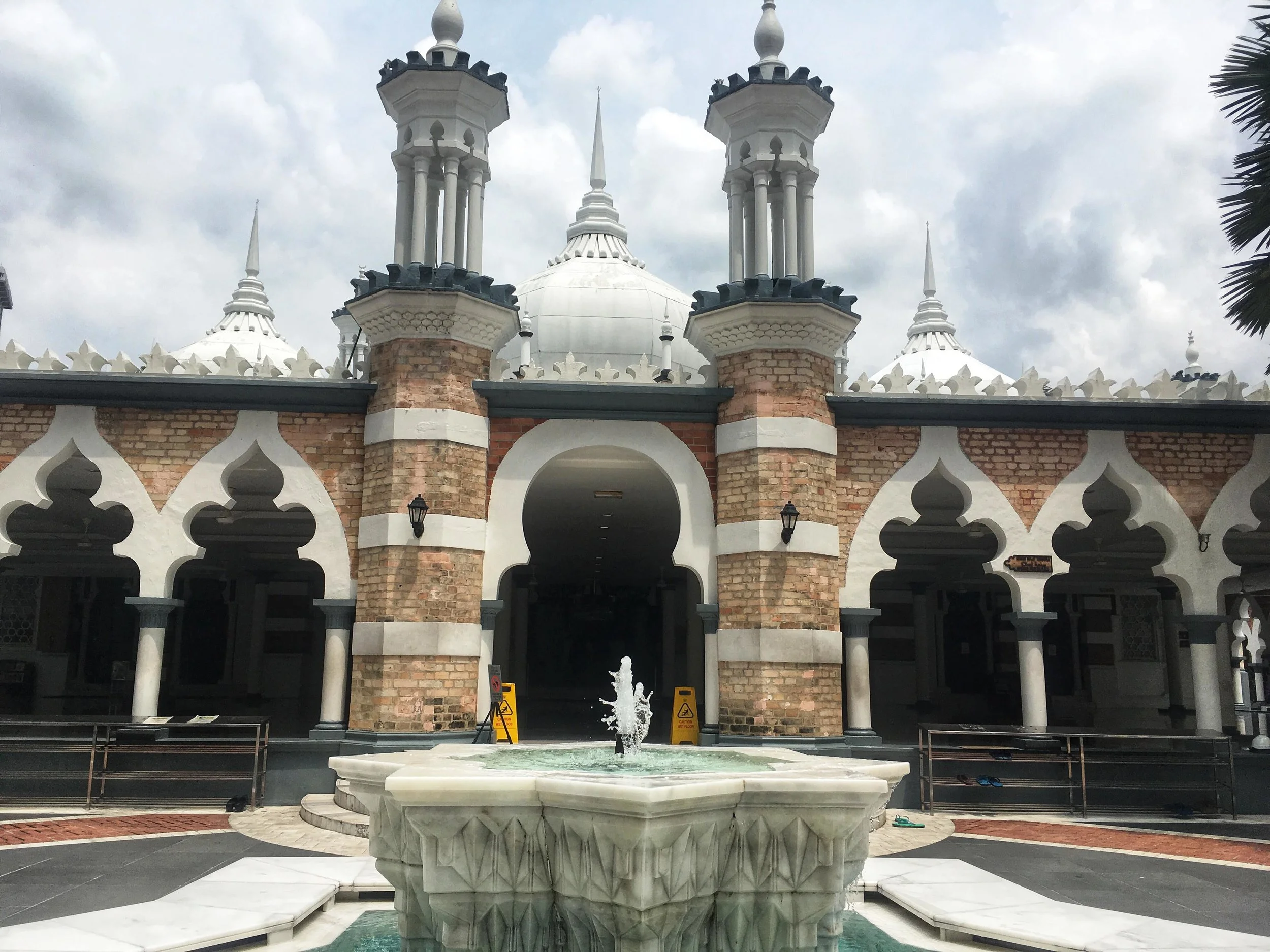
Located right in the heart of Kuala Lumpur, Malaysia, the tiny Masjid Jamek is the city’s most historic old mosque. It even has it’s own LTR station named after it! Masjid Jamek was built back in 1909, and is the oldest historic mosque in the city, The mosque is one of the most important Muslim religious sites in the city, but non-Muslim tourists are welcome to visit. Here’s everything you need to know.
You might also like: Visiting the National Mosque of Malaysia
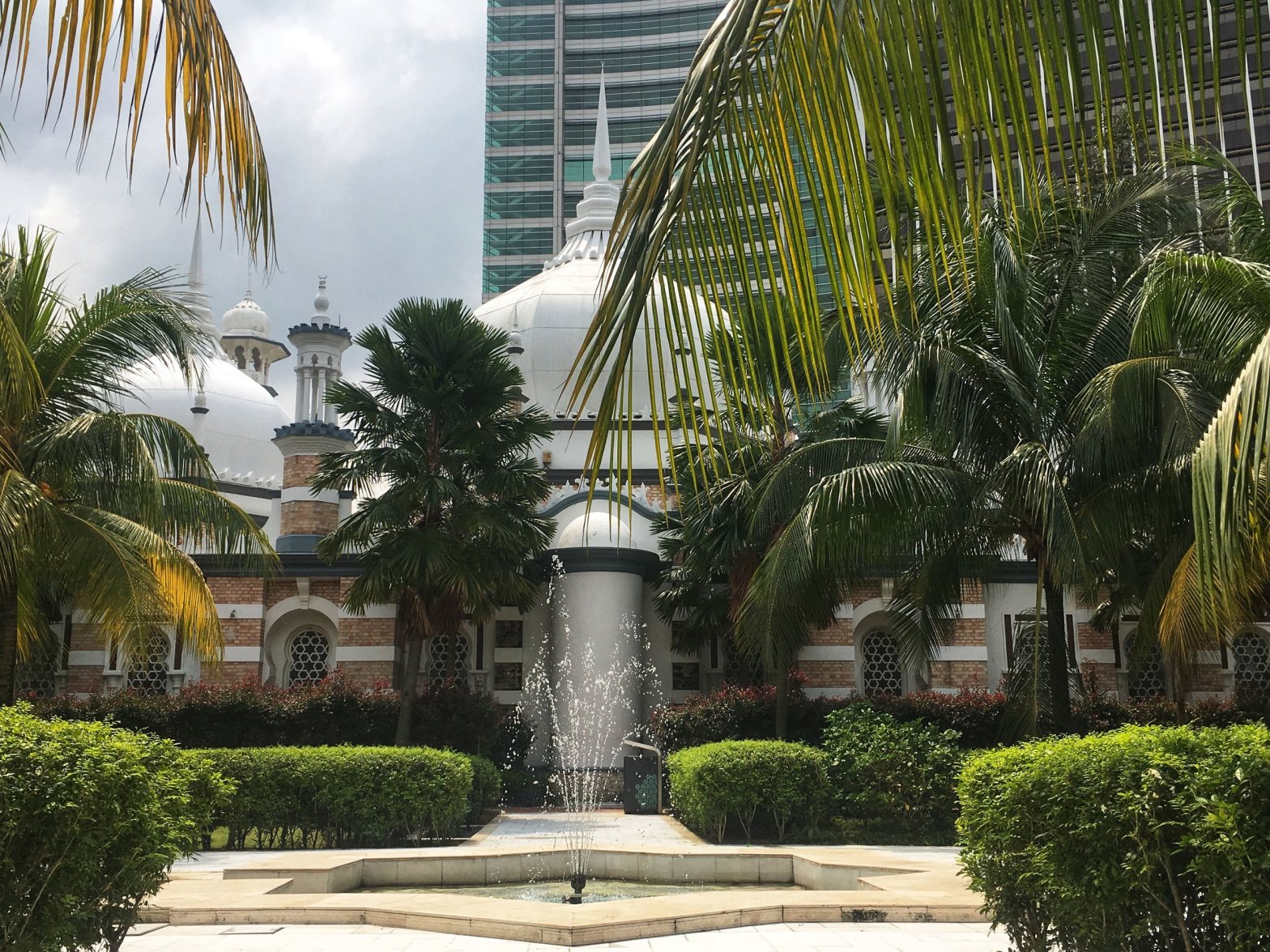
Kuala Lumpur’s Masjid Jamek is an iconic part of the city’s downtown skyline. The Moorish architecture of the little mosque is an eye-catching piece of the historic downtown area around Merdeka Square.
Masjid Jamek, the oldest mosque in Kuala Lumpur, was built back in 1909 by English architect, officer, and footballer Arthur Benison Hubback, who deigned many of old KL’s most iconic buildings. Officially the Sultan Abdul Samad Jamek Mosque, Masjid Jamek is an important piece of Kuala Lumpur’s history. It’s such an iconic landmark that one of the busiest and mot important LTR stations was named after it!
Even if you are not a Muslim, it’s definitely worth paying a visit to this beautiful and historic mosque. It doesn’t cost anything to visit. Visitors are just asked to sign a guestbook, and if they are not dressed appropriately to enter a mosque, they will be lent a modest robe at no additional fee.
The staff at the mosque are incredibly friendly and helpful, and are always willing to assist you or answer any questions that you have. When I mentioned that I was from Texas, the guy who welcomed me to the mosque made finger guns, shooting them in the air like a cowboy. “Don’t mess with Texas!”, he proudly announced.
You can guide yourself around the lush gardens surrounding the mosque. The mosque is built on a sacred site above what was once a historic Muslim burial ground. Today, the beautiful gardens and fountains offer a lovely relaxing space in the middle of the bustling city.
You’ll also be interested in: Malaysia’s Pink Mosque
Though smaller than many of the mosques you’ll find in Kuala Lumpur, the Masjid Jamek was the city’s main and most important mosque until the construction of the National Mosque in the 1960s. It’s still an important and beautiful place to visit for both Muslims and non-Muslims alike.
Masjid Jamek is open for visits from non-Muslim tourists on Saturday-Thursday from 8:30-12:30; 14:30-16:30. The mosque is closed to non-Muslim tourists on Fridays.
Masjid Jamek is FREE for anyone to visit
The mosque is located in the central part of KL’s downtown right at Masjid Jamek LTR Station.
Jalan Tun Perak, City Centre, 50050 Kuala Lumpur, Wilayah Persekutuan Kuala Lumpur, Malaysia
















 LB convert