Taking a Night Bus in Vietnam (Hanoi to Hue)

Vietnam is a long and skinny country. This means that it can take a long time to get from one part of the country to the other. Sure, you can fly, but if you are traveling on a budget, that can get a bit expensive. Vietnam has a good and comprehensive rail network too. But if you want to save money, sooner or later you’ll end up on a Vietnamese sleeper (night bus). We took the sleeper bus from Hanoi to Hue. Here is our review:

We booked our tickets online a few days in advance through 12go.asia through Sinh Tourister, Vietnam’s most reputable travel company. Warning: there are lots of fake Sinh Tourister and Sinh Cafe offices! Visit their website at https://www.thesinhtourist.vn to make sure you go to the right place!

We got to the office at 5:30pm and loaded our luggage beneath the bus. The company was very professional, and issued luggage tags with ID numbers for each piece of luggage. Then, we found our seats. The night bus has 41 beds, with pillows and blankets. There isn’t much room inside the bus, so be sure to put your luggage underneath. You can bring a small bag with you as carry on, but there really isn’t much space to put it. There are two levels of bunks, upper and lower. We ended up in upper bunks. Although they are a bit cramped, there is enough room to stretch out. You can raise your seat to read, or lower it into a bed to sleep. Actually, although it’s a bit cramped, it is a lot better than a normal bus for long a long trip.

We left Hanoi right at 6:00pm, and stopped for toilet breaks at 9:00pm and around midnight. There is no toilet on board, but there is air conditioning and wifi. We arrived in Hue right on time around 7:00am the next morning.

There were two drivers who alternated driving throughout the night, and they drove slowly and safely. Overall, we had a very good experience! It was a lot better than we expected!

So, should you take a night bus in Vietnam? Honestly, yes! It’s ok! Sure, maybe a train would be more comfortable, but if you are trying to save some money and don’t need too much space, a night bus is not a bad way to travel!

Ordering a Vietnamese Tofu Platter

Want to try something new in Hanoi that is not pho or banh mi or bun cha??

Let us bring you to a secret gem hidden in a tiny alley across from Hoan Kiem Lake in Hanoi’s Old Quarter.

Bún Đậu Việt or Vietnamese mixed platter: Best fried tofu by Bún Đậu Hàng Khay in Hanoi’s Old Quarter

We are about to leave Hanoi and move south, but before we go, we want to try some new Vietnamese food that is not just the typical (although delicious) pho or bun cha. We accidentally found this place by Google Maps and decide to check it out for lunch. We aren’t sure exactly what it’s called or how it’s translated into English. The one thing we are sure about though is that it’s A MUST TRY Vietnamese dish.

We have been craving fired tofu in Hanoi lately. You’ll see it on so many food carts and street stalls, and it always looks so good. This place can make some of the best fried tofu we’ve had! To get to the little hold-in-the-wall restaurant, we walked through a tiny, narrow alley to reach the restaurant. At the end of the alley you will see lots of locals sitting in a shop with tiny blue tables and stools. We were not sure how to order at first, but the waitress, who could speak English, ordered two portions for us.

The dish was served on a banana leaf that covered a woven tray. The plate consisted of warm fried tofu, which was crispy on the outside and amazingly soft inside; tasty fried spring rolls; a black herbal sausage (which looked a little scary but tasted so fresh); chewy tender pork; and other things that I really have know idea what to call them. I tried to notice how people eat it! Even if you aren’t 100% sure what you are eating, that’s part of the fun of a travel adventure, right? Sometimes you just have to be brave and try it and be so happy and surprised with how good it tastes!

The back herbal sausage scared me a bit but turned out to be so tasty also! On the side, they gave us each a tiny bowl of plain fish sauce for dipping, and limes and chili to add to taste. Chili really adds a nice flavor (take a tiny dip, don’t soak it – it can become so spicy!). I have to say that this food experiences was very impressive. It’s so DELICIOUS! It’s not something  that you can expect the taste. But this was surely beyond my expectation! I enjoyed the tofu and spring rolls the most.

Later, I found online that their special menu is pork tongue but it’s pricey compared to this regular dish. Be brave and try it! The shop is quite clean and not so hot inside. It’s reasonably-priced for sure. I will come back again before I say so-long to Hanoi.  

We spent 100.000 VND for 2 portions + 1 water (1 portion is 45.000 VND)

(pork tongue: 70,000)

Location : https://goo.gl/maps/iUzzBZkJcpG2

 Tiny alley cross Hoan Kiem Lake that hides restaurant inside
Tiny alley cross Hoan Kiem Lake that hides restaurant inside

Three Historic Temples near West Lake (Tay Ho), Hanoi

Head out of the Old Quarter to Tay Ho, Hanoi’s “West Lake” neighborhood. North of Ho Chi Minh’s Mausoleum and the One Pillar Pagoda sits West Lake, the largest lake in the city. Hanoi’s West Lake is home to shopping malls, condominiums, five-star hotels, nice restaurants, and a calmer and more laid-back lifestyle than the chaos of the Old Quarter. It’s also home to three of the city’s oldest and most beautiful temples.

Quan Thanh Temple – 11th century “Place of the Gods”

Quan Thanh Temple, meaning the “Place of the Gods” is an 11th century Taoist temple on the shores of West Lake. The temple is dedicated to the Taoist god Xuan Wu, the “Dark Warrior”, who is especially revered by martial artists.

People come to the temple to burn ghost paper, which is often available for sale inside and around the temple complex.

There is a small admission fee (10,000d) which goes towards maintenance and upkeep at the temple.

Quan Thanh Temple is located at Thanh Niên, Quán Thánh, Ba Đình, Hanoi. The temple is close to Ho Chi Minh’s Mausoleum and the One Pillar Pagoda.

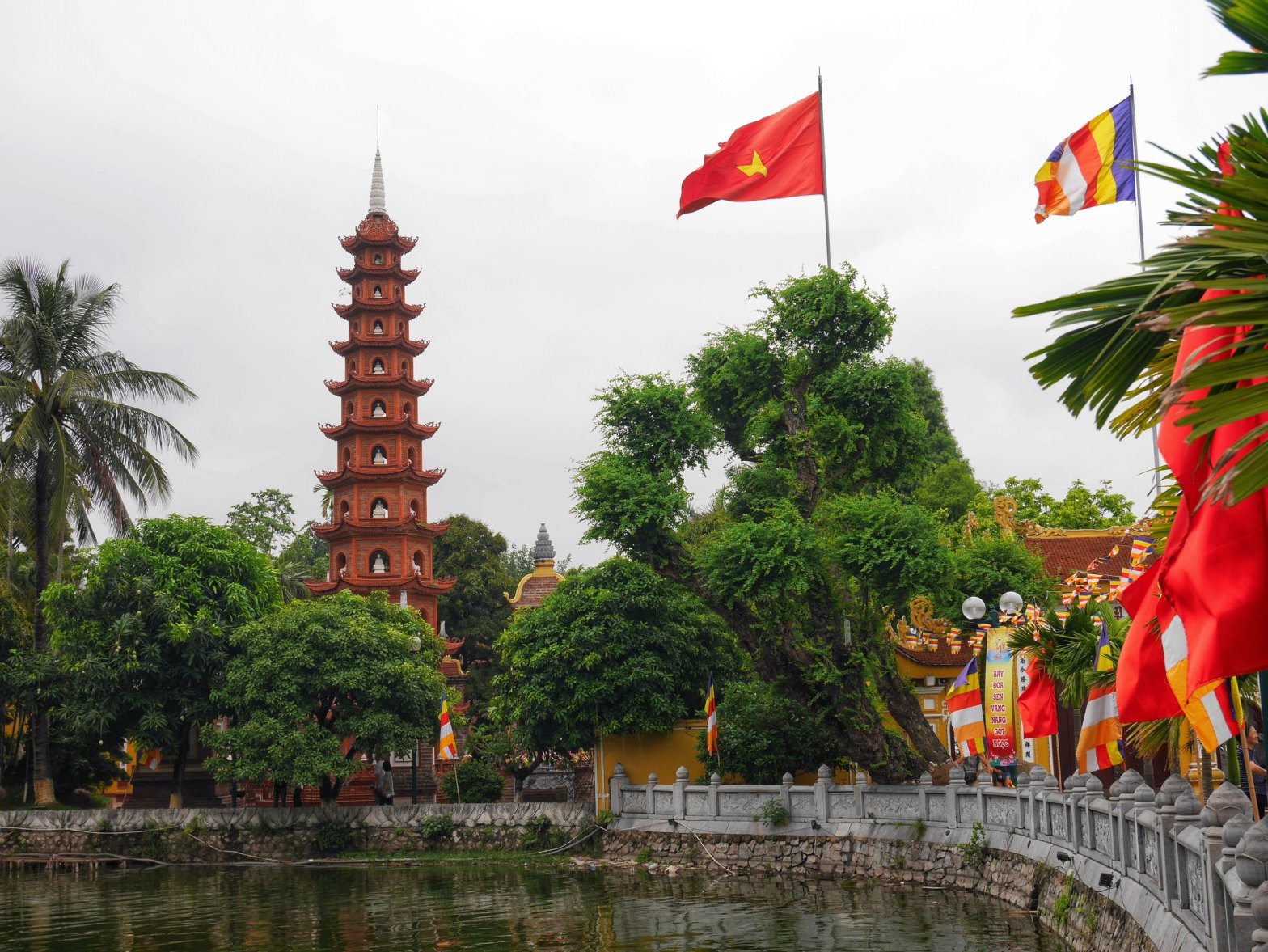
Tran Quoc Pagoda – the city’s oldest Buddhist temple, on a small island in West Lake

Hanoi’s oldest Buddhist temple, Tran Quoc Pagoda, is one of the city’s most impressive and beautiful sites. The tall pagoda sits on a small island in West Lake, reached by a bridge. Prayer flags blow in the breeze, and curls of incense float up from the wooden prayer halls. There is no admission fee to visit this pagoda, although donations are welcome.

You’ll often see Buddhist monks performing rituals at this temple, and it’s very popular with Buddhist Hanoians and foreign tourists alike.

You can reach Tran Quoc pagoda from Quan Thanh Temple in just a short walk. It is located at Thanh Niên, Yên Phụ, Ba Đình on a small island in West Lake.

Den Thuy Trung Tien – a tiny Taoist shrine on its own small island

Immediately across the road from Tran Quoc Pagoda, on another (much smaller) island is Den Thuy Trung Tien, a small Taoist shrine.

There is no admission to enter this temple.

5 Foods You Must Try in Hanoi, Vietnam

What to eat in Hanoi?

Hanoi, Vietnam’s bustling capital, is considered by many to be the street food capital of the world. There are thousands of delicious dishes waiting for you to try in Hanoi, but if you want to get the best food experiences, don’t miss these top five dishes that you must try in Hanoi!

1. Phở

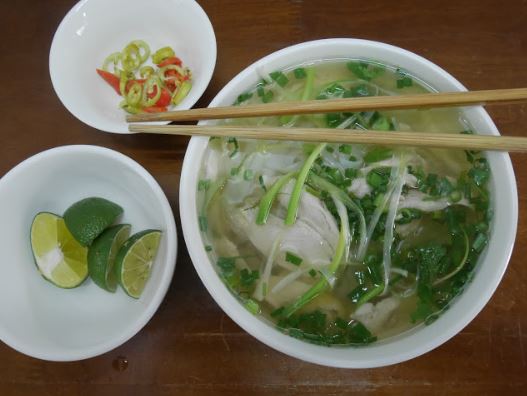
“pho ga” – chicken pho

Of course, you can’t write about Vietnamese food without mentioning pho. This hearty bowl of rice noodles and chicken or beef served in a hearty and savory broth is a classic Vietnamese staple. A good bowl of pho at a street restaurant will only set you back about 40,000d, making it a cheap and super filling breakfast, lunch, or dinner (it can be eaten for any meal of the day)! Add chilies or a squeeze of lime to add extra flavor and complexity to your broth. The best bowls of pho have lots of meant and aren’t greasy at all. This fresh, healthy classic is the number 1 food you cannot pass by in Hanoi.

2. Bánh Mì

 banh mi
banh mi

Bahn mi developed as a street food special thanks in no small part to decades of French colonial influence. This baguette sandwich is ubiquitous at lunchtime; found on nearly every street. You can take it to go wrapped up in a brown paper bag, or eat it right there on tiny plastic stools on the street. The best banh mi is served in a hot, crispy baguette stuffed with pate, chili sauce, and lots and lots of fresh veggies and herbs.

3. Bún Chả

 bun cha
bun cha

Bun cha was President Obama’s favorite dish when he visited Vietnam, and we can’t disagree – it’s amazing! Grilled pork in a sweet and savory broth is served with a mountain of rice noodles and a huge bowl of herbs. Mix all of your ingredients into the broth and eat it all up with chopsticks like a big bowl of pho. This dish is best served with an ice cold bottle of Hanoi Beer on the side!

4. Xôi Gà

 com ga
com ga

Com ga is a super hearty and filling dish made of sticky rice and chicken. The dish is topped with crispy fried onions and served with thin slices of cucumber. The rice is sprinkled with soy sauce, making it little salty and very savory. You won’t be hungry after finishing your dish, but you might be very sleepy! Sticky rice is so heavy, and it’s known for making people feel full, sleepy, and lazy after finishing a dish. This is perfect to eat in the late afternoon when it’s so hot outside. It’s the perfect time for a nice nap.

5. Cơm gà

 com ga
com ga

Com ga is chicken rice, but it’s so so different from the chicken rice that you’ll find in Thailand or Singapore. Every Asian country has their own twist on this common street food dish, and com ga is Vietnam’s delicious version! The savory yellow rice pairs so well with the chicken and mango salad. The mango salad mixed with fresh vegetables and herbs is a bit sweet, but not at all spicy.

The Original Vietnamese Egg Coffee at Cafe Giang

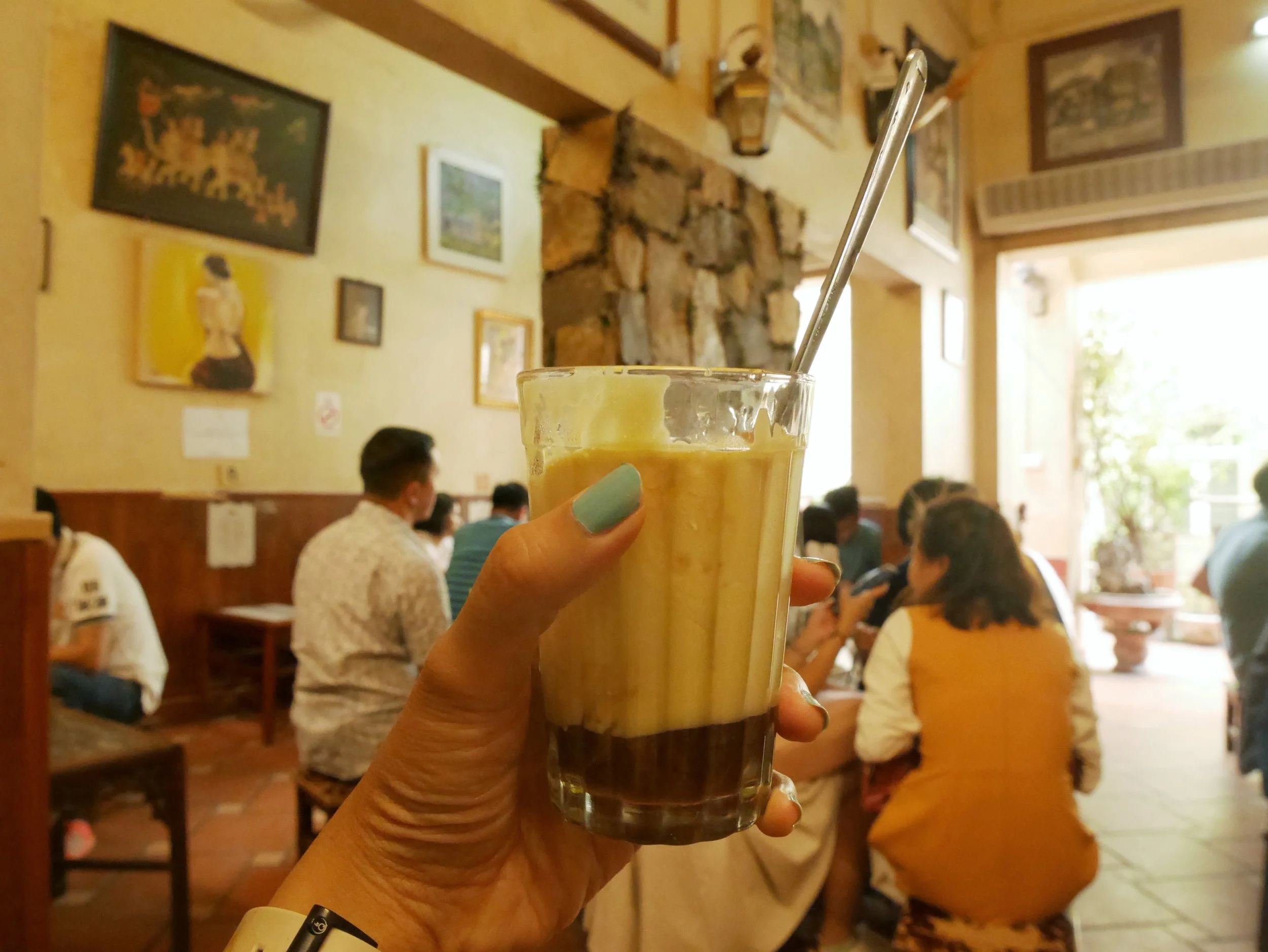
The one and only original Vietnamese Egg Coffee at Cafe Giang, Hanoi

 The original Vietnamese egg coffee at Cafe Giang, Hanoi Old Quarter
The original Vietnamese egg coffee at Cafe Giang, Hanoi Old Quarter

This is a hidden gems in Old Quarter of Hanoi. It’s worth your effort to seeks out this coffee shop, as this is the place where egg coffee was born! At Cafe Giang, you can find the original taste of egg coffee which was invented by Mr. Nguyen Giang in 1946, when he was working as a bartender in a five-star hotel. The inspiration to create this recipe came when Vietnam had a scarcity of milk. Instead, he use egg yolk to replace the milk. I have been trying egg coffee from many, many shops in Hanoi, and I’m so glad to find the original egg coffee at Cafe Giang !

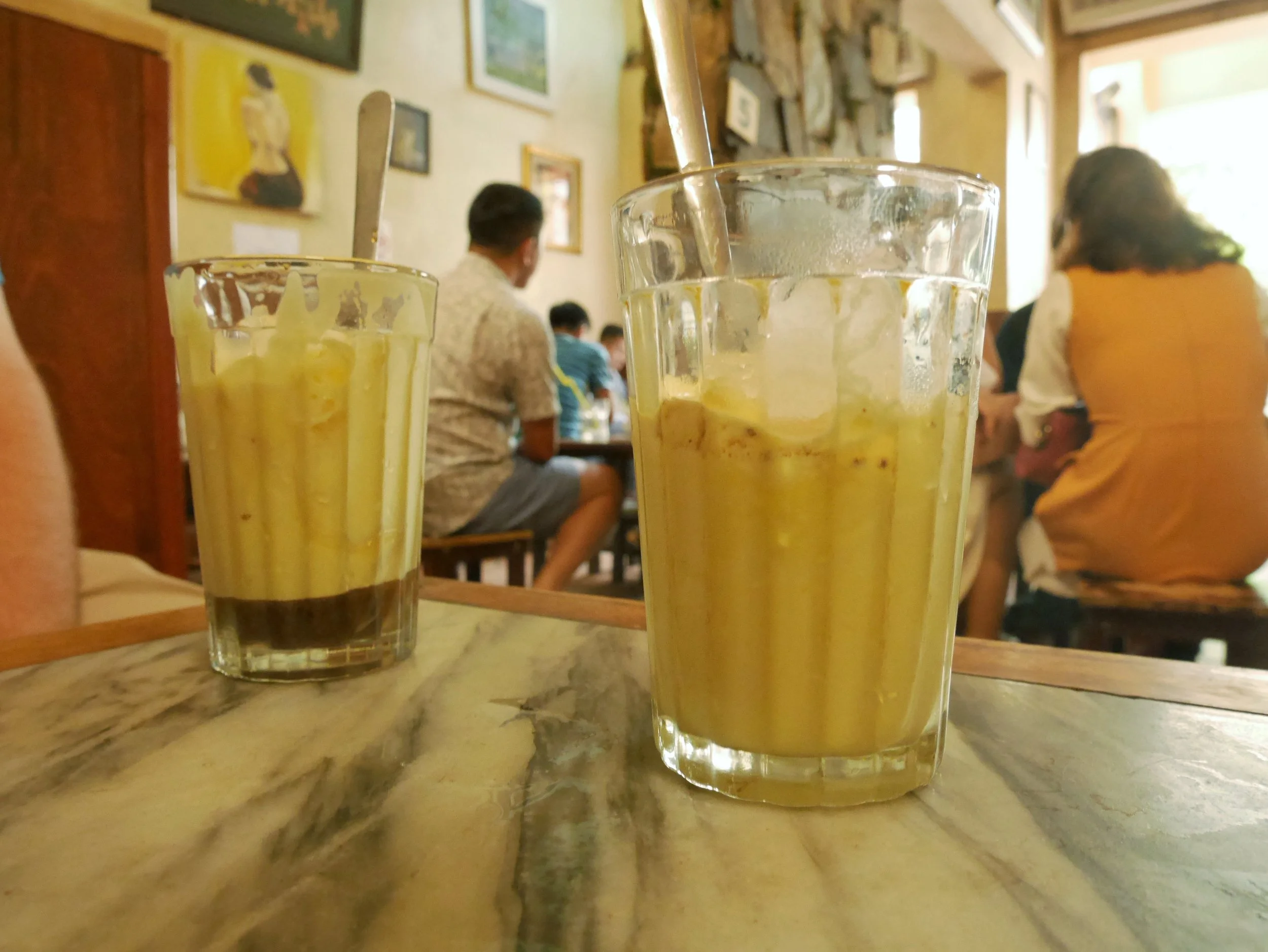
 Egg with Vietnamese coffee (left) and Egg with chocolate (right)
Egg with Vietnamese coffee (left) and Egg with chocolate (right)

We ordered two different drinks to try: egg with coffee and egg with chocolate. The egg drinks were served in layers with a few cubes of ice. You have to stir and mix it up until the ice  has melted and chilled your drink.Then enjoy your smooth delicious egg coffee or egg chocolate. The creamy and buttery taste of this egg coffee, reminds me of a milkshake or melting ice cream. There is no smell of egg at all.

Cafe Giang has a wide variety of menu items that you can choose to order. There are other drinks that I am really interested in trying next time, like egg with cinnamon, egg with matcha, and egg with beer or rum (???). It’s a nice cafe that conserves the old-fashioned feel of a local Vietnamese coffee shop with tiny stools and plain decor. The cafe doesn’t need to be fancy when it is so famous for its drinks!

                                                          wide variety of egg drinks, Cafe Giang
                                                         wide variety of egg drinks, Cafe Giang

They have 2 floors. It was pretty crowded when we visited. After all, it’s so popular! I’m so grateful that he found a way to replace milk with yolk – Vietnam got a new specialty for all of us to try!

Location https://goo.gl/maps/Fe3BavyrsMD2

Cafe Giang can be a little hard to find if you don’t know where to look. It’s tucked away in a tiny alley between two tall tube houses. Just enter the alley and keep walking. You’ll walk right into the first floor of the cafe!

 entrance to Cafe Giang
entrance to Cafe Giang

Hanoi’s White Horse Temple (Bach Ma)

 Bach Ma Temple in Hanoi
Bach Ma Temple in Hanoi

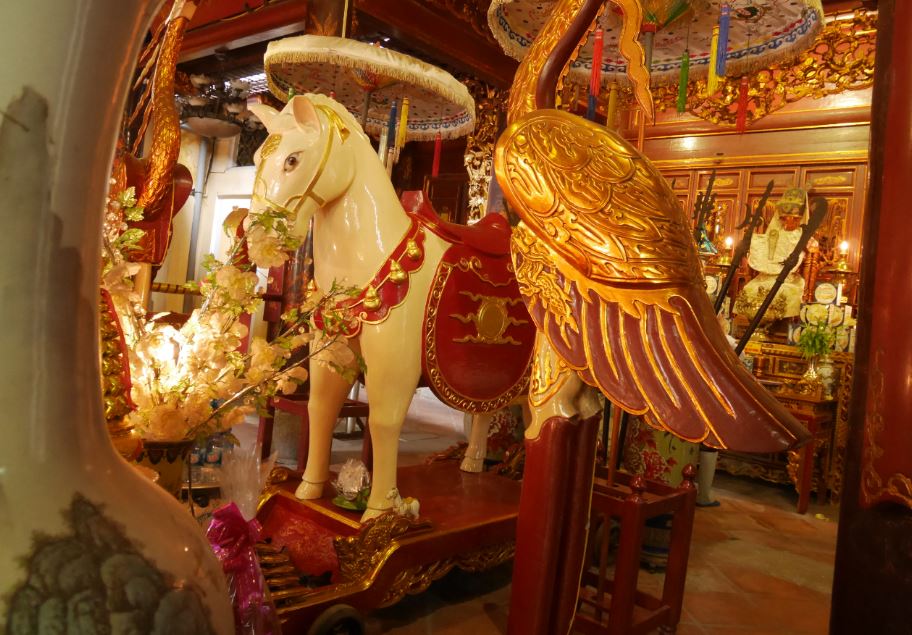
From the outside, Bach Ma Temple looks fairly nondescript – a squat yellowish building looking very much like other local Hanoi temples. But Bach Ma, believed to be the oldest temple in the city, is an important Hanoi historical site. The temple dates back to the 11th century, with a legend related to Emperor Ly Thai To and the founding of Hanoi.

 the White Horse of legend
the White Horse of legend

According to the legend, a magical white horse led the emperor to the spot on which he built the walls for the ancient city that would become Hanoi. In honor of the spirit of the white horse, the emperor constructed a temple in its honor, enshrining a beautiful white horse statue.

 white horse at Bach Ma Temple
white horse at Bach Ma Temple

The temple is open for visitors every day except Monday from 8:00am-5:00pm, but is closed for midday between 11:00am-2:00pm. Bach Ma Temple is located at 76 Hàng Buồm, Hoàn Kiếm, Hà Nội , and there is no entry fee to visit.

Visitors are expected to behave properly and respectfully. Proper dress – no sleeveless shirts are permitted for men or women, and no shorts for women – is expected when visiting the temple. As with most Vietnamese temples, you may wear your shoes inside the outer parts of the building, but must remove them before entering the inner sanctuary.

Attending a Hanoi Water Puppet Show

 Lotus Water Puppet Theater
Lotus Water Puppet Theater

What is Water Puppetry?

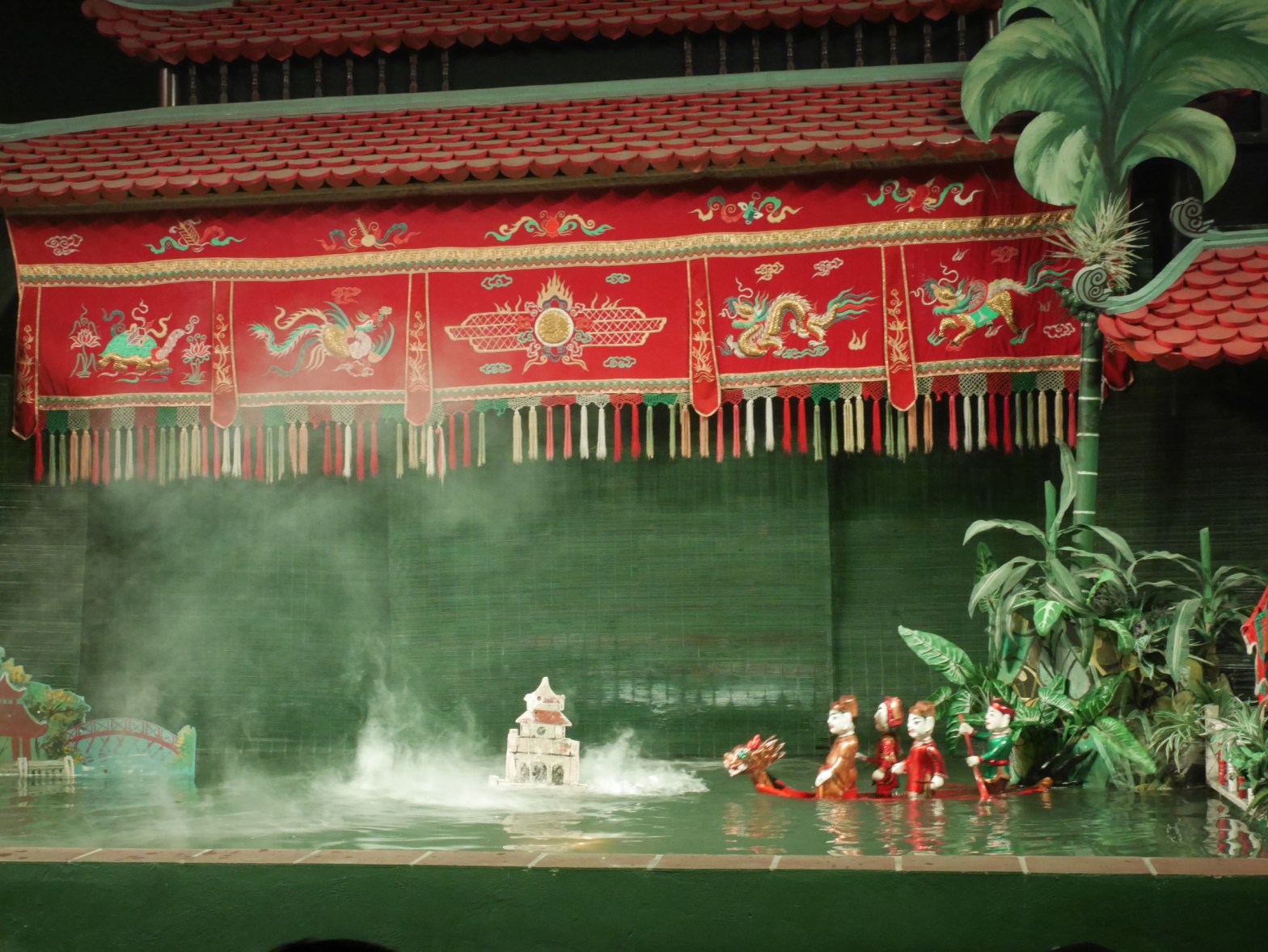
Water puppetry is one of northern Vietnam’s traditional performance art forms. Múa rối nước, as its called in Vietnamese, dates back to the 11th century. Traditionally, these shows, depicting Vietnamese folktales, legends, and scenes from daily life, were performed in flooded rice fields. Nowadays, water puppet shows are performed on stages in special theaters, which have a rectangular water pool for the performance, and a screen hiding the puppeteers from view.

 water puppet stage at Lotus Theater
water puppet stage at Lotus Theater

What is the show like?

The show lasts around one hour, and is made up of many different scenes. Some, like the scene shown below, are depictions of Vietnamese folktales and legends. This scene tells the legend of Hoan Kiem Lake. Other scenes show the traditional daily life of rural farmers, such as plowing a field or chasing away a fox. The show is accompanied by singing and music performed on traditional Vietnamese instruments.

 returning the sword to Hoan Kiem Lake
returning the sword to Hoan Kiem Lake

Where to watch the show

There are two popular water puppet theaters in Hanoi’s Old Quarter around Hoan Kiem Lake. The truth is, there isn’t much difference between the two shows. Both show similar scenes using the traditional performance art. If you are really curious, why not visit both and let us know your opinion!

Lotus Water Puppet Theater

16 Lê Thái Tổ

Thang Long Water Puppet Theater

57b Đinh Tiên Hoàng

Cost of tickets

The price of a ticket to the water puppet show is pretty standard at both theaters. One ticket costs 100,000d, about $5 USD.

5 Top Museums to Visit in Hanoi, Vietnam

Hanoi, Vietnam’s capital, is full of fascinating museums where you can learn all about the history and culture of the country. These top five museums in Hanoi are all within walking distance of Hoan Kiem Lake and the Old Quarter.

Hoa Lo Prison Museum (Hanoi Hilton)

 inside the Hoa Lo Prison
inside the Hoa Lo Prison

Hoa Lo Prison was originally constructed by the French to hold political dissidents and suspected revolutionaries in Indochina. It’s a dark, dismal, and grim place. The walls were painted grey and black to give prisoners a feeling of despair, and prisoners were chained together with no room to move. A real guillotine stands in one corner, used to execute prisoners.

During the Vietnam War, the prison was used as a POW camp by the North Vietnamese, holding such famous prisoners as US senator and presidential candidate John McCain.

Ironically nicknamed the “Hanoi Hilton” by US prisoners, the Hoa Lo Prison Museum is a depressing place, but an important reminder of a dark period of history. Be aware, though, that the museum does offer a fairly one-sided view of the war.

 French guillotine
French guillotine

Location

1 Hoả Lò, Trần Hưng Đạo, Hoàn Kiếm, Hà Nội

Admission

40,000d

Hours

8:00am – 5:00pm daily

Vietnam Military History Museum

 North Vietnamese tank on display in the museum
North Vietnamese tank on display in the museum

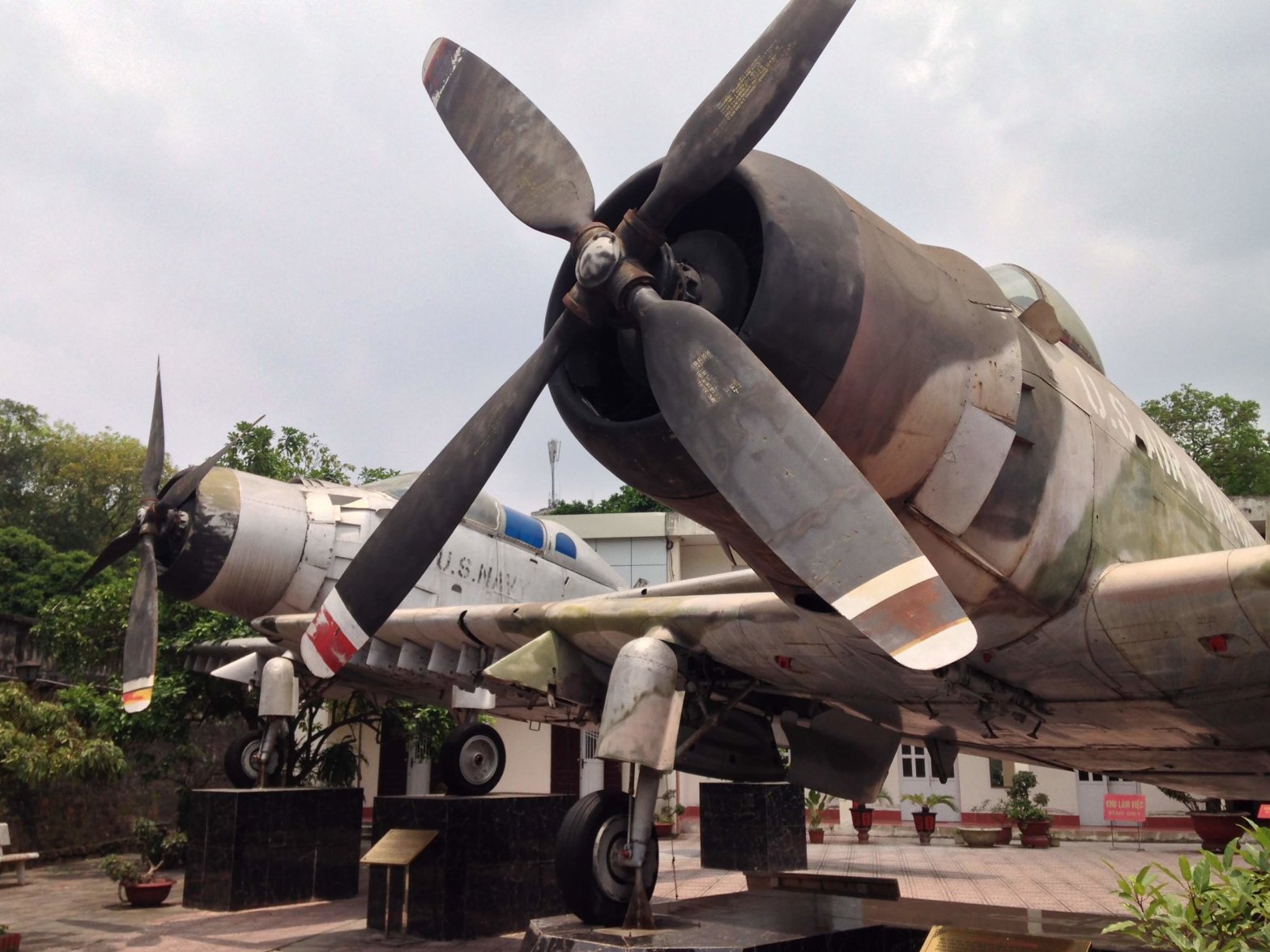
Visit the Vietnam Military History Museum to learn more about the war, known as the Second Indochina War, the Vietnam War in the US, and the American War in Vietnam. Here, dozens of old American aircraft are on display outside of the museum, and tanks, weapons, and other artifacts from the two Indochina Wars are displayed with interesting exhibits inside the museum.

The museum is located next to the old Imperial Citadel.

 fascinating collection of USAF aircraft
fascinating collection of USAF aircraft

Location

28A Điện Biên Phủ, Điện Bàn, Ba Đình, Hà Nội

Admission

Adult 40,000d

Student 20,000d (including ISIC cardholders)

Hours

8:00 – 11:30am and 1:00–4:30pm; closed Monday and Friday

Vietnam National Museum of History

 Vietnam Natinoal History Museum
Vietnam Natinoal History Museum

The National History Museum has two adjacent campuses. One, located in a fairly new building, holds artifacts, photographs, and news clippings about the Communist revolutionaries and rebel leaders who fought against the French and Americans in the First and Second Indochina Wars.

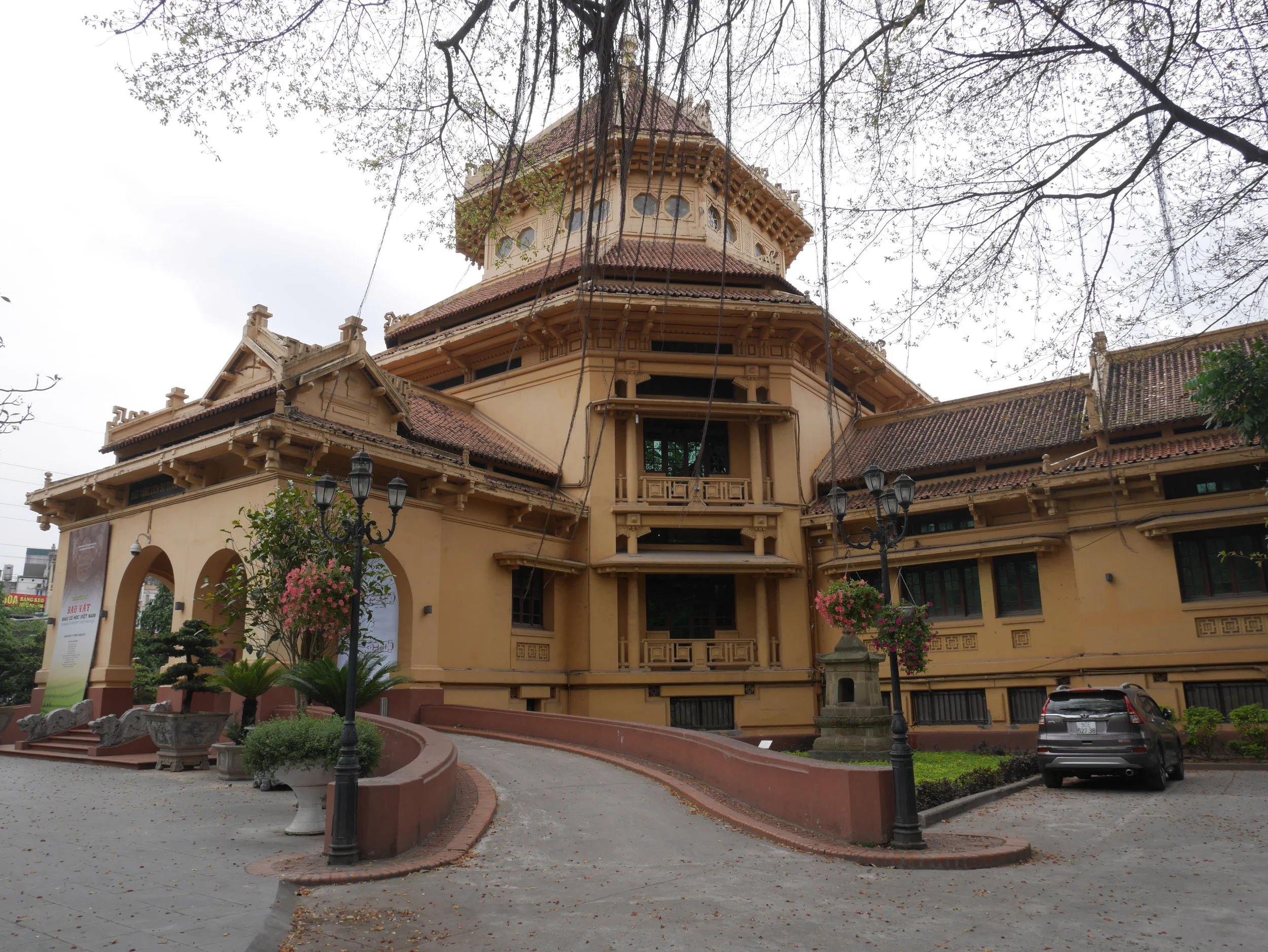
The other building, located in a beautiful old yellow-painted colonial building holds exhibits from Vietnamese history, from stone-age people in Vietnam through the recent Vietnam Empire. These exhibits are excellent, and a wonderful display of the history, art, and culture of the country.

Location

214 Trần Quang Khải, Tràng Tiền, Hoàn Kiếm, Hà Nội

Admission

Adult 40,000d

Student 20,000d (including ISIC cardholders)

Hours

8:00am – 12:00pm and 1:30pm – 4:30pm; closed Sunday and Monday

Vietnam Women’s Museum

 female revolutionaries and Vietnamese heroes
female revolutionaries and Vietnamese heroes

The Vietnam Women’s Museum is an interesting look at the roll of women in Vietnamese society. One section of the museum describes traditional wedding ceremonies and the traditional lifestyle of Hill Tribe mothers. One very fascinating exhibit shares information about the Mother Goddess religion, a traditional folk religion in Vietnam,.

 Mother Goddess shrine
Mother Goddess shrine

Location

36 Lý Thường Kiệt, Hàng Bài, Hoàn Kiếm

Admission

40,000d

Hours

8:00am – 5:00pm daily

Ho Chi Minh Museum

 Ho Chi Minh Museum
Ho Chi Minh Museum

When you visit Ho Chi Minh’s Mausoleum and the One Pillar Pagoda, don’t miss the Ho Chi Minh Museum, located within the same complex.

The museum shows Ho Chi Minh’s life through modern and symbolic exhibits. In one room, a large lotus flower is made out of artifacts recovered from wrecked American aircraft. In another, a large glass pyramid is enscribed with Uncle Ho’s words in various langauges. It’s difficult to describe, so you really should visit this museum and see for yourself!

Location

19 Ngách 158/19 Ngọc Hà, Đội Cấn, Ba Đình, Hà Nội

Admission

40,000d

Hours

8:00am – 12:00pm and 2:00pm – 4:30pm (no afternoon hours Monday or Friday)

Quán Sứ Temple, the Ambassador’s Pagoda – Headquarters of the Vietnamese Sangha

 entrance to Quan Su Temple, Hanoi
entrance to Quan Su Temple, Hanoi

The 15th century Quan Su Temple, meaning “Ambassador’s Pagoda”, was constructed by the Vietnamese emperor for the ambassadors and visiting dignitaries from neighboring Buddhist countries.

 incense burners at Quan Su Temple
incense burners at Quan Su Temple

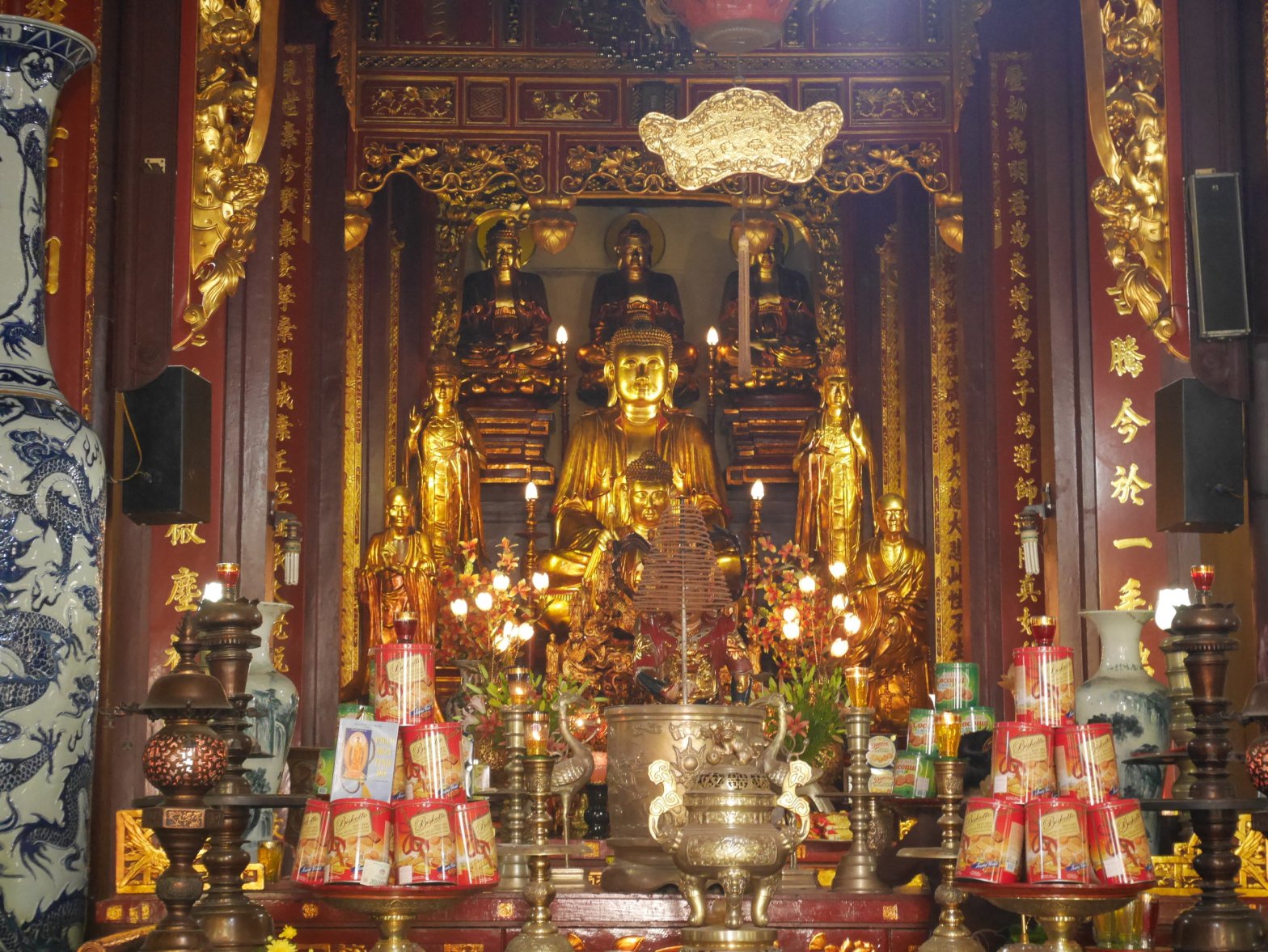
Today, Quan Su Temple is the headquarters of the Vietnamese Sangha, the governing body of Vietnamese Buddhism. It’s an active temple, and a peaceful and serene spot surrounded by the busy streets of Hanoi.

 Vietnamese Buddhist shrine
Vietnamese Buddhist shrine

There is no cost to visit this beautiful and historic temple. Proper dress is required, however, which means no sleeveless shirts (men or women) and no shorts (women). Shoes must be removed before entering the temple buildings.

 red lanterns at the Ambassador's Pagoda
red lanterns at the Ambassador’s Pagoda

There is also a tiny shop, run by the monks with proceeds supporting the temple, selling Buddhist books (in Vietnamese), charms, and prayer beads. Outside the beautiful gilded main temple hall, there are a few shrines smaller shrines. In the upper floors behind the main temple building is a meeting hall for the Sangha leadership. If you are interested in Buddhism, this is one of the top sites in Hanoi that you should not miss. It’s also a calm and quiet spot where you can find a little peace in the midst of the chaos that is Hanoi.

 a small shrine at the temple
a small shrine at the temple

The temple is located at 73 Quán Sứ, Trần Hưng Đạo, Hoan Kiem, Hanoi

The One Pillar Pagoda – A 1,000 Year-Old Temple in Hanoi

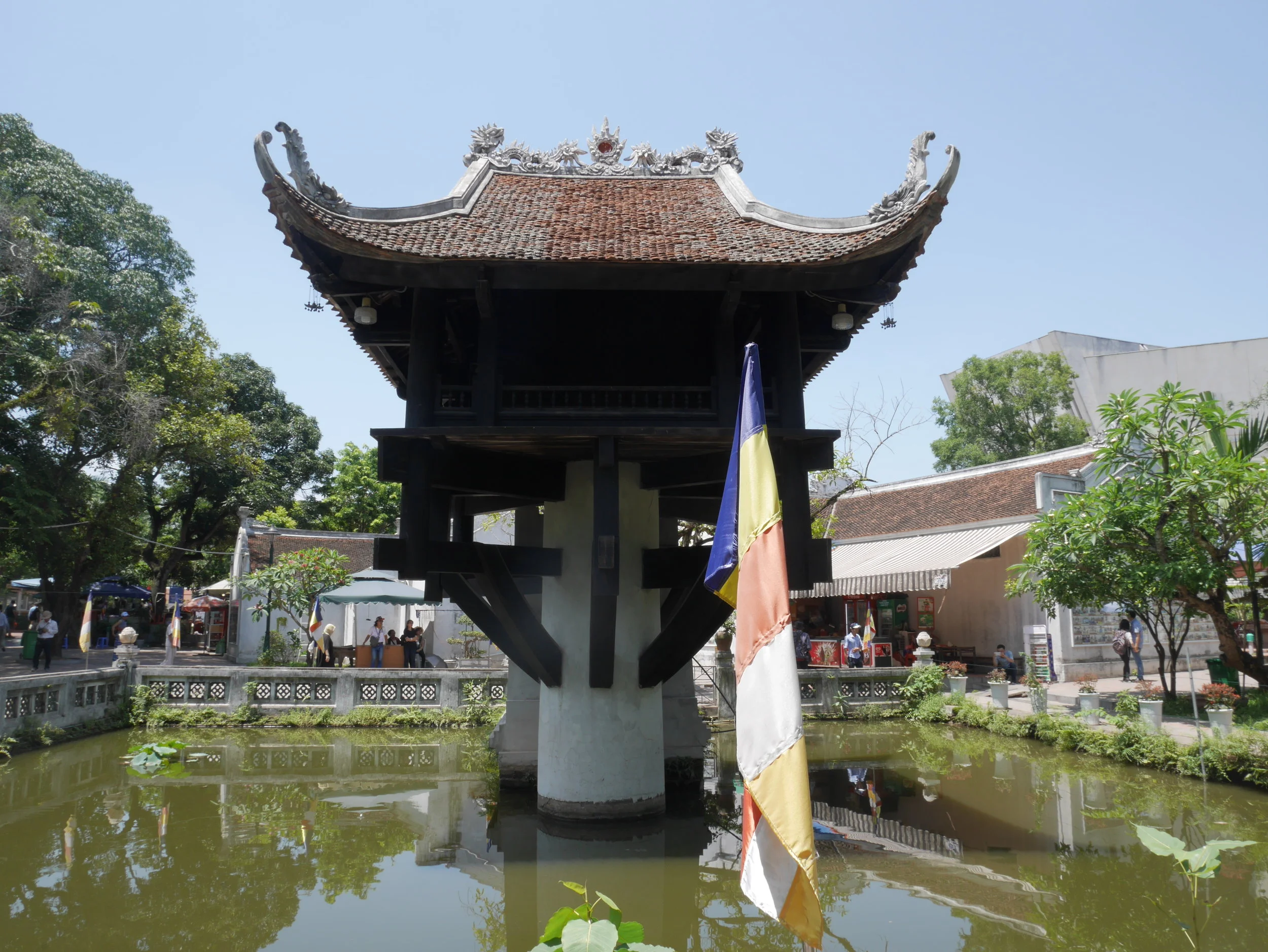
 the One Pillar Pagoda
the One Pillar Pagoda

The One Pillar Pagoda is one of the oldest and most important temples in Vietnam, and is the symbol of Hanoi  As its name suggests, the pagoda is built upon a single pillar, designed to resemble a lotus flower blooming from a small square pond.

The lotus is a symbol of purity in Buddhism, and the temple’s design relates to the legend of its history. Long ago, the Vietnamese emperor was lonely and childless. One night he had a dream that a Bodhisattva (something like a Buddhist saint) brought him a white lotus upon which a small child was sitting.

Later, the emperor fell in love with and married a peasant girl who gave him a son. To celebrate and memorialize the occasion, as well as to offer thanks, the emperor constructed the One Pillar Pagoda in honor of the lotus flower from his dream.

 climbing the steps to the pagoda
climbing the steps to the pagoda

You can visit the One Pillar Pagoda when you visit Ho Chi Minh’s Mausoleum and the Presidential Palace, as it’s nearby both of those famous Hanoi landmarks.

You must dress properly when visiting the pagoda, as it is a Buddhist temple and Vietnamese holy site. No sleeveless shirts, and no shorts are allowed for women.

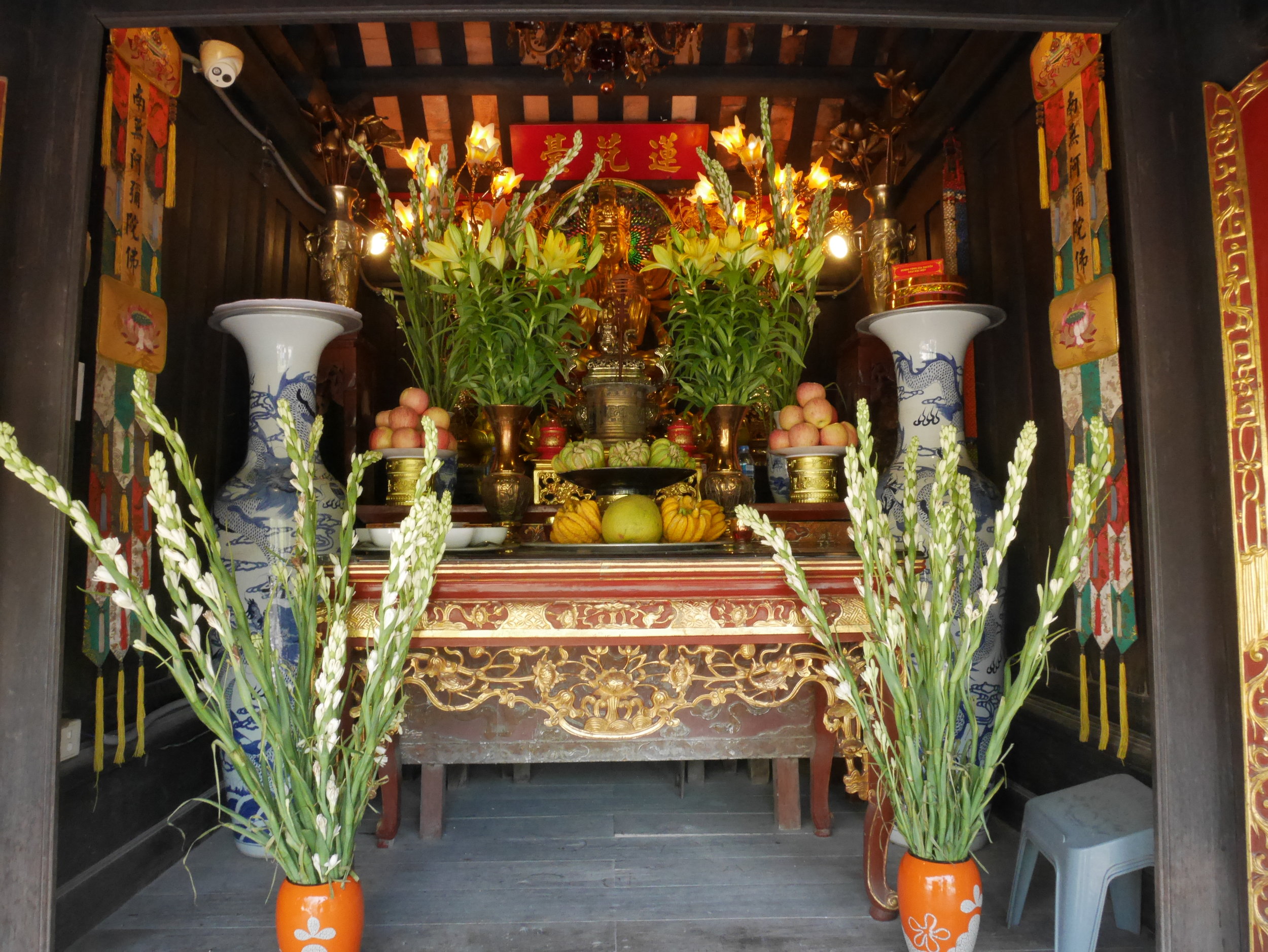
 shrine inside the One Pillar Pagoda
shrine inside the One Pillar Pagoda

The pagoda is located just outside Ho Chi Minh’s Mausoleum, and between the Presidential Palace and the Ho Chi Minh Museum. Admission is free.

Design a site like this with WordPress.com
Get started