Visiting Ho Chi Minh’s Mausoleum and Museum

When you are in Hanoi, visit Ho Chi Minh’s Mausoleum and Museum and the Presidential Palace to learn more about the revolutionary leader and father of modern Vietnam.
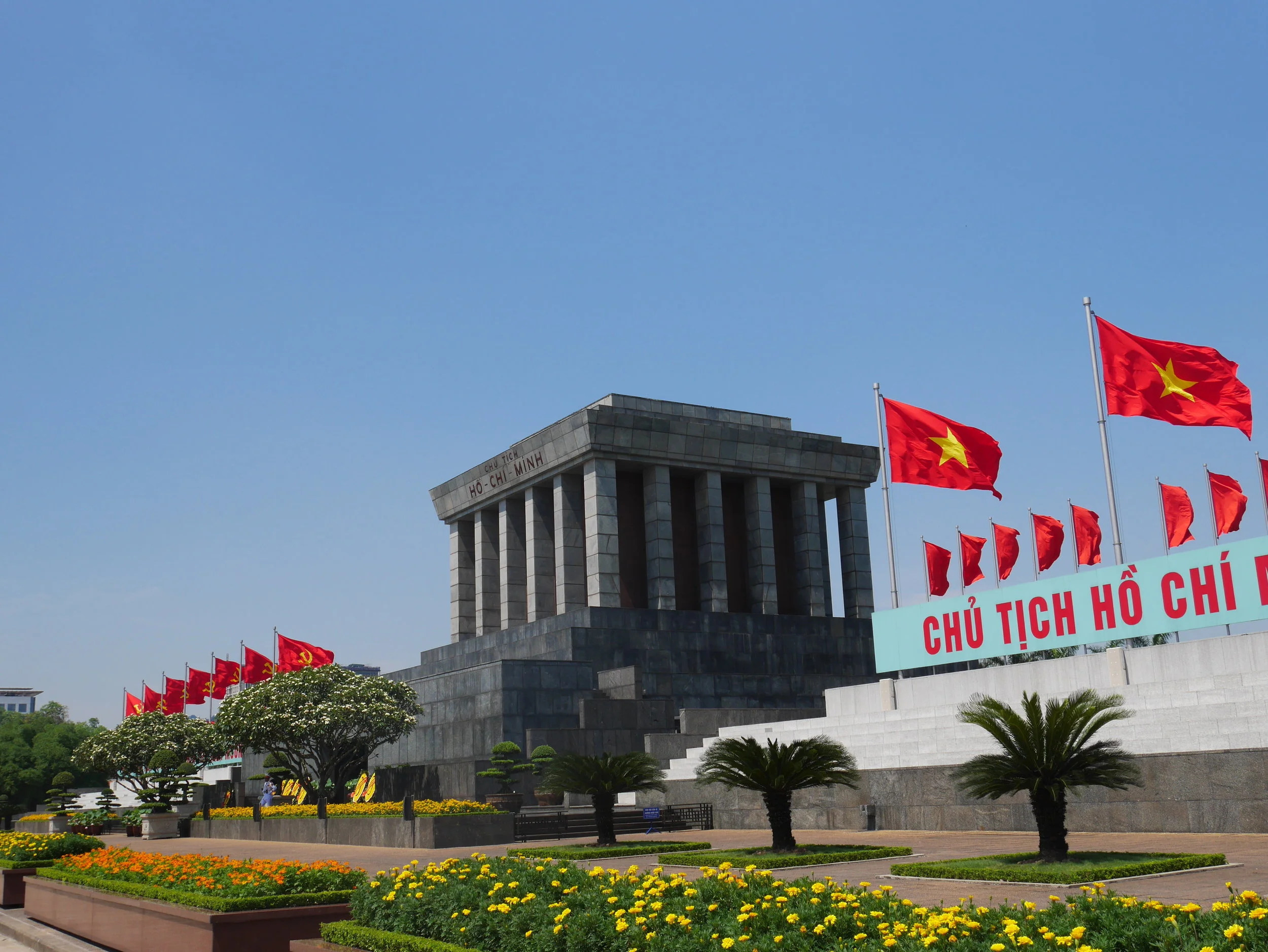
 Ho Chi Minh's Mausoleum
Ho Chi Minh’s Mausoleum

Who Was Ho Chi Minh?

Ho Chi Minh, or “Uncle Ho”, as he is commonly called, is the father of modern Vietnam. The scholar, poet, writer, and revolutionary was instrumental in leading Vietnamese victory against the French in the First Indochinese War and later rose to become president of North Vietnam during the Second Indochinese War (Vietnam War). As a revolutionary and Communist leader, Uncle Ho is revered as the father of modern unified Vietnam.

After his death, his body was preserved and is currently displayed in the Ho Chi Minh Mausoleum in Hanoi, like Lenin in Red Square. Though he lived modestly and simply, after his death Uncle Ho was given the Soviet treatment with entombment in this massive and impressive granite mausoleum.

 Ho Chi Minh Mausoleum, Hanoi
Ho Chi Minh Mausoleum, Hanoi

Visiting the Mausoleum

Proper dress is required when visiting the mausoleum, as if you were going to a temple. This means no sleeveless shirts and no shorts.

You should arrive early, as visiting hours are short, and the mausoleum is almost always crowded. Expect lines to be very long. It is advised to arrive by 7:00am to begin queuing.

Cameras are not allowed inside the mausoleum, and this includes mobile phones. You must leave all of your personal belongings with the guards outside, which you will collect upon exiting. Visitors move through the mausoleum at a reverent, but steady pace past the preserved body of the revolutionary hero.

 uniformed guards marching at the mausoleum
uniformed guards marching at the mausoleum

Location

Số 2 Hùng Vương, Điện Bàn, Ba Đình, Hanoi (it’s massive, you can’t miss it)

Admission

FREE!

Hours

Saturday    8–11:30AM
Sunday    8–11:30AM
Monday    8–11AM
Tuesday    8–11AM
Wednesday    8–11AM
Thursday    8–11AM
Friday    8–11AM

The Presidential Palace Complex

Just next to the mausoleum sits the Vietnamese Presidential Palace and the “Ho Chi Minh’s Vestige in the Presidential Palace Area” Historical Site. The leafy grounds of the Presidential Palace are open to visitors, and contain a number of fascinating relics of Uncle Ho’s life and work.

The yellow colonial-style Presidential Palace was once the residence of the French Governor-General of Indochina. Unused to lavish excess, when he became the leader of Vietnam, Uncle Ho opted not to live in the palace, but instead in a much smaller and simpler house that he had constructed nearby. Today, the palace is used for official government meetings.

 Vietnam's Presidential Palace
Vietnam’s Presidential Palace

Visitors are free to explore most of the grounds at their own pace. You can visit the small house where Ho Chi Minh lived and worked as president of Vietnam, and explore the beautiful and shady gardens where he liked to walk and meet guests.

 Uncle Ho in the garden
Uncle Ho in the garden

Next to a large fish pond sits Uncle Ho’s two-room wooden stilt house. The house displays Ho Chi Minh’s simple and modest lifestyle.

 Uncle Ho's  stilt house
Uncle Ho’s  stilt house

Location

1 Hoang Hoa Tham, Ba Dinh, Hanoi (Immediately adjacent to the mausoleum)

Admission

40,000d (about $2)

Hours

8-11am and 1:30-4pm

Ho Chi Minh Museum

Leaving through the exit of the Presidential Palace complex, you’ll arrive at the Ho Chi Minh Museum. The museum has exhibits, photographs, and artifacts from Ho Chi Minh’s life, but presented in a unique and artistic way.

 Ho Chi Minh Museum
Ho Chi Minh Museum

The museum shows Ho Chi Minh’s life through modern and symbolic exhibits. In one room, a large lotus flower is made out of artifacts recovered from wrecked American aircraft. In another, a large glass pyramid is enscribed with Uncle Ho’s words in various langauges. It’s difficult to describe, so you really should visit this museum and see for yourself!

 Statue of Ho Chi Minh inside the museum
Statue of Ho Chi Minh inside the museum

Location

19 Ngách 158/19 Ngọc Hà , Hanoi (next to the Presidential Palace)

Admission

40,000d (about $2)

Hours

Saturday    8AM–12PM, 2–4:30PM
Sunday    8AM–12PM, 2–4:30PM
Monday    8AM–12PM
Tuesday    8AM–12PM, 2–4:30PM
Wednesday    8AM–12PM, 2–4:30PM
Thursday    8AM–12PM, 2–4:30PM
Friday    8AM–12PM

Should You Book a One Day Tour to Hạ Long Bay?

Ha Long Bay

Ha Long Bay is one of Vietnam’s most popular destinations. Just a few hours away from Hanoi on the coast, thousands of limestone cliffs jut up from the sea like giant stone fangs. Ha Long Bay, meaning “The Bay of the Descending Dragon”, was declared a UNESCO World Heritage Site in 2000 because of the bay’s breathtaking natural beauty and amazing geographical features.

 a fishing boat in Ha Long Bay
a fishing boat in Ha Long Bay

When you are staying in Hanoi, you’ll see travel agencies on every corner selling day trip packages to Ha Long Bay. What are these tours like, and are they worth the money?

famous “Cockfight Rock” in Ha Long Bay

Package Tour

We booked a one-day package tour. You can find identical tours for sale at literally every guesthouse in Hanoi, and at every travel agency located on every corner of the Old Quarter. In short, don’t worry too much about shopping around; every package will be the same, and you can book them anywhere!

We were picked up at our hotel at 8:00am. Although we were told that it would be a three-hour drive from Hanoi to Ha Long, it ended up taking over five hours. The roads were in poor condition, and the traffic was heavy and slow. We arrived at the marina just past 1pm, and were led to our boat.

 Ha Long Bay Marina
Ha Long Bay Marina

Lunch

Before departing from the marina, we were served a family-style seafood lunch on board the boat. Maybe I was just starving because we hadn’t eaten all day, but the food tasted pretty good – especially the spring rolls! Lunch is included, but drinks, including water, cost extra.

Be sure to order a can of Ha Long Beer!

Vietnamese seafood lunch served “family style”

Boat Tour

After lunch, we cruised out into the bay. All of the passengers headed upstairs to the upper deck for some sun and the nice breeze.

 cruising in Ha Long Bay
cruising in Ha Long Bay

Kayaking at the Floating Village

After sailing around the bay, the boat made a stop at the floating village for kayaking. Kayaking costs a bit extra ($5), and you can row around the village and nearby cliffs.

 the yellow building is the schoolhouse
the yellow building is the schoolhouse

The people in this small fishing village spend nearly all their time in the water. There is even a small floating school that students kayak to and from every day for their lessons!

Hang Dau Go Cave

 walkway leading to the cave
walkway leading to the cave

Next, the boat anchored at one of the bay’s larger islands. All of the passengers disembarked and climbed the steep stone stairs up to the Hang Dau Go Cave.

 Hang Dau Go Cave
Hang Dau Go Cave

The boat picked us up at a dock at the cave’s exit, and we departed the island back to Ha Long about 45 minutes later. From there, we were ushered back to our bus for the return trip to Hanoi.

We were back in the Old Quarter around 8:30pm.

Cost

One Day Tour: $25-35

Overnight: $55-65

Day Tour or Overnight?

So is the trip worth it? Yes, although you will feel rushed and a bit exhausted afterwards. A few hours in the bay isn’t really enough time to thoroughly enjoy all the natural beauty, but a one-day tour makes sure to hit all of Ha Long Bay’s biggest highlights.

Ideally, spend a bit more money and book an overnight luxury cruise to enjoy the bay at a more lesurly pace.

A Secret Communist Bunker at an Ancient Palace – Tang Long Citadel, Hanoi

 Tang Long Citadel front gate
Tang Long Citadel front gate

Tang Long Citadel was the imperial palace of Vietnam’s Le Dynasty for hundreds of years. The citadel is now mostly in ruins, although some very impressive structures have been restored and archaeological research is ongoing. The citadel has been recognized as a UNESCO World Heritage Site.

Tang Long Citadel is fascinating for a number of reasons. You’ll enjoy your visit whether you are interested in Vietnamese culture, ancient history and archaeology, or Vietnam War-era military history. Beneath the ancient gates lies a secret – a 1960’s era secret underground bunker used by North Vietnamese generals during the “American War”!

 gatehouse atop the walls of the citadel
gatehouse atop the walls of the citadel

Only a few buildings of the citadel are left standing, and those are mostly fairly recent reconstructions. If you use your imagination, though, you can picture just how grand the palace must have been, and what a spectacle it would have been when the emperor rode in through the mammoth front gate.

 the Princess' Pavilion
the Princess’ Pavilion

Another building displays some artifacts recovered from the archaeological digs of the ancient palace. As a matter of fact, your entry ticket to the citadel is also good for visiting the archeological dig site just across the street! Be sure to visit both parts of the citadel in order to get the full experience! The dig site is just across the street from the citadel’s exit.

 archaeological artifacts recovered from the citadel
archaeological artifacts recovered from the citadel

There is a secret beneath the ancient wall of the citadel! Room D67 was opened to visitors for the first time ever in December 2017.

Built in 1965, D67 was the secret bunker and military headquarters of General Giap, commander of the North Vietnamese Army during the Vietnam/American War in the 1960s-70s.

 stairs leading down to Room D67, the military command bunker
stairs leading down to Room D67, the military command bunker

Climbing down steep stairs in a narrow passage beneath the ancient palace walls, the air grows heavy and cool. It’s dark, a little claustrophobic and a little creepy! Soon, you’ll pass thick solid metal doors and enter the tiny secret underground command bunker.

 military meeting room at D67
military meeting room at D67

The bunker is just a few connected rooms – cramped, practical, and full of important communications equipment. The walls of the bunker are thick, meant to withstand even chemical or nuclear strikes. It’s fascinating, especially if you are interested in modern history.

 communications equiptment at D67
communications equiptment at D67

Hanoi Imperial Citadel

Location:

19c P Hoang Dieu (near the Military History Museum)

Ticket: 

30,000d ($1.50) – includes entry to the Imperial Citadel, Room D67, and the archaeological excavation site across the street

Hoan Kiem Lake and the Jade Mountain Pagoda – the heart of Hanoi’s Old Quarter

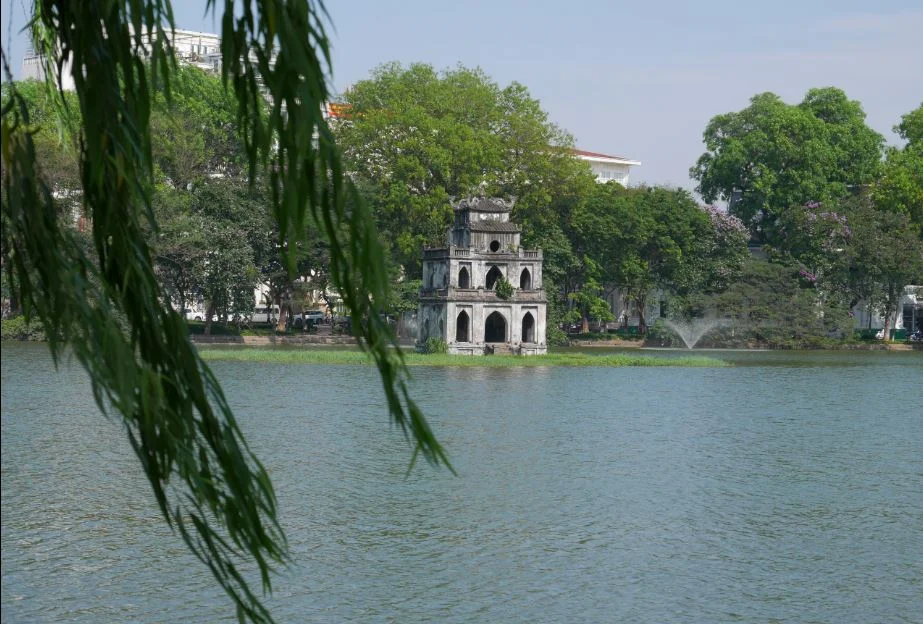
 The legendary Turtle Tower on Hoan Kiem Lake
The legendary Turtle Tower on Hoan Kiem Lake

If you are visiting Hanoi’s Old Quarter, one of the first sights you’ll see is Hoan Kiem Lake, the “Lake of the Returned Sword”. The small lake is the heart of Hanoi’s historical old town, and is steeped in ancient myth and legend. Ngoc Son Temple, the Temple of the Jade Mountain, sits on a small island within the lake. Both the lake and the temple are picturesque historical and cultural sights that you must see when visiting Hanoi.

 Ngoc Son - the Temple of the Jade Mountain
Ngoc Son – the Temple of the Jade Mountain

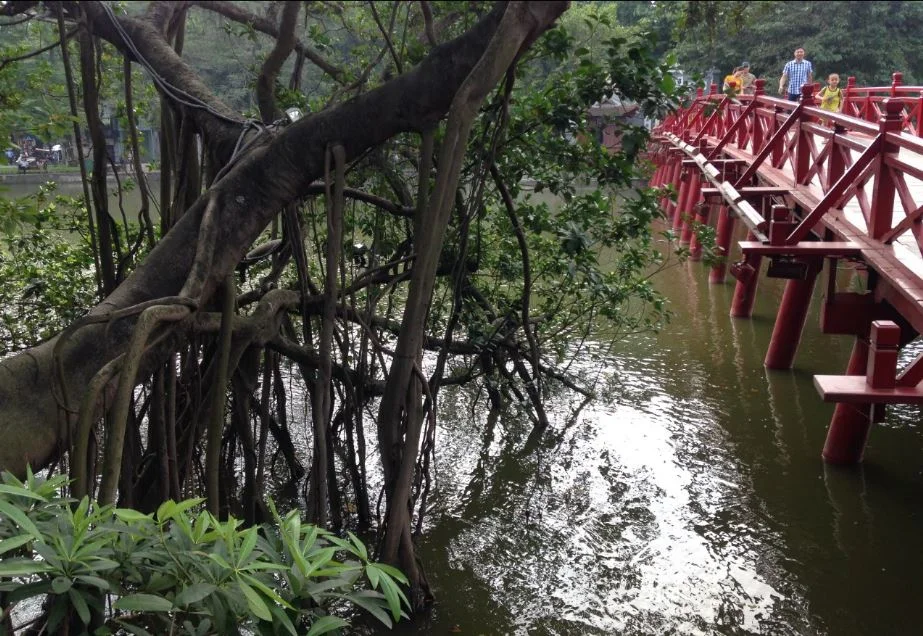
Built in 1865, Ngoc Son Temple is a Confucian and Taoist temple on Hoan Kiem Lake. Visitors to the temple must cross the beautiful and historic red bridge to Jade Island. It’s a beautiful and picturesque spot, and very popular for taking photos!

the famous “Morning Sunlight Bridge” to the temple

There is a small entrance fee to enter the temple, which goes towards upkeep and maintenance.

Ticket: 30,000d ($1.50)

Student (including ISIC card): 15,000d ($0.75)

 crossing the lake on the red bridge
crossing the lake on the red bridge

Ngoc Sen is a dual Taoist and Confucian temple. There are shrines inside the main temple hall to the Taoist deities and philosophers, and braziers for burning joss paper and ghost money.

 Ngoc Son Temple
Ngoc Son Temple

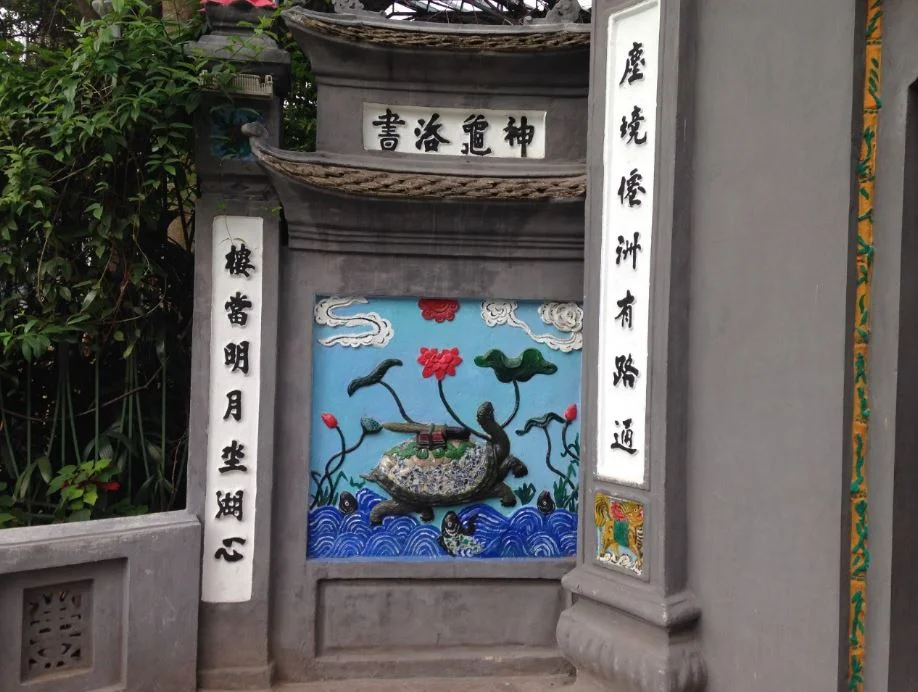
There is a very famous Vietnamese legend about Hoan Kiem Lake. 15th century Vietnamese emperor Le Loi was given a magical sword. He used this sword to fight and vanquish the invading Chinese army. After the war, he rowed out on the lake, and returned the sword to the Golden Turtle God, who took it back under the water. The turtle is one of Vietnam’s “Four Sacred Animals”, and represents knowledge, longevity, and wisdom. Today, the turtle and the sword is a symbol of Hanoi, and you will see the iconography all over the city,

 The Turtle and the Sword
The Turtle and the Sword

The turtles aren’t just a myth! There is even a stuffed Hoan Kiem turtle on display inside the temple. Although the last known Hoan Kiem turtle died in 2016, who knows if the turtle from the legend is still waiting under the water with his magical sword?

 one of the last of the legendary turtles
one of the last of the legendary turtles

Spend a relaxing afternoon sitting by the lake. It’s a beautiful and calm spot in the midst of the chaos of Hanoi! In the center of the lake is the Turtle Tower, which is dedicated to the Golden Turtle God of legend. Although you can’t cross the water to the historic tower, it is a beautiful sight for taking photos, especially at night, when the tower is lit up with golden light.

 The Turtle Tower
The Turtle Tower

There are many shops and cafes on the lake shore. Order a famous Vietnamese iced coffee and sit by the lake enjoying the view. If you wake up early enough, join the old folks practicing Tai Chi in the park or go for a jog on the path around the lake.

“Combo Obama” Bún Chả?? – Obama Was Here! (Hanoi, Vietnam)

In 2016 during his historic diplomatic visit to Vietnam, then US President Barack Obama was treated to dinner by chef and travel writer Anthony Bourdain.  Two years later, we follow in his footsteps and visit Bun Cha Huong Lien, the now-famous restaurant, and order the “Combo Obama”.

 Bún Chả Hương Liên
Bún Chả Hương Liên

Bún chả is a northern Vietnamese dish (a Hanoi specialty) consisting of grilled pork in a soup served with vermicelli noodles and fresh herbs. When you sit down to eat, the pork, noodles, and herbs are all served separately, and you mix them together in your bowl to create a delicious noodle soup.

 Bún Chả Hương Liên  - the shop where Obama ate in Hanoi, Vietnam
Bún Chả Hương Liên  – the shop where Obama ate in Hanoi, Vietnam

We had lunch at Bun Cha Huong Lien, a crowded three-story restaurant in Hanoi’s Old Quarter where Barack Obama and Anthony Bourdain dined together. Now, the menu that the two men ordered is served as the “Combo Obama”: a serving of bún chả, a fried seafood roll, and a cold bottle of Hanoi Beer.

 It was so busy inside the shop! All three floors were packed with hungry people.
It was so busy inside the shop! All three floors were packed with hungry people.

It was lunchtime, and the restaurant was so busy. We had been walking all day and were starving! Stepping into the narrow and crowded restaurant, we were led  up to the second floor to the only free table available. Service was fast! We ordered two “combos Obama”, and soon we were about to learn just why the restaurant is so popular! The meal was filling and delicious!

There are big framed pictures of Mr. Obama eating at the restaurant hanging on every wall, and the table, chairs, dining set, and silverware that he used are kept safe behind a glass display case!

 A super filling and delicious meal, washed down with a Hanoi Beer.
A super filling and delicious meal, washed down with a Hanoi Beer.

The restaurant is nothing fancy – plastic stools and metal tables, and the price hasn’t gone up since the restaurant became the most popular shop in the city. The whole meal, including bún chả, seafood roll, and a bottle of Hanoi beer,  cost only 85,000 dong (about $6).

Bún Chả Hương Liên  menu – try the “Combo Obama”!

The shop is just a short walk from Hoan Kiem Lake area, and it’s easy to find.

Address: 24 Lê Văn Hưu, Phan Chu Trinh, Hai Bà Trưng, Hà Nội

Official Facebook Page: https://www.facebook.com/bunchahuonglienobama/

The Temple of Literature in Hanoi: One of the World’s Oldest Universities

The Temple of Literature is Vietnam’s first university, and one of the oldest universities in the world. Founded in 1070, the Confucian temple was the home to the Vietnamese Imperial Academy, which trained court mandarins for important civil roles.

 a courtyard at the Temple of Literature
a courtyard at the Temple of Literature

Location:

The temple is one of Hnaoi’s biggest tourist sites, so it’s not hard to get to. It is located on Quoc Tu Giam Street, Dong Da District in Hanoi. It’s a 20-30 minute walk from Hoan Kiem Lake, and any taxi or cyclo driver will be able to take you there quickly.

Ticket Price:

Adult: 30,000d; Student (including ISIC card): 15,000d

Hours:

Open daily 8am-6pm.

 a gate tower at the Temple of Literature
a gate tower at the Temple of Literature

One of the most famous sites in the compound are the Stelae of Doctors, large stone tablets sitting on the back of carved turtles. Each one is carved with records of the imperial examinations, along with the names and information of the graduates.

 Stelae of Doctors
Stelae of Doctors

The turtle is the traditional Vietnamese symbol of wisdom and longevity.

 turtle stelae
turtle stelae

In the back of the complex is the main temple building, holding various historical artifacts and a Confucian shrine.

 Confucian shrine
Confucian shrine

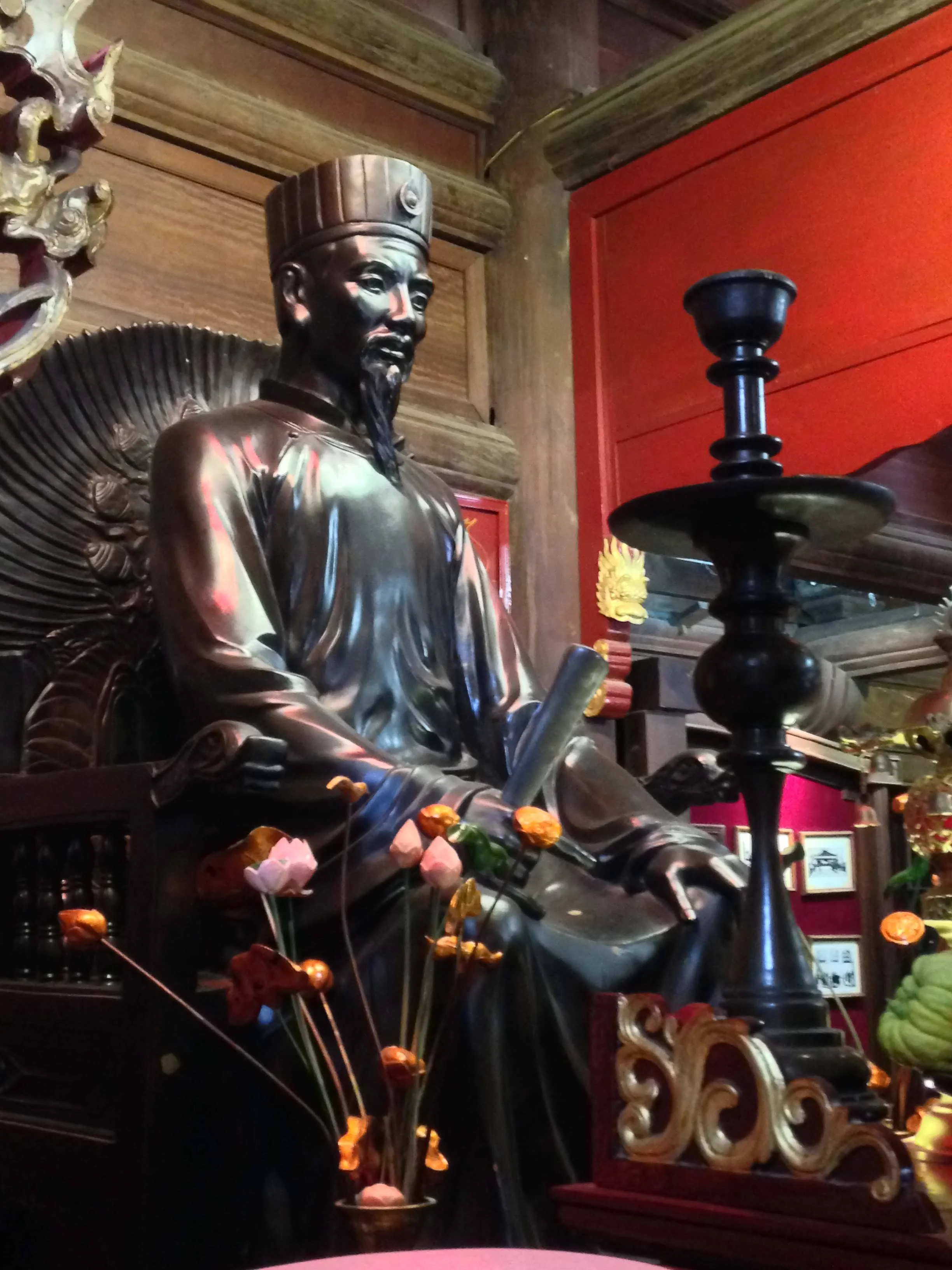
Inside are statues dedicated to important Imperial Vietnamese figures. The historical artifacts are fascinating, and include items such as the robes used by students at the Imperial Academy, ink brushes, and textbook carriers.

 a shrine inside the temple
a shrine inside the temple

If you only have a short time in Hanoi, you mustn’t miss the Temple of Literature. It’s one of the city’s most popular destinations for a reason. In just a short time you can learn a lot about ancient Vietnamese history and culture, especially if you rent an audio guide.

Egg Coffee: The Note Coffee in Hanoi, Vietnam

 Vietnamese Egg Coffee
Vietnamese Egg Coffee

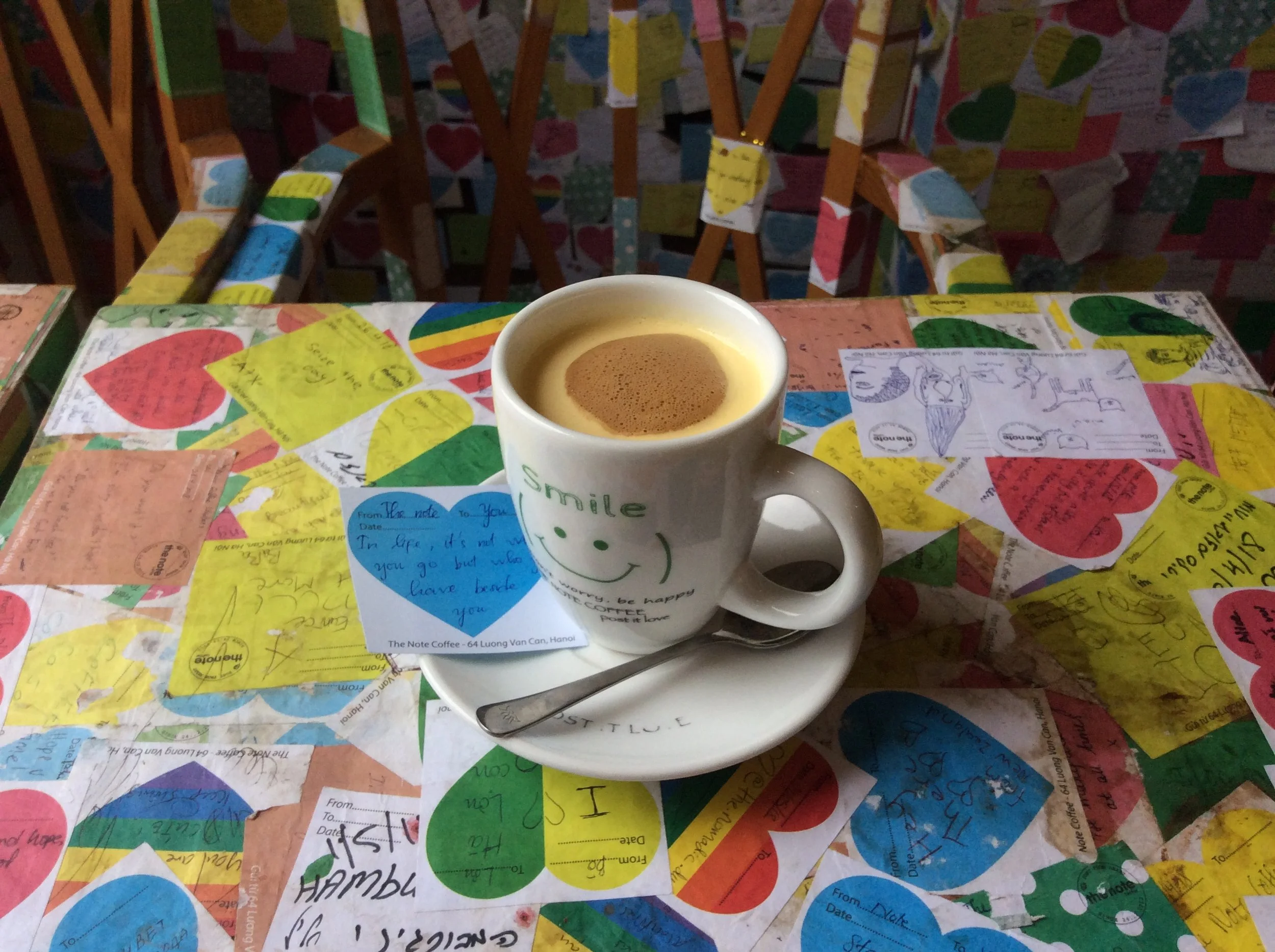
Egg Coffee is famous here in Vietnam. The idea of putting an egg in coffee sounds weird. It’s hard to admit that this cup of Vietnamese egg coffee made my day! This cup is very creamy, and the aroma of the coffee was almost like they had added vanilla to it. I couldn’t even tell that there was an egg in my mug. I just wanted to sip more and more! The cup was served with a little note from the employee and good vibes.

 interior of The Note Coffee
interior of The Note Coffee

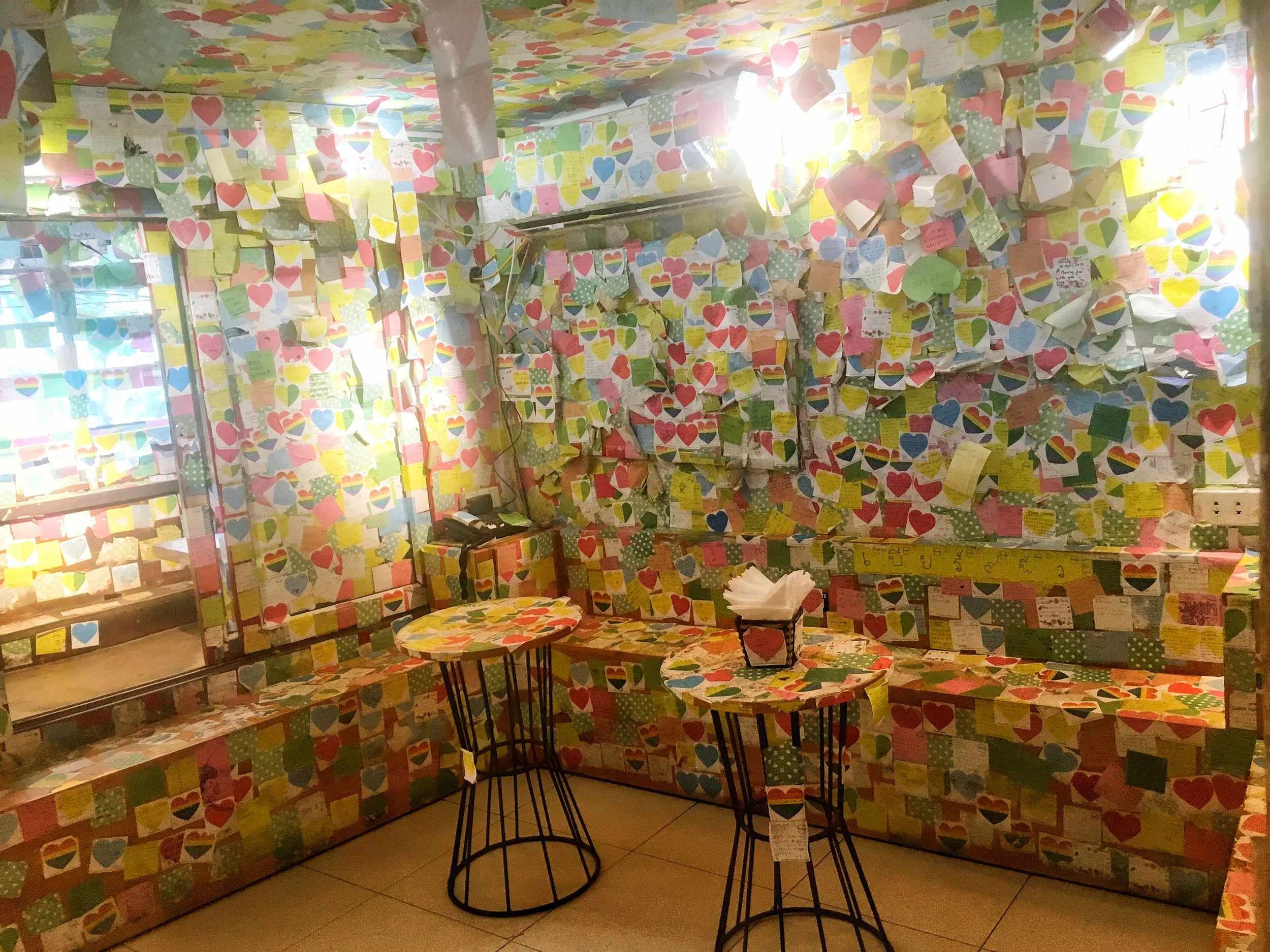
I’m at a very cute coffee shop called ‘The Note Coffee’. It’s a coffee shop that is fully decorated with post-its! Every post-it contains a little note from clients all around the world. The shop is very easy to locate, just at the corner of Hoan Kiem Lake.

The staff were so friendly! I was very impressed by the waitress that kept waving at us with a smile since before we even crossed the crazy street of Hanoi! The Note Coffee has 3 floors where you can sit and chill. I enjoyed looking out the window from the second floor, and seeing the crazy intersection with the beautiful lake in the background.

The price is good, even for a budget. This egg coffee is only around $3, and it is really filling. They also have other types of coffee and food too, although egg coffee is their specialty. I will have to go back and try more next time. And of course, I will have to get another Egg Coffee! 🙂

Songkran! – Comic # 30

Songkran, the Thai New Year, is a fun holiday! It’s a three-day festival in which people go crazy with a huge city-wide water fight! Songkran is a blast… for the first day or so.

By the third day, I usually experience a little “Songkran burnout”. Getting splashed with water by random kids on the street looses some of its fun after three days, especially if all you want to do is walk to 7-11 for a snack.

Long-term expats know to hole up in their condos with Netflix and a case of Singha Beer for a few days.

Still, it’s a fun time, and definitely something you shouldn’t miss if you’ll be in Thailand on April 13-15.

Happy Songkran!

Learn More:  What is Songkran?

What is Songkran?

It’s April, the hottest part of the year in Thailand, and time for Songkran, the Thai New Year!

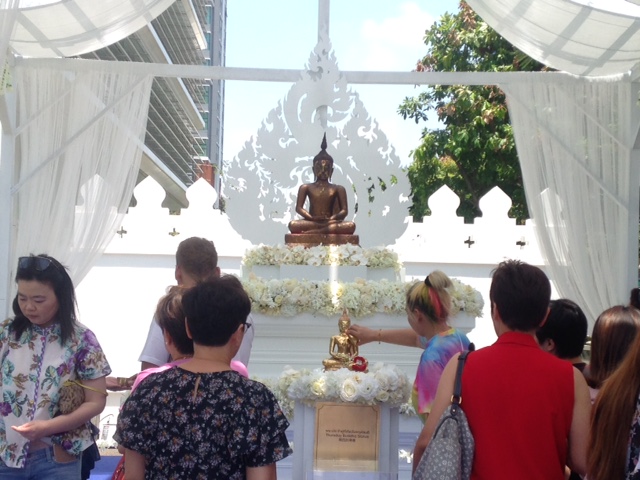
 These little shrines will be set up in public places, like the Subway station, an apartment's front office, or the supermarket (above) so that Buddhists can make merit for Songkran by washing the statue with holy water
These little shrines will be set up in public places, like the Subway station, an apartment’s front office, or the supermarket (above) so that Buddhists can make merit for Songkran by washing the statue with holy water

What is Songkran?

Songkran, a three-day festival falling on April 13, 14, and 15 every year, is the traditional Thai New Year.

How do you celebrate Songkran?

Well, first you’ll need a Songkran Shirt! You’ll notice that nearly everybody in Bangkok will be wearing a brightly-colored floral Hawaiian-style “aloha shirt” during the festival. This year, the Thai government has also been encouraging people to wear traditional Thai silk outfits during Songkran.

Traditionally, Songkran is a reverent holiday. People will return to their hometowns to visit their families. Children will wash their parents hands with scented water, and Buddhists will wash Buddha statues with holy water.

 washing a Buddha statue before playing the Songkran Festival at King Power Mall, Soi Rangnam, Bangkok
washing a Buddha statue before playing the Songkran Festival at King Power Mall, Soi Rangnam, Bangkok

Nowadays,  thought, the festival has evolved into something bigger and wilder.

The Water Fight

Some time in the last couple decades, Songkran has changed. The three-day festival has grown into a huge city-wide water fight! Certain areas of the city are closed off for revelers to throw buckets of water and shoot each other with water guns. It’s a lot of fun! Pick up a waterproof phone bag and a water gun (available almost literally everywhere in the weeks leading up to Songkran) and join in the fun!

 Wild Songkran party at Siam Square, Bangkok. Grab a water gun and join in the fun!
Wild Songkran party at Siam Square, Bangkok. Grab a water gun and join in the fun!

Don’t be surprised if you get dragged into celebrating, even if you are just out to head on an errand! Nobody is safe on Songkran. People will stand on street corners soaking anyone who passes by, and smearing their faces with aromatic cooling powder. Embrace the party, don’t take yourself too seriously, and have fun!

 a procession with a Buddha statue passing through the Songkran party at Siam Square, Bangkok
a procession with a Buddha statue passing through the Songkran party at Siam Square, Bangkok

Where to Play Songkran in Bangkok

There are several big street parties throughout Bangkok.

Siam Square has one of the most famous parties, and is the safest and most family-friendly. The area is protected from traffic and patrolled by staff and police. It’s a much more traditional party and more Thai than the ones at Khao San Road or Si Lom. After all, why would you travel halfway around the world to celebrate a traditional Thai holiday with a bunch of Americans?

Stay Safe!

The Songkran Festival is a part of Thailand’s infamous “Seven Deadly Days”. More road accidents happen during Songkran than during any other part of the year, and the Thai government keeps daily statistics about the number of road fatalities during the festival in a somewhat morbid but necessary effort to remind people to be safe.

Careless revelers might throw a bucket of water at a passing motorbike, who might swerve and cause a huge road collision. Drunk driving is also a big problem during the festival.

Stay safe! Stay off the road as much as you can, and avoid driving. Especially avoid driving or taking a bus across the country, as the highways can be a bit dangerous during this time.

Be aware of your personal belongings, and keep your phone protected in a waterproof phone bag around your neck.

And have fun!

Happy Songkran!

 you'll find water guns, plastic waterproof phone cases, and buckets available for sale at any convenience store in the days leading up to Songkran
you’ll find water guns, plastic waterproof phone cases, and buckets available for sale at any convenience store in the days leading up to Songkran

Visiting Osaka Castle: What You Need to Know

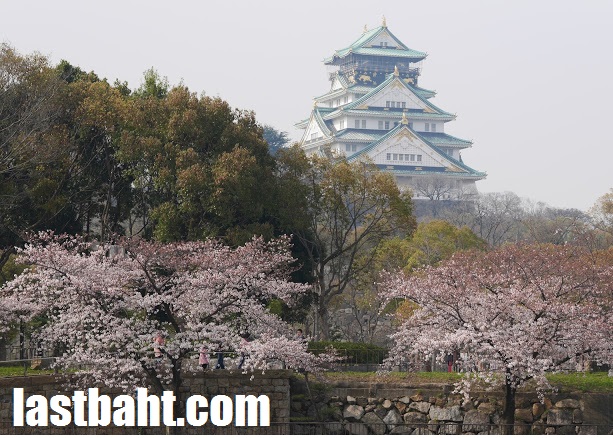
大阪城 – Ōsaka-jō (Osaka Castle)

Osaka Castle is one of the most iconic sites in Japan. This sixteenth century fortress is one of Japan’s most iconic symbols. With beautiful gardens and an incredibly fascinating museum full of artifacts, art, and weapons from the

Getting to Osaka Castle

Osaka Castle sits in the middle of the beautiful Osaka Castle Park, surrounded by high stone walls and a wide moat. The park is especially beautiful in the early spring and autumn when the cherry blossoms and red foliage are at their most stunning.

The most convenient metro station is Osakajo-Koen Station, which is just outside the castle.

Admission and Hours of Osaka Castle Museum

Admission to the castle and museum costs 600 Yen ($6), which should be affordable for even budget travelers.

The castle museum is open from 9:00-17:00, and the castle is illuminated at night until 23:00.

What to do at Osaka Castle

  • Explore the beautiful Osaka Castle Park
  • Visit the Osaka Castle Museum to learn about the history and culture of Japan’s Shogunate Period
  • (Springtime) view the cherry blossoms that bloom all around the castle
  • Have some food (or ice cream) at the small market surrounding the castle
Design a site like this with WordPress.com
Get started