Ghost Money: What is Joss Paper?

During the Hungry Ghost Festival, it’s common to see small, makeshift alters set up on the curbside outside of homes, and people burning money and paper models of various luxury goods. This is “ghost money”, also known as “joss paper”,  jīnzhǐ  金纸; (gold paper), or  míng bì 冥币 (shade money).

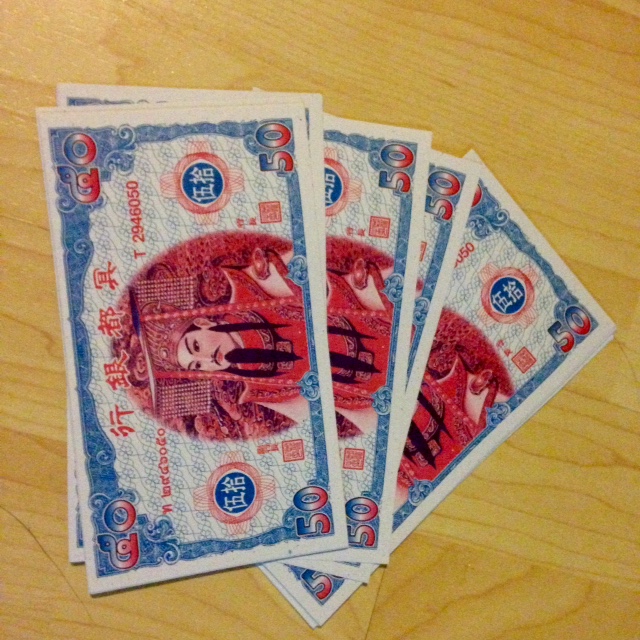
front and back of a Thai 50 baht ghost money note

Nowadays, ghost money can come in many forms. Besides banknotes, people can burn small paper coins, and even gold ingots made out of paper! Traditional Chinese beliefs teach that burning ghost money is the way to send it to one’s deceased ancestors in the afterlife.

Chinese joss paper ghost money luxury goods iphone

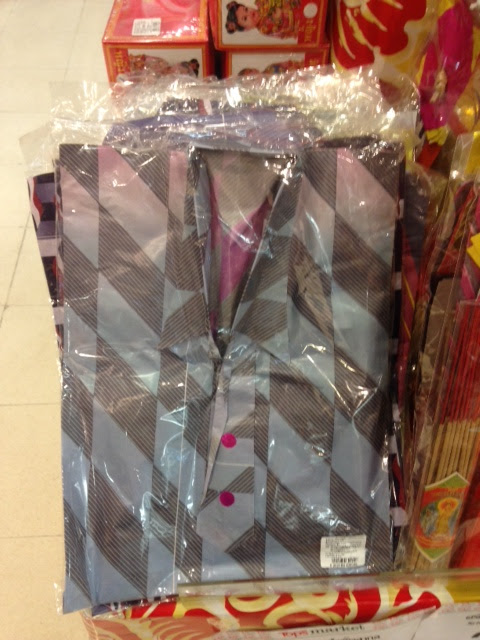
You can even buy clothing!

a Chinese joss paper suit for the Hungry Ghost Festival

People burn joss paper during the Hungry Ghost Festival as gifts for their ancestors and as offerings for ghosts and gods.

11 Taboos during the Hungry Ghost Festival

Pixabay

 How to avoid a haunting on the Hungry Ghost Festival

The Hungry Ghost Festival, Zhong Yuan Jie ( 中元节), falls on the seventh month of the lunar calendar, and is often compared to Chinese Halloween. (Read more about the Hungry Ghost Festival HERE). On this night, it’s said that spirits and ghosts are allowed to return to the realm of the living. Not all of these ghosts are friendly. Hungry ghosts, the spirits of those who did not have a proper funeral or who have been forgotten, return to the earth seeking food and entertainment to satisfy their insatiable cravings. Some of these spirits are tricksters, and some are believed to be downright malicious! People who keep the Hungry Ghost Festival traditionally follow a number of taboos to protect themselves from angering these ghosts. Here’s what you should NOT do tonight:

  1. Stay away from pools, lakes, and ponds This tradition says that ghosts try to take advantage of any opportunity to be reincarnated, but that is a sort of “waiting list” to come back to Earth. Someone swimming, especially alone or at night, is too good of a target for them to move things up a bit.
  2. Don’t whistle or make loud noises at night Stay relatively quiet to avoid attracting any sort of ghostly attention.
  3. Stay home after the sun goes down It’s recommended not to stay out too long after dark. Instead, go home and join in the feast with your family!
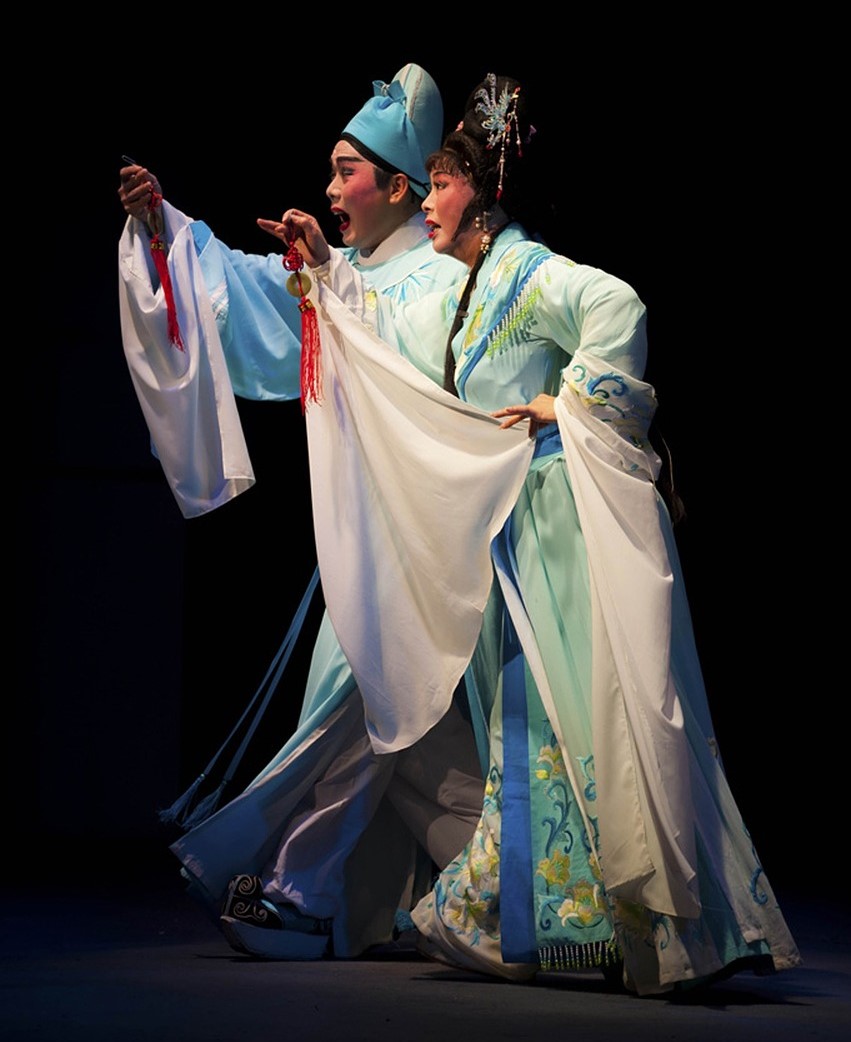
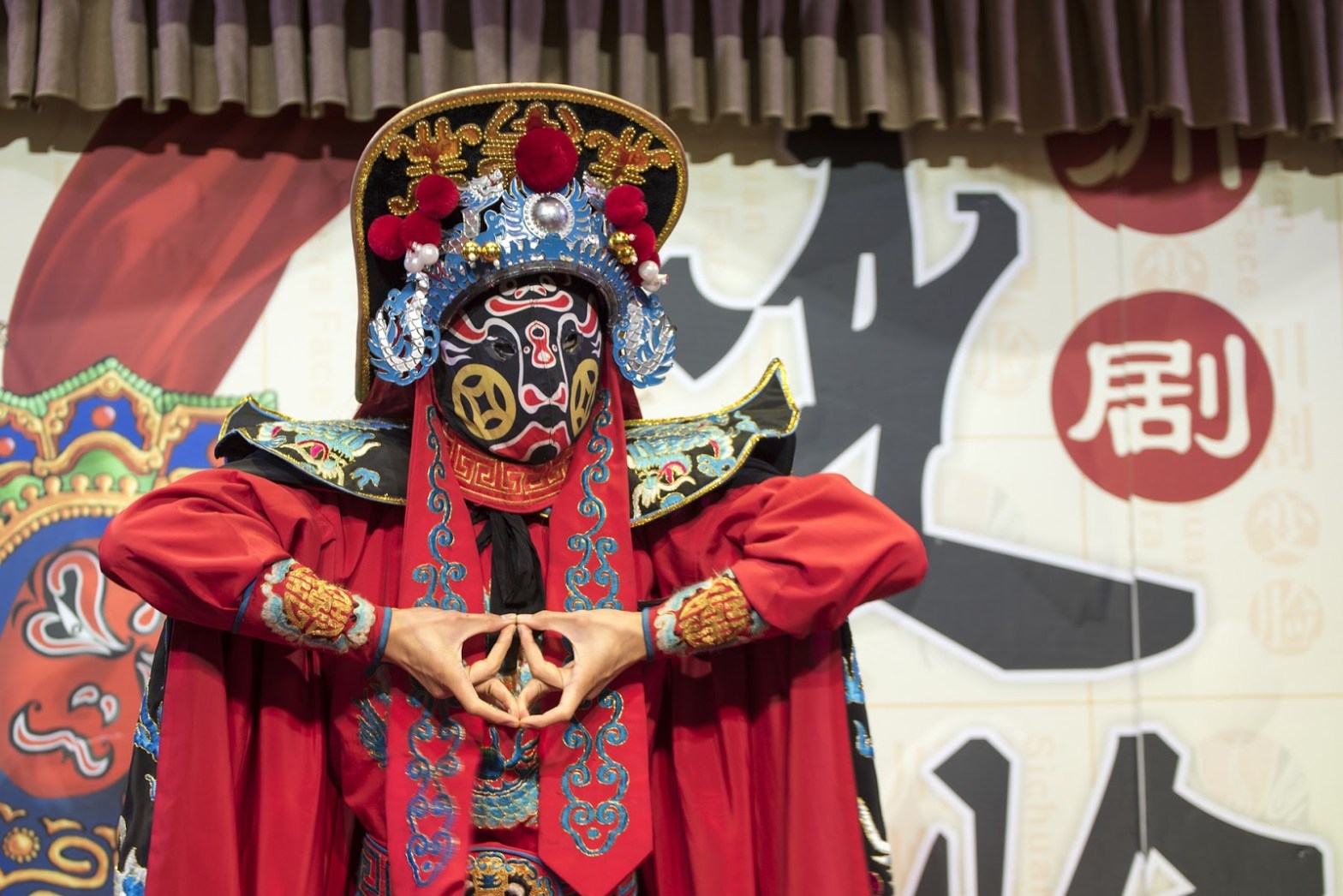
  4. Do not sit in the front row at the Chinese opera It’s a tradition to watch Chinese opera performances during the Hungry Ghost Festival, but you’ll notice that the front row of seats will always be left empty. These seats are reserved for ghostly visitors who might stop by to watch the performance.
  5. Don’t turn your head to look over your shoulder If you feel someone tap you on the shoulder, don’t look back! Who knows what you might see?
  6. Don’t make jokes about ghosts The ghosts who come back especially do not like to be mocked!
  7. Don’t step on or over an offering or alter, and don’t kick the ashes How would you like it if somebody trampled all over your feast?
  8. Don’t pick up any strange coins or money you might come across It could be a trap! The ghosts will try all sorts of tricks to get into your home.
  9. Do not curse  The ghosts could be offended.
  10. Don’t wear red or black clothing  Apparently, these are ghostly colors. It’s said that ghosts might mistake people wearing red or black for one of their own! It’s best to avoid those colors on Ghost Night.
  11. Don’t be afraid!  You don’t have to really believe in ghosts to celebrate the Hungry Ghost Festival. After all, it’s really a time for family and remembrance. Chinese families often have a big feast and reflect on their ancestors and loved ones. Most of all, have fun.

The Hungry Ghost Festival – Zhong Yuan Jie – 中元节

Zhong Yuan Jie (中元节), the Hungry Ghost Festival, is often compared to Chinese Halloween. Falling on the fifteenth night of the seventh lunar month, it is believed that on this night the gates of the afterlife are opened for spirits and ghosts to return to the world of the living.

Pixabay

What is the Hungry Ghost Festival?

The Hungry Ghost Festival is quite similar to traditional Western beliefs regarding Halloween: that is, on “Ghost Night” (the 15th night of the 7th lunar month), the gates to the afterlife are opened, and ghosts are allowed to visit and wander the Earth.

Hungry ghosts, the spirits of those who were not given the proper funeral rites, are released to wander the earth seeking food and entertainment to sate their insatiable cravings. They feast greedily at shrines set up on curbside outside of peoples homes.

This Festival is also a time to remember loved ones and ancestors who have departed, as it’s believed that their souls may come back to visit their families during this time.

Where is the Hungry Ghost Festival celebrated?

Originally a Chinese Taoist tradition, forms of the Hungry Ghost Festival have spread throughout Asia, and is an important festival for families of Chinese descent all around the world. In Bangkok, which has a large Chinese-Thai population, it’s quite common to see small curbside shrines and offerings during Ghost Month.

What do you do on Ghost Night?

Pixabay

Ghost Night is a time to spend with families. Traditionally, families prepare a feast (often vegetarian), and remember their ancestors and loved ones who have died. If visited by a butterfly, cricket, or other rare or beautiful insect, it is believed that it is the spirit of a loved one who has come by to visit.

Not all ghosts are friendly, however, and an important question is ‘what should you NOT do?’. There are a number of traditions that people follow on Ghost Night to protect themselves from tricky or vengeful spirits and ghosts. These traditional taboos are in place to protect people from the hungry ghosts who wander the earth

SEE MORE: 11 Taboos During the Hungry Ghost Festival

SEE MORE: Ghost Money: What is Joss Paper?

In 2017, the Hungry Ghost Festival falls on the 5th of September.

In 2018, it will fall on the 25th of August.

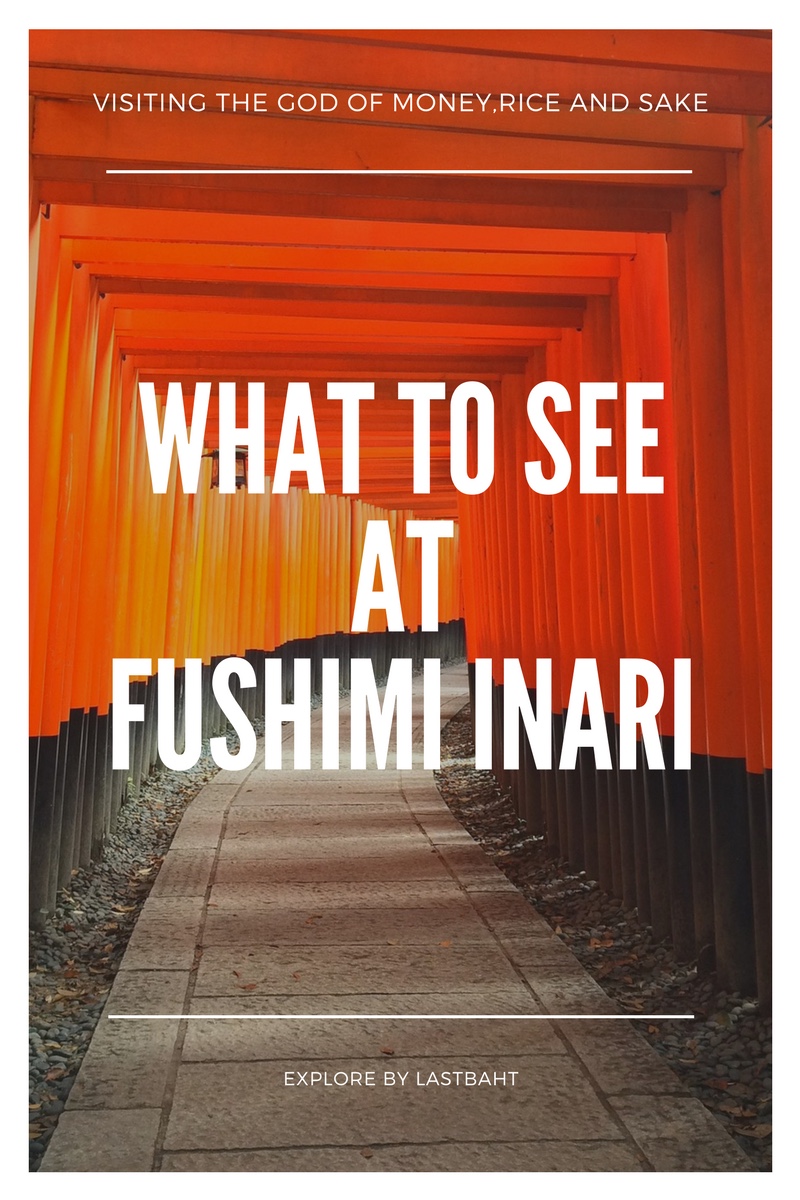
What to See at Fushimi Inari 伏見稲荷大社

a bright red shrine at fushimi inari in Kyoto, Japan

Visiting the god of sake

The best part of Fushimi Inari is that it is free to visit! The mountain is dedicated to the god Inari, the god of rice, sake, and money. It’s a sacred site (and a very popular place for selfies!) and the paths up the mountain are lined with the red torii gates marking a Shinto shrine. The gates represent the separation of the sacred from the earthly.

a small shrine with fox statues at fushimi inari in Kyoto, Japan

What does the fox say?

The fox is the symbol of the god Inari, and is believed to be the god’s messenger. Along the way, you’ll pass hundreds of statues of foxes wearing the red cloths of the shrine. The fox is also the symbol of the shrine, and there are plenty of fox-themed souvenirs to buy along the way.

black kanji characters on the red torii gates at fushimi inari in Kyoto, Japan

Even though Fushimi Inari is one of the busiest and most popular places to visit in Kyoto, it doesn’t feel touristy at all. Sure, it’s a little crowded around the main shrine, but once you begin the walk up the mountain, the crowds will fall behind and you’ll be able to really enjoy the peaceful atmosphere of the shrine. There is no entrance fee or opening hours. It’s a public place for meditation and enjoying the beauty of nature.

Kyoto Japan: A Short Guide

Videos featuring Fushimi Inari

Cold in Kyoto

Beer and Ice Cream

“Oishi” Means “Delicious

Top Sites in Historic Melaka, Malaysia

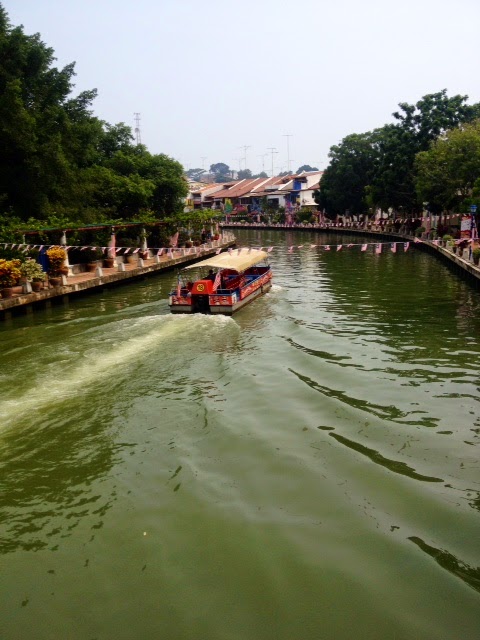
a sightseeing river boat cruises slowly along the green waters of a river in Malacca (Melaka) Malaysia

If you are short on time in Melaka, or just want to really get an excellent feel of the old parts of the city, a tour along the river is the best way to go. Afterwards, visit one of the cafes or restaurants along the atmospheric river walk for a cup of coffee or a beer and watch the boats cruise past.

Church of St. Francis Xavier

The Gothic-style Church of St. Francis Xavier is named after Melaka’s most famous priest, the founder of the Society of Jesus (Jesuits) who spent quite a bit of time in Melaka. The namesake of Pope Francis is called the “Apostle of the East”. Constructed in 1856, the Church of St. Francis Xavier is the center of Roman Catholicism in the city, and free to visit and look around.

http://stfrancisxaviermelaka.blogspot.com/

The church is open to visitors. It’s cool, quiet, and peaceful inside. Many people come in to pray or to sit and reflect in the quiet sanctuary.

red painted church in Melaka, Malaysia

The Stadhus, the administrative center of Dutch colonialism in Melaka, was built in 1650, making it the oldest remaining Dutch building in all of Asia!

statues of saints outside the red church in Malacca Malaysia

Statue of St. Francis Xavier and the Ruins of St. Paul’s

Neither the Church of St. Francis Xavier nor Christ Church however are the most important church in town. That honor goes to, despite being a ruin, the Church of Saint Paul. Built in 1521, St. Paul’s served as the home base for St. Francis Xavier himself as he undertook his missions across Asia. St. Francis was buried at the church after his death in 1552 before his body was moved to Goa, India. At this time, the bones of St. Francis’ right hand were removed for the creation of a relic.

St. Paul's church ruins stone walls no roof open sky sun behind clouds on hill in Malacca Malaysia

Although the church is now an empty ruin, there is more to see on the hill. The church’s historic graveyard is open to visitors, and is worth exploring and looking around.

Independence Memorial

Another site worth visiting is the Independence Memorial, a free museum detailing Malaysia’s independence and unification. Malaysia is a federation made up of thirteen states or sultanates and ruled by a king elected from among the Malaysian sultans. The sultanates are ruled by hereditary sultans, and the states, where the monarchy was abolished by the colonial rulers, have governors. Modern Malaysia was formed in 1963 after gaining independence from the United Kingdom.

wooden malaysian style palace of the Sultan of Malacca (Melaka), Malaysia

After visiting, explore the “Forbidden Gardens” that surround the old wooden palace.

Cheng Hoong Teng Temple

Malaysia is a melting pot of people from all over the world. One of the largest ethnic communities in the country are the Chinese-Malay, who first arrived in the country hundreds of years ago as traders. The Cheng Hoong Teng Temple (“Temple of the Green Cloud”) dates back to the 16th century, though the building has been rebuilt and restored a few times since.

Singapore and Kuala Lumpur.

3 Amazing Temples in Pattaya

several beautiful islands in the Gulf of Thailand and offering a number of new family-friendly attractions, Pattaya is also home to some very unique and beautiful temples. Visit these three amazing temples to discover the sacred side of Pattaya City.

Big Buddhas in Hong Kong or Phuket, Pattaya’s Wat Phra Yai (Big Buddha Temple) is a lovely place to visit. Sitting on a hill overlooking the city and the sea, the temple has a quiet and peaceful atmosphere, cool breezes, and great views.

golden Buddha statue in Pattaya, Thailand

This temple is a fairly popular spot. Besides the great views over the bay, it’s also a good place to receive a blessing from a monk.

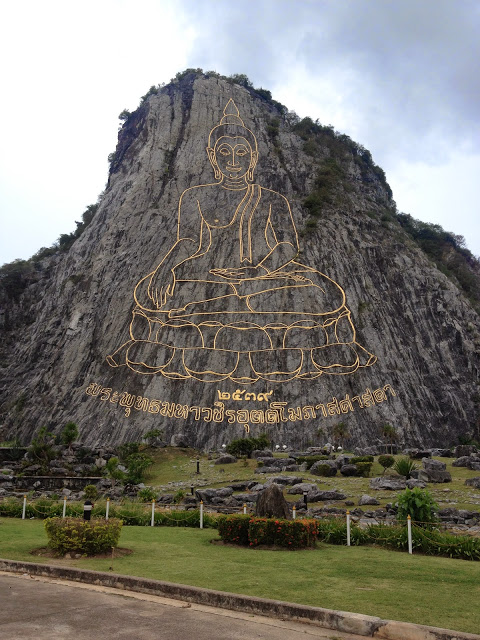
a golden Buddha image carved into the side of a mountain in Pattaya, Thailand

The Laser Buddha at Buddha Mountain was designed in 1996 to celebrate the fiftieth anniversary of the ascension of Thailand’s King Bhumipohl to the throne.

wooden temple on the beach in Pattaya, Thailand

Admission is 500 baht, and it goes towards the constant restoration and upkeep of this hand-carved wooden temple. The Sanctuary of Truth is made entirely out of teak wood without the use of even one metal nail! Dozens of craftsmen work constantly to improve and restore the temple.

a hand-carved wooden statue of the Chinese goddess Guanyin at a wooden temple in Pattaya, Thailand

The Sanctuary of Truth is divided into four wings, each representing an aspect of southeast Asian spirituality. The wings represent Cambodia, China, India, and Thailand respectively. Construction began in the 1980s, but isn’t expected to be finished until sometime in the 2050s, although it is complete enough to enter and look around. Tours are required, and all visitors must wear hardhats for protection at all times.

See also: Koh Larn

3 Amazing Temples in Phuket

a half-buried golden Buddha head and torso at Wat Prathong, Phuket, Thailand

Wat Chalong

Wat Chalong is the most important temple on Phuket Island. An intricate and beautiful three-story chedi holds a number of important Buddhist holy relics on each floor. Admission is free, and visitors can climb to the top of the chedi for amazing views over the temple complex.

green hills of Phuket Island, Thailand from Wat Chalong Buddhist Temple

Wat Chalong is surrounded by beautiful green hills and jungle, and the views are amazing! The temple itself is a fairly large complex, but the square golden Chedi rising up high over the compound is the main attraction to see.

Phuket Big Buddha

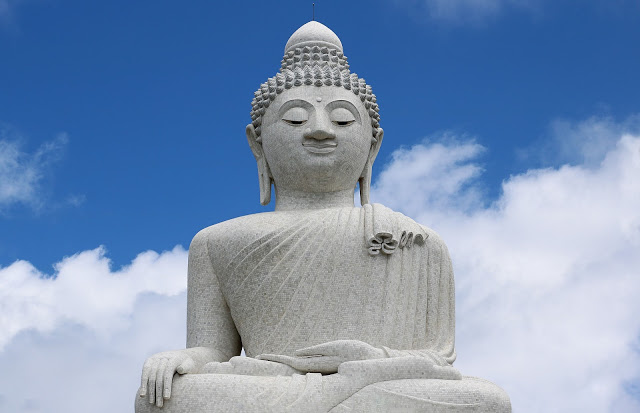
Sitting on a hill overlooking the sea is the Phuket Big Buddha, the island’s most important and impressive holy site.

Pixabay

The Big Buddha is one of the most important “don’t miss” sites on the island! Visit the Big Buddha to pray for luck, receive a blessing, and see some of the most amazing views of the island.

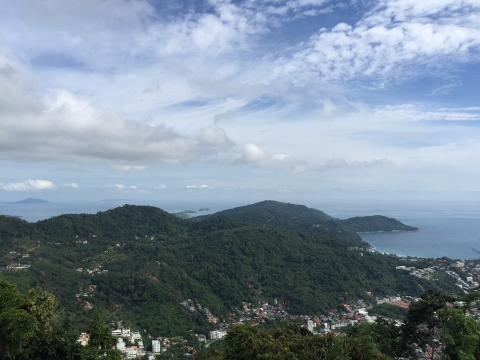
view of green hills, blue sea, and blue sky of Phuket Island, Thailand

Of course, there’s plenty to do in Phuket that we didn’t mention here. Let us know about your favorite sites and attractions on the island in a comment below!

Day Trips to Indonesia from Singapore

a Sindo ferry sails from Singapore to Indonesia

Getting to Indonesia from Singapore

Ferries depart from Tanah Mera Ferry Terminal in Singapore several times a day. A return ticket to Pulau Bintan costs S$50. If you don’t want to spend the night in Indonesia, make sure that you book your return ticket from Singapore to avoid getting stuck! The trip takes 1-1.5 hours, and the ferries are comfortable and air-conditioned.

Pulau Bintan is going to be your base from exploring a few unique and interesting Indonesian islands on your day trip.

NOTE: You should change some Singapore or US dollars into Indonesian rupiah before leaving Singapore to avoid hassle once you arrive in Pulau Bintan.

Visas

Citizens of nearly all countries can enter Indonesia visa-free or with a visa-upon-arrival. 30-day visas-on-arrival costs $35 USD. Make sure to have cash in USD, and the process is very quick and easy.

Check with Indonesian immigration before arrival to make sure that you qualify.

Pulau Bintan 

The ferry arrives at Pulau Bintan, the larger island in the area. Visitors will go through immigration at the docks. Visa secured, pick up a map at the nearby tourist office. There are some very nice resorts on the island, but for a day trip, it’s advised to hop one of the local boats to either (or both) of the nearby smaller islands for a more cultural and exciting adventure.

Pulau Penyengat

“Wasp Island” is a lot more pleasant than its name would suggest! Take one of the many wooden local boats for 7000Rp from the docks on Pulau Bintan for the short 15-minute journey to Pulau Penyengat. Upon arrival, you’ll immediately notice how different this island is! The green jungles and brightly-colored buildings make the small island feel cheerful and inviting.

<img src="https://lbconvert.travel.blog/wp-content/uploads/2019/08/f8f1f-img.jpg km across.

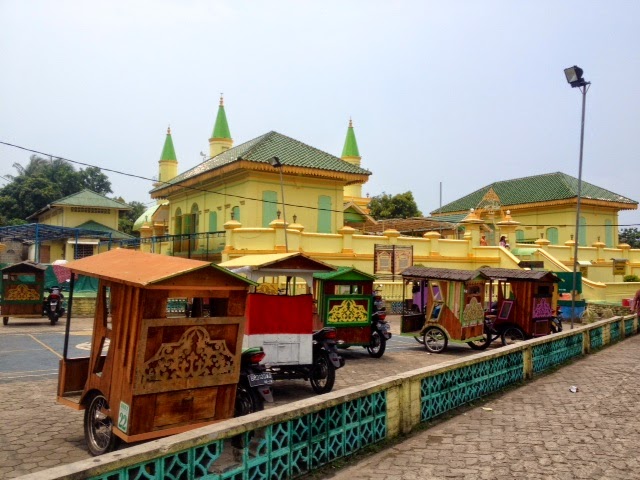
the bright yellow roayl palace of Raja Ali on Penyengat Island, Indonesia

You will also come across the ruins of an old 18th century stone fort, built by the Sultan to protect the island against colonial Dutch invaders built into the jungle hills looking out to the sea. It’s a quiet and peaceful place to explore.

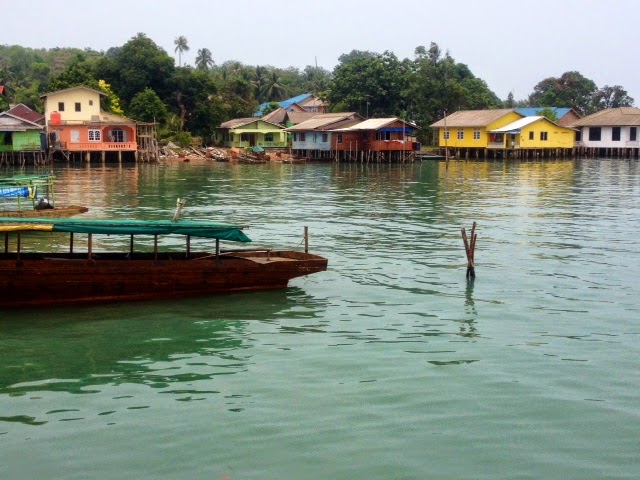
a fishing village on stilts on the Indonesian Island of Pulau Senggarang

This village is quiet and peaceful, and is the place to come to visit Buddhist temples and explore some Chinese-Indonesian culture. Just off the docks on the mainland, you’ll find a few bright red Chinese temples and shrines. Some Taoist shrines are dedicated to Marco, the god of the sea, who is believed to protect the locals and bless them with safety at sea.

The main Chinese temple at Senggarang is the 300 year-old Vihara Dharma Sasana temple.

a golden Buddha statue at a Chinese temple on Senggarang in Indonesia

The entire village is very quiet, and the temples and shrines are no exception. Though they are photogenic and interesting, the big temple is not the main attraction at the village!

sacred tree growing over a Chinese temple in Senggarang, Indonesia

After spending some time exploring Senggarant, head back to the docks at Bintan to board your return ferry to Singapore.

Getting Back to Singapore From Indonesia

After a full day of exploring, you might be exhausted! Take a seat at the open balcony of the ferry terminal while waiting for your boat to arrive. Order a bottle of Bintang Beer, and enjoy as the sun sets over the water.

You should have booked a return ticket when leaving Singapore. Grab a snack and a drink and wait for your boat at the ferry terminal. Exiting immigration is as quick and easy as arriving, and you’ll soon be on your way back to Singapore.

Want to learn about more awesome places to visit in Indonesia? Check out these top 5 sites in Bali, the country’s most famous island!
Design a site like this with WordPress.com
Get started