Hong Kong’s Big Buddha and More: Ngong Ping Plateau

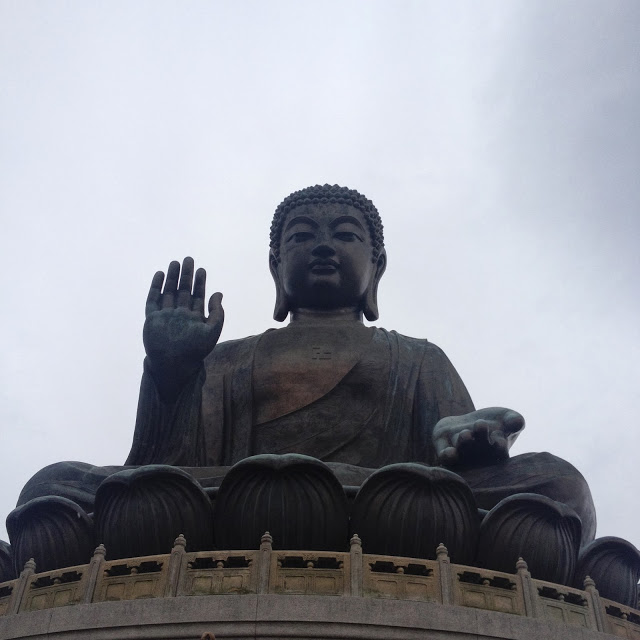
Hong Kong Big Buddha statue sitting on a mountain

Tian Tan Buddha via Pixabay

You can take a bus to the top of the mountain, but what’s the fun in that? The best way to reach the top of Ngong Ping Plateau is by the Ngong Ping 360 Cable Car! If you really want to do something special, $240 HKD ($30 USD) will get you a ride to the top in the glass-bottom Crystal Cable Car!

If you want to get some exercise, or want to save some money, there is also a path winding up the mountain that you can hike from far below to the very top where the Buddha sits! Or, you know, you can just take the bus (Route 23). From experience, though, we can say that splurging for a ticket to ride the Crystal Car is really worth it for the most amazing views.

Pixabay

The Tian Tan Buddha takes its name from the Temple of Heaven, the Imperial temple in Beijing, Chian. Constructed in 1993, the statue is 112 feet (34 meters) tall and cast from bronze.

This statue is significant in Mahayana Buddhism, and is one of the “Five Great Buddhas of China”. Visitors climb the 268 steps leading from the base to where the statue sits in a pose known as the “Protection Buddha” which symbolizes overcoming fear.

Po Lin, the Precious Lotus Monastery, temple gates against mountain scene in Hong Kong

The main feature of the temple are three venerated statues each representing the past, present, and future lives of the Buddha respectively.

Don’t forget to take your ticket to the Big Buddha to the kitchens at the monastery! You can redeem it for a healthy and delicious vegetarian noodle lunch!

Wisdom Path – The Heart Sutra Trail

Just past the monastery is the Wisdom Path, also known as the Heart Sutra Trail. This short path follows a number of wooden posts carved with scripture from the Heart Sutra, an important Mahayana text. The path is set in a figure-eight representing infinity, and curves through a garden of tea trees.

You can also visit the Linong Tea House! They offer a free tea ceremony three times a day, where you can sample different types of tea and learn about Chinese tea culture from the local tea master.

flowering tea blossoming into orange and red blooms in a glass tea pot at a tea house in Hong Kong, China

Hong Kong is much more than a densely packed business center. There is a quiet side to the Special Administrative Region. Behind the busy city life there is something peaceful, spiritual, and serene. When visiting Hong Kong, spend a day at the Ngong Ping Plateau. You won’t regret it. Unless maybe you decide to hike the long trail up the mountain!
4 Beautiful and Historic Temples in Chiang Mai, Thailand

Next to Bangkok, Chiang Mai is probably the biggest destination for visitors to Thailand. Rich with northern Thai culture, clean air, and plenty of beautiful sights to see, the mountainous “northern capital” of Chiang Mai is not to be missed. Here are four top famous and historic temples to visit when spending time in the north of Thailand. So hop on one of Thailand’s new night trains, and explore the beautiful historic city of the north!

Doi Suthep

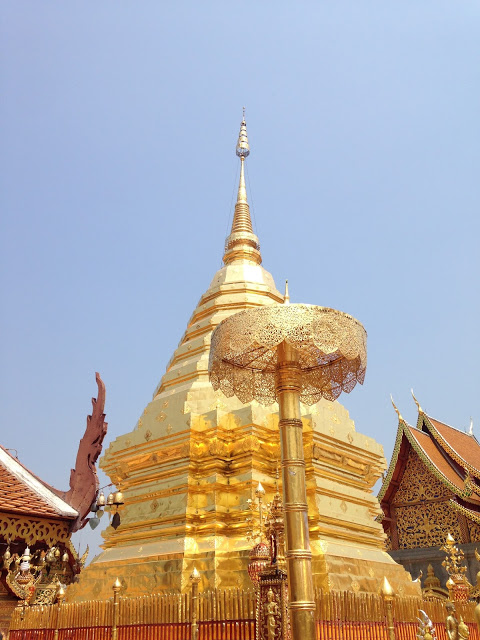
Sitting high on a mountain overlooking Chiang Mai, Wat Phra Doi Suthep is a 13th century temple, and is one of the most sacred holy sites in northern Thailand.Wat Doi Suthep is the principal temple in Chiang Mai, and one of the top destinations when visiting the north.

a golden chedi at a temple in Chiang Mai Thailand

At the temple, you can  light incense, pray, and make merit at the most holy site in the city. If you get tired, there are plenty of nearby restaurants, souvenir shops, and coffee stalls to take care of you! Enjoy the nice breeze and cooler temperatures at the top of the mountain.

a temple courtyard in Chiang Mai, Thailand

Wat Phra Sing, since 1935 a Royal Temple of the First Grade, is a 12th century temple named after it’s most important statue, the Phra Buddha Sihing, a relic said to have been brought to Ayutthaya long ago from ancient Ceylon.

golden chedis in a temple courtyard in Chiang Mai, Thailand

Wat Phan Tao

Perhaps one of the most beautiful and iconic sites in Chiang Mai is Wat Phan Tao, a 14th century monastery, and one of the oldest remaining original all-wooden temples. The bright saffron of the monks’ robes stands out strikingly against the dark wood of the temple, making the whole scene feel timeless and surreal.

prayer flags inside a dark temple in Chiang Mai, Thailand

Of particular note is the wooden carving of a peacock over the temple entrance. The peacock was the historic symbol of the ancient Kings of Chiang Mai, and a sort of unofficial symbol of the city itself.

Wat Chedi Luang

Very near Wat Phan Tao is Wat Chedi Luang, a 14th century temple which once held the famous Emerald Buddha, which now sits at

Wat Phra Keaw at Bangkok’s Grand Palace complex.

a large Buddhist chedi holding a holy relic at a famous and ancient temple in Chiang Mai, northern Thailand

This is also a really great place for visitors who want to learn more about Buddhism! Wat Chedi Luang offers a free daily “monk chat” where visitors can sit down and chat with novice monks who want to practice their English. Visitors are encouraged to ask about anything they want to know regarding Buddhism. The monks are more than happy to answer any questions, or just sit down and chat.

What’s next? Elephants in Chiang Mai!

Spend an unforgettable day taking care of a small family of rescued elephants in the Chiang Mai highlands. VIDEO

/lastbaht/2017/03/comic-23-chiang-mai.html COMIC

If you’ve been to Chiang Mai, let us know your favorite sites. Leave a comment below!

Erawan Shrine: Colorful Bangkok

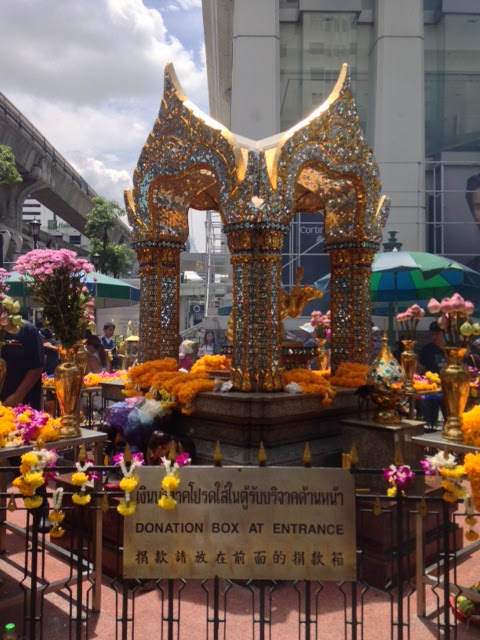
In this week’s video, I pay a visit to the Erawan Shrine in downtown Bangkok.

What is a Spirit House?

Pretty much every building in Thailand has a spirit house. Some are
bigger than others. Most are pretty small. The spirit house is for the
spirits who are supposed to take care of the land and the building.

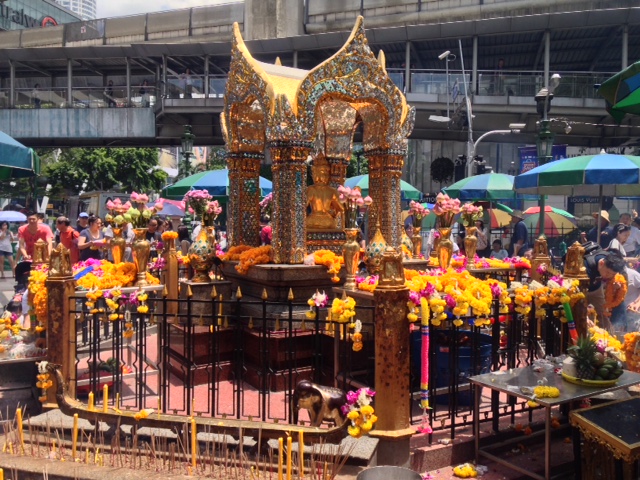
a hindu shrine in Bangkok dedicated to the god Brahma

The Erawan Shrine

The shrine at the Erawan though, is much bigger! It’s a full-sized shrine dedicated to the Hindu god Brahma.

Hindu? But isn’t Thailand a Buddhist country?

Yes, it sure is. But Thai Buddhism is influenced heavily by Hinduism, and the Hindu gods are revered alongside the Buddha. In fact, royal court Brahmans, holy men of the Hindu priestly caste, play a very important role in several annual ceremonies.

flower garlands decorating the Erawan Shrine in Bangkok, Thailand

As prayer bells ring and the temple musicians play the droning songs of prayer music to the slow and somber beat of drums, dancers perform ritual prayers in song for those who make a donation to the shrine. The Erawan Shrine is always alive with bright colors, the scent of flower garlands mingling with heavy incense, and the sounds of prayers and music. It’s a colorful, beautiful, chaotic place!

The shrine is located at the Erawan Hotel and is very close to the BTS Chitlom Station. You can access the shrine by the skywalk from the station. Admission is free. There are plenty of flower and incense shops surrounding the shrine. If you make a donation, the dancers will perform a prayer for you.

Three Visa Run Destinations from Bangkok

Any long-term expat in Thailand knows of the dreaded ninety-day “visa run”. Every three months, depending on the visa classification, an expat must either report to the local government office to “check in”, or leave the country and re-enter on a fresh visa. This can get tedious and dull, but it doesn’t have to be. Make a weekend getaway out of your visa run and visit one of the three best visa run destinations that are cheap and easy to visit from Bangkok.

1. Singapore

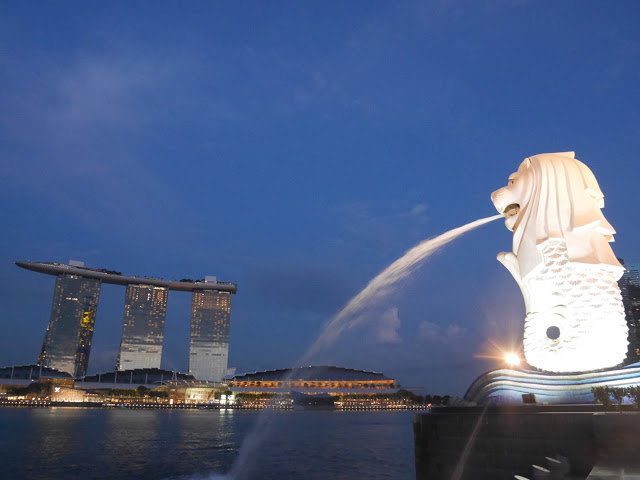
Singapore, the Lion City, a vibrant city-state at the tip of the Malay Peninsula, is an ever-popular destination for visa-runners, especially those who need to take care of consular business at the Thai embassy.

<img src="https://lbconvert.travel.blog/wp-content/uploads/2019/08/a18ee-img.jpg hours; $100-200 USD – Cheapest prices found on Thai Air Asia and Nok Scoot

What to do:

9 Free Things to do in Singapore

2. Siem Reap, Cambodia

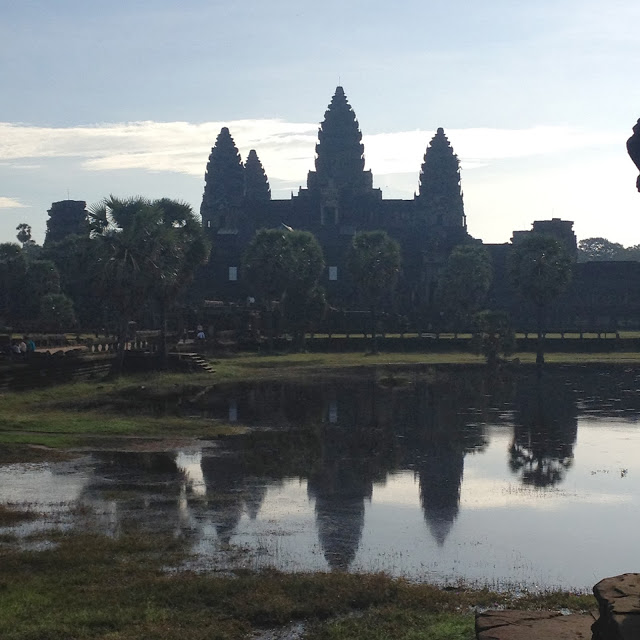
Siem Reap, the “Gateway to Angkor”, is one of the easiest places to visit from Bangkok. It’s close, it’s cheap, and it’s full of amazing sights to see, such as the world-famous Angkor Wat.

<img src="https://lbconvert.travel.blog/wp-content/uploads/2019/08/8dc36-img.jpg!

Cons:

  •  The extra expense of a visa-upon-arrival is required for citizens of most countries. Visa costs vary, but cost around $35 for most nationalities. You will fill out the paperwork in the airplane and pay and receive your visa at immigration after you land. It’s usually a fairly quick process.

Flight from Bangkok:

  • 1 hour; $50-100 USD – cheapest tickets available on Thai Air Asia

What to do:

5 Things to do in Siem Reap (Besides Visiting More Temples)

BOOK: The Long Road From Pub Street: A Cambodia Travelogue – my first book! It’s all about my travels through Cambodia. Check it out here!

VIDEO: Kingdom of Wonder

3. Vientiane, Laos

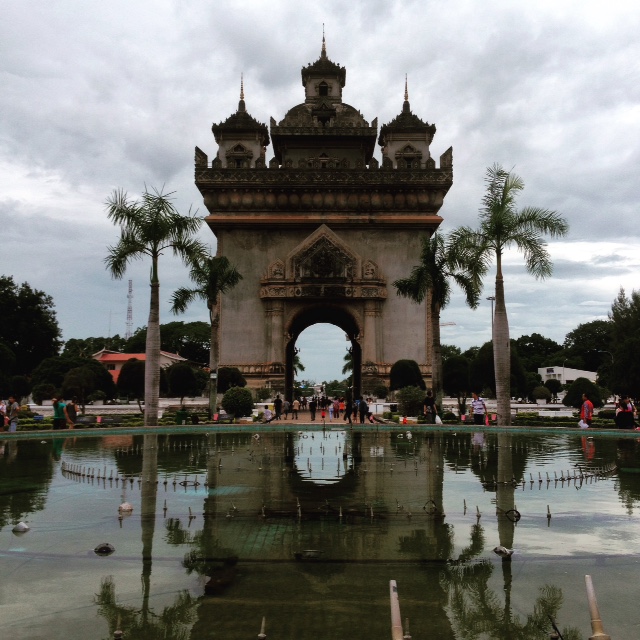
Vientiane, the sleepy capital  of the Lao PRD, should not be overlooked as a visa-run destination! Many expats don’t consider visiting Vientiane, but they should! There are lots of very interesting things to do and see, and it’s small enough to make visiting perfect for a short weekend getaway.

Spend a Weekend in Vientiane!

VIDEO: A Weekend in Vientiane

Should You Take a Tuk-Tuk in Bangkok?

Should You Take a Tuk-Tuk in Bangkok?

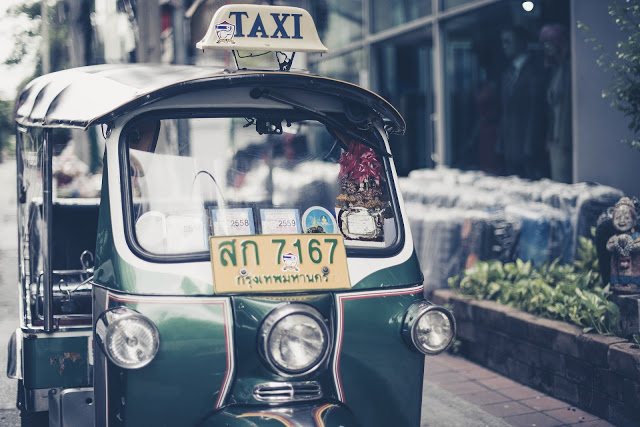
The ever-popular tuk-tuk is an iconic sight cutting across the traffic in Bangkok. These brightly-colored auto rickshaws zip everywhere around the city, but especially around the tourist hubs.

Pixabay

A tuk-tuk is one of Bangkok’s iconic “motor rickshaws”, a small carriage pulled by a low-powered motorbike. They are one of the iconic sights of the city, but are sometimes  not worth taking.

The general rule seems to be when you want one, you can’t find one. When you really don’t want one, they will be there to harass you. Generally tuk-tuks appeal to grungy backpackers who don’t understand that the rough and generally unsafe tuk-tuk is actually more expensive to take than an air conditioned metered cab! You will have to haggle with the driver to find a good price, which will, unfortunately, be a lot higher than if you were a local.

If you watch carefully, you’ll notice that it’s almost always foreigners who take the tuk-tuks around the city. Sure, they may be fun,

but you’ll pay a lot more than you would for a regular taxi!

Unfortunately some tuk-tuk drivers will try to take advantage of you. It can be fun to take one, but it’s not really a safe, economical, or “authentic” way to get around town, as many tourists seem to believe.

So, is it worth it? It’s definitely an experience, and they are undoubtedly fun to take. As long as you are just going a short distance and don’t mind paying a little extra for a little less, it’s not bad. Have fun and enjoy. Just make sure it’s not about to rain!

They’re never there when you need them, but swarms of drivers will hassle you to hire them when you absolutely don’t. Love them or hate them, Bangkok’s tuk-tuks are here to stay.

Learn more with the helpful e-book “Getting To, From, and Around Bangkok”, a helpful transportation guide to the “Big Mango”

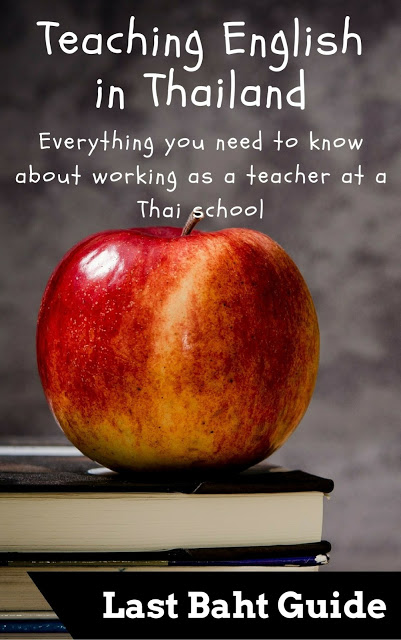
Teaching English in Thailand BOOK

Teaching English in Thailand

Everything you need to know about working as a teacher at a Thai School

https://www.amazon.com/dp/B074SPY74H

Every year, thousands of people visit the Kingdom of Thailand, and many
never want to leave. It’s not unusual to hear of a backpacker who fell
in love with the country and lifestyle who settled down and became a
teacher for a year or more, just to stay a bit longer in the “Land of
Smiles”. Is taking an English teaching position in the “Land of Smiles”
right for you?

“Teaching English in Thailand” offers advice for
new and prospective English teachers in Thailand. From obtaining the
proper visas and work permits to what you should expect in a typical
Thai classroom, this book seeks to offer a brief overview of the daily
life and experiences of a new teacher.

Available NOW on Amazon! 

VIDEO Golden Mount Temple and the Amulet Market: Colorful Bangkok

Bangkok was once known as the “Venice of the East” for its many canals crossing the city. Today, I take a public boat along one of these canals to the city’s Old Town. I climb the beautiful Golden Mount Temple and explore the dark alleyways of the nearby amulet market at the Loha Prasat.

This is the first of a series of vlogs that I hope to make showing some amazing and beautiful sites around the colorful City of Angels. This is Bangkok – come explore its wonderful sites!

Top 5 Sights around UBUD, BALI

Bali, Indonesia’s most famous island, is well-known for its beautiful beaches. But there’s a lot more to do than swim and surf, especially if you venture inland to the beautiful town of Ubud. Located amongst rice paddies, dramatic hills, and verdant forests, Ubud is surrounded by some of the most beautiful scenery in the country, and is full of wonderful and unique sights to visit.

1. Saraswati Water Temple and Ubud Palace

Although Indonesia as a whole is predominantly a Muslim country (Indonesia actually has the world’s largest Muslim population), about 85% of Balinese follow Hinduism. You’ll find Hindu temples and shrines throughout the island, but some of the most beautiful are located in and around Ubud.

Pura Taman Saraswati is the Ubud Water Temple. Located in the center of town just next to the Ubud Palace and one of the world’s most beautiful Starbucks, the Water Temple sits surrounded by a gorgeous lotus pond and reached by a long stone path.

Bali Palace in Ubud, Indonesia

2. Sacred Monkey Forest

Walk down Monkey Forest Street in the center of Ubud, and you’ll make your way to the Sacred Monkey Forest, a nature reserve and temple complex teeming with indigenous crab-eating macaques.

There are hundreds of monkeys swinging from the trees in the forest. Make sure that your belongings are all well-secured! They are curious and greedy little things and will try to snatch any loose items, including the sunglasses from your head!

two monkeys in a sacred forest Ubud, Bali, Indonesia

3. Pura Tirta Empul

You will need to hire a driver to get to the rest of the places on this list, but it’s worth it! Not too far outside of Ubud is the Pura Tirta Empul Water Temple.

Hindu water temple, Ubud, Bali, Indonesia

4. Pura Besakih Mother Temple

Bali’s largest and most important temple sits on the slopes of Mount Agung volcano. When the volcano erupted in 1963, the temple was barely spared the path of the lava. To the Balinese devout, this was a sign from the gods.

colorful Balinese temple complex, Ubud, Bali, Indonesia

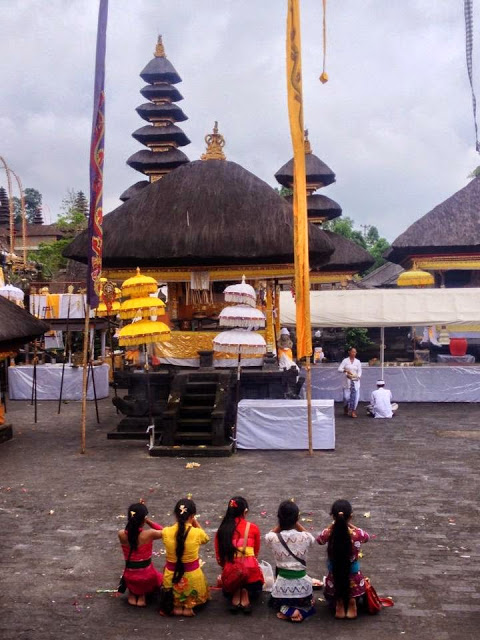
The Mother Temple is the center of Balinese Hinduism, and is a complex made up of dozens of smaller shrines, each celebrating a number of annual holidays and festivals, meaning that there is almost always some sort of festival going on nearly every day.

green rice terrace Ubud, Bali, Indonesia

What’s Up With Those Stamps From 7-11?

I walk into my neighborhood 7-11 to pick up my morning can of iced coffee. It’s early, and I’m still half asleep, but when I receive my change from the cashier, I notice that she has given me a few brightly-colored stamps along with my change. It’s August, which means that “stamp season” has arrived at Thai 7-11 convenience stores. But what is the point of these stamps? How do they work? What the heck are you supposed to do with them?

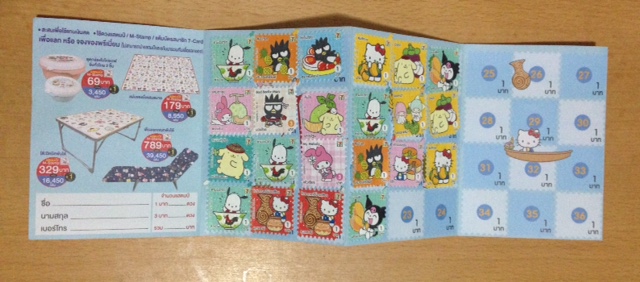
Thai 7-11 stamp collecting book

What do you do with them? 

Collecting

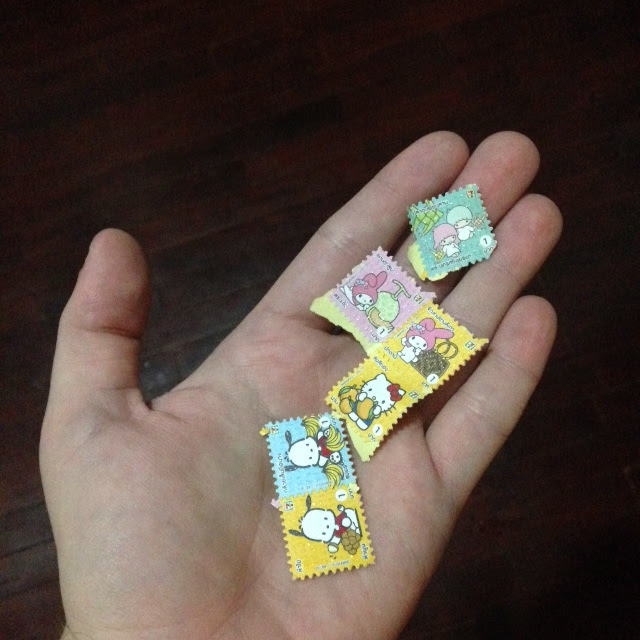
If you are a sucker for collecting things, you might just want to pick up one of the stamp booklets from the front counter of the convenience store to help you arrange your stamps. Each year 7-11 produces stamps with a different theme using a different set of popular cartoon characters. This year, the stamps feature the different provinces of Thailand and a product that the province is known for.

A few years ago, they focused on the different countries in the ASEAN region, their national foods, costumes, landmarks, and culture.

It can be fun to try to collect all of the different stamps while “stamp season” lasts! Some people like to try to fill up their booklet completely, and consider that to be “winning” the “game”.

collecting stamps in a Thai 7-11 stamp book

Getting special merchandise

If you collect enough stamps, you can redeem them for specially-branded merchandise like tables, chairs, dinnerware, etc. It takes quite a few stamps to do this, but if you look on the front page of your stamp booklet, you can see what you need to save to reach your goal.

Making a donation 

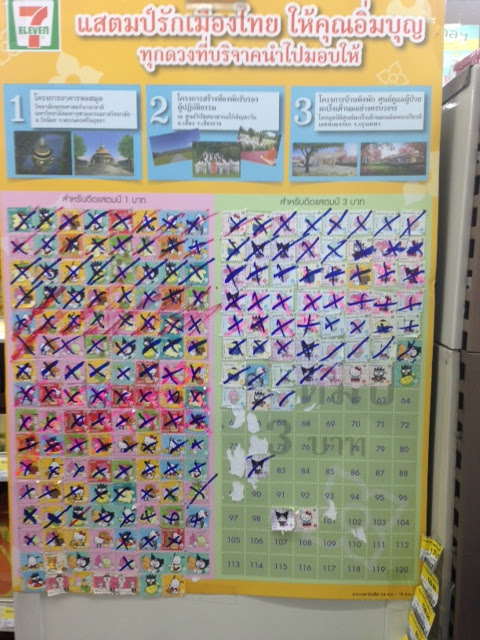
If you don’t want to save your stamps, you can leave them at 7-11 to be donated to a local charity. Some stores have a stamp page taped to the wall where you can stick your stamps as you leave. This goes towards the donation. It’s one baht at a time, but I guess every little bit helps, right?

stamps on a wall to donate money in 7-11

How do they work?

 For every 50 baht you spend, you will receive one 1-baht stamp in return. Certain items, however, are marked with a promotion, allowing you to receive a number of specially colored 3-baht stamps.

Thai promotional stamps at a 7-11 convenience store to collect

Sure, it’s kind of a cheesy and silly promotion, but it can be fun too. Personally, I never redeem my stamps. Instead, I try to fill up at least one side of my stamp book with each year’s stamps. I think it’s kind of cool to see the different designs. They usually follow some sort of theme that goes towards encouraging people to learn about the culture of Thailand, which I think is pretty neat!

Design a site like this with WordPress.com
Get started