Scared of heights? You might want to avoid the Eco Forest Park in the heart of Kuala Lumpur. For everyone else, this is the perfect place to see the jungle right in the middle of the city. This nature reserve, located in the heart of Malaysia’s capital city, is a respite from the heat and bustle of the city. It’s a protected area where the natural landscape is allowed to thrive.
Bukit Nanas Eco Forest Park, Kuala Lumpur, Malaysia
The Eco Forest Park is a forest reserve that was established at Bukit Nanas right in the middle of Kuala Lumpur back in 1906. Today, it’s still a preserved area, complete with hiking trails, a forestry museum, and even a camping area. It’s kind of amazing to see this piece of wild jungle right in the middle of a big city!
Canopy Walk, Kuala Lumpur, Malaysia
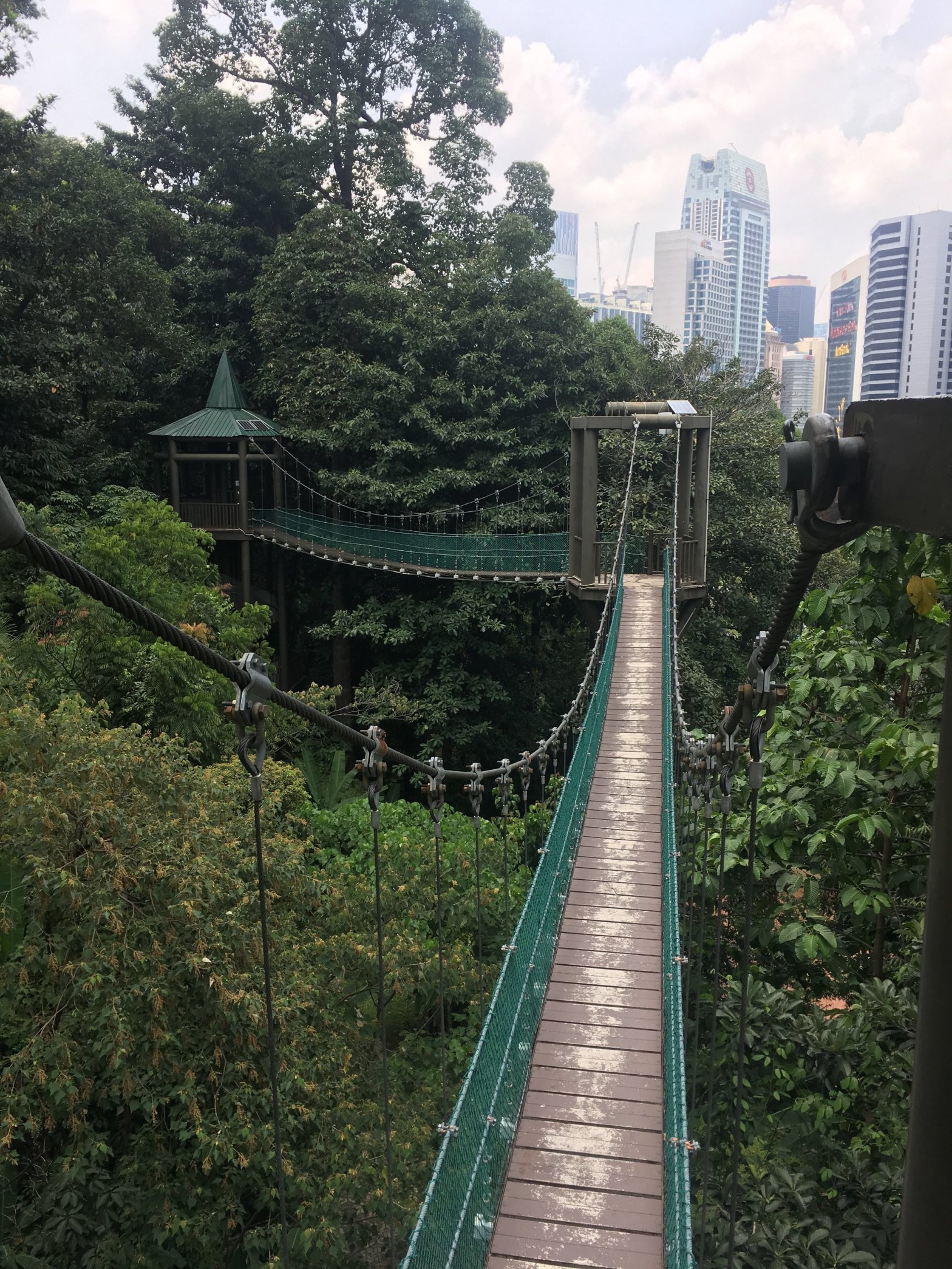
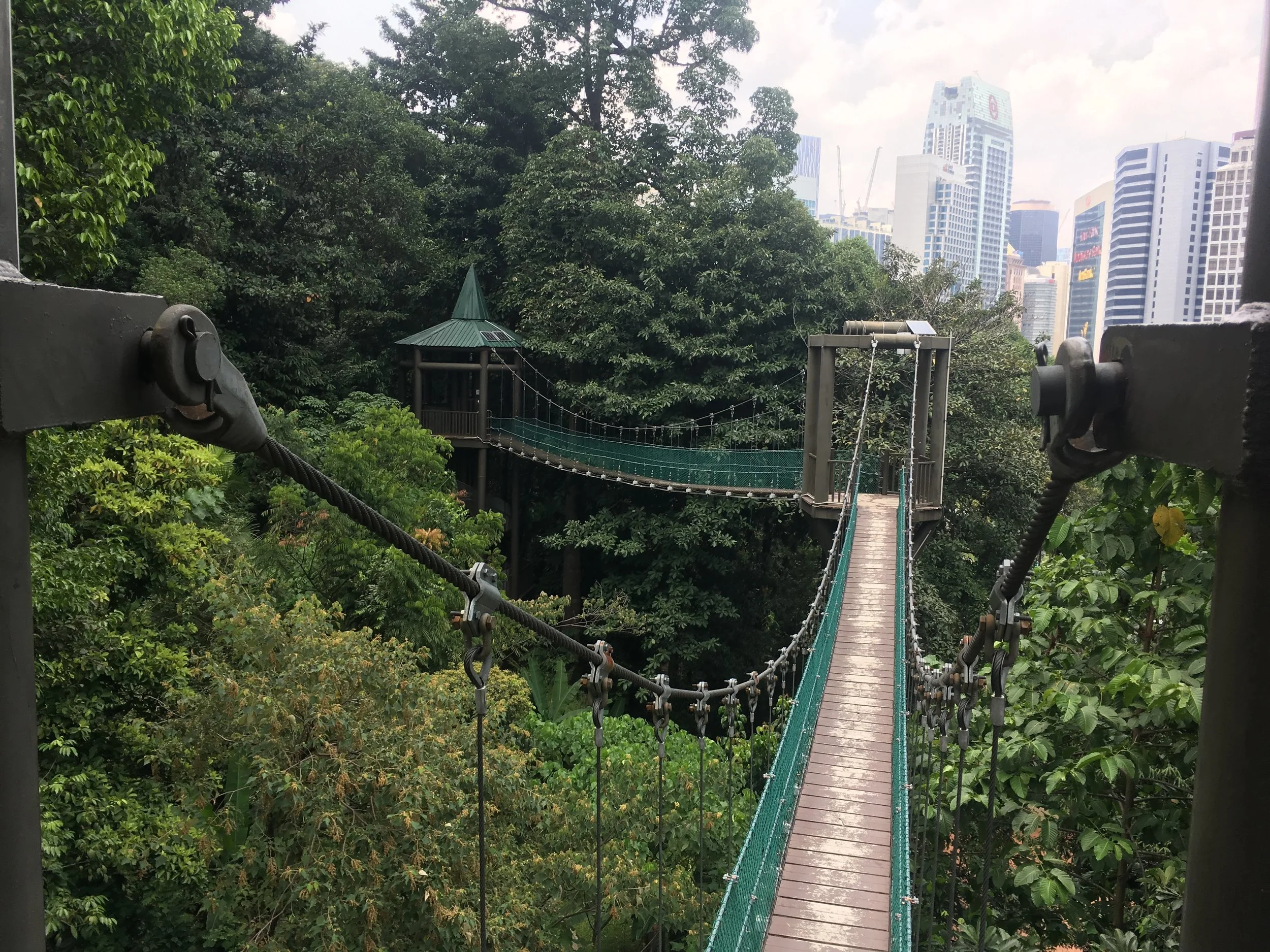
The forest park’s most impressive feature is the Canopy Walk, a series of platform connected by swaying bridges high above the treetops. From there, you’ll be treated to breezes (a rarity in the city) as well as views of both the jungle below and the city all around.
Canopy Walk in Kuala Lumpur
If you are afraid of heights, though, I wouldn’t recommend it! The bridges, though sturdy and perfectly safe, do tend to sway as you walk over them. Once you are up in the canopy, the only way to get down is to walk across all of the bridges in the park to the exit on the other side. If you are brave, though, the Canopy Walk is a beautiful and rarely-seen side of the jungle in the middle of the city.
Eco Forest Park Bukit Nanas Canopy Walk
Visit in the morning or on a weekday, and you’ll almost certainly have the place to yourself.
Admission is totally free. It’s a great way to get in touch with nature without even leaving the city.
While visiting Kuala Lumpur, Malaysia’s vibrant capital city, don’t miss these top five museums! Some, like the Islamic Arts Museum and the National Museum of Malaysia are well-known and popular parts of any itinerary. Others, such as the Malaysian Royal Police Museum are hidden gems, and not to be missed.
Visiting museums is a wonderful way to learn more about a country and its history and culture, and these five will help you to experience beautiful Malaysia.
The National Museum of Malaysia
the National Museum of Malaysia
Malaysia’s National Museumis full of the country’s history, and costs only 5 MYR to visit! Here, you’ll learn about the region’s pre-history, the pre-colonial kingdoms and sultanates that ruled the peninsula, Malaysia’s colonial period, and the modern history of the nation.
a ticket to the National Museum of Malaysia costs just 5 ringgit
The museum has hundreds of amazing historical artifacts on display, and is the best place to start your visit to Malaysia. You will learn all about the country’s history, and get a feel for how it came to be the country that it is today. Don’t miss the royal throne that once belonged to a historical peninsular sultan!
throne of a Malay sultan at the KL National Museum
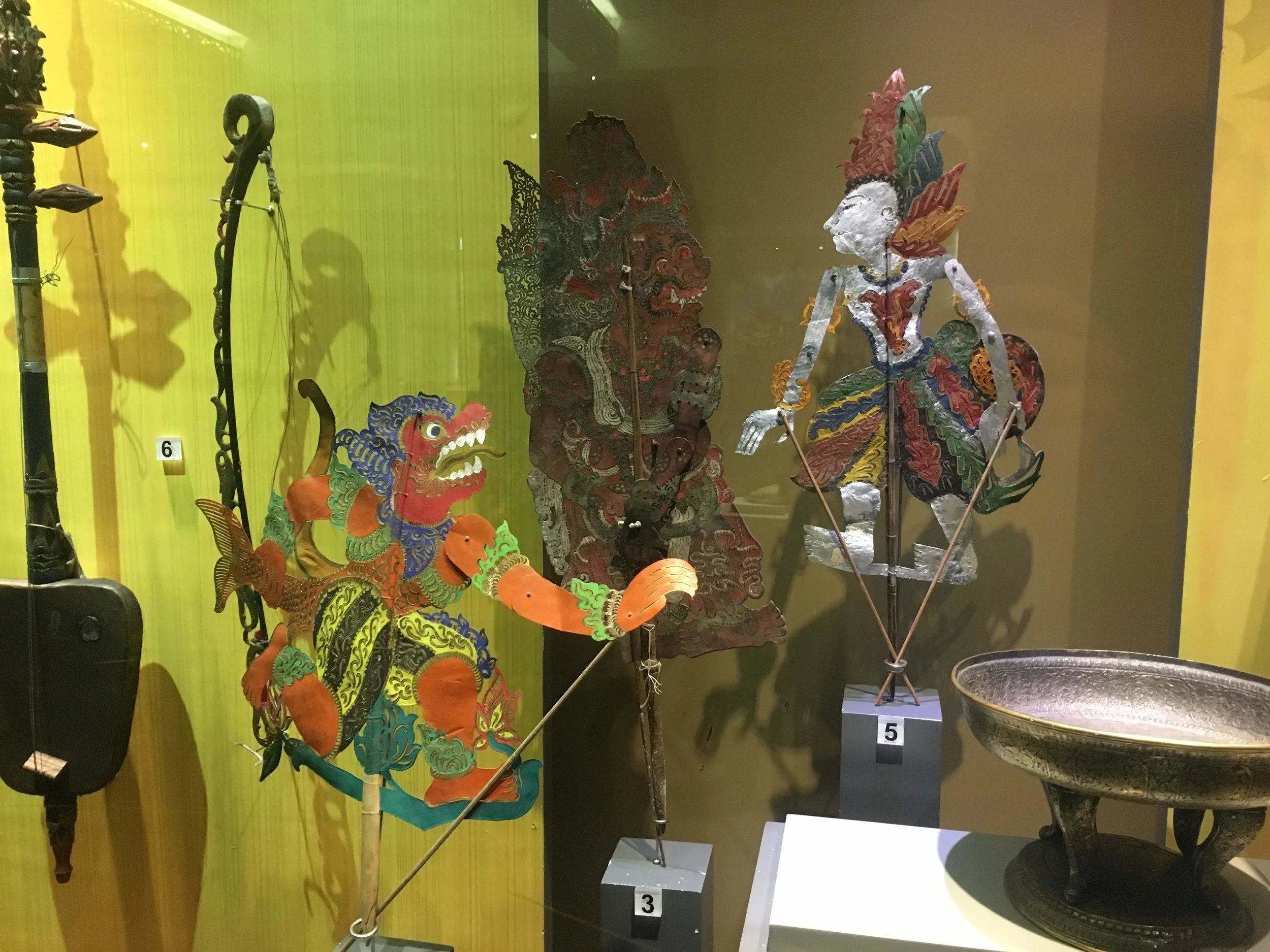
The museum also has exhibits about Malaysia’s art and culture, from traditional Malay shadow puppets to the historical spread of Islam through the peninsula.
You can easily reach the museum on foot from KL Sentral Station. The station connects by underground walkway to Muzim Negara Station, which has an exit in front of the museu,.
The Malaysian National Museum is open daily from 9:00-18:00
A ticket to the Malaysian National Museum (Muzim Negara) costs 5 MYR
The Islamic Arts Museum
ceiling dome at the Islamic Arts Museum in Kuala Lumpur, Malaysia
The Islamic Arts Museum is perhaps the best museum in Kuala Lumpur, especially if you are interested in art and art history. It’s certainly the best laid-out and beautiful museum in the city; even the building itself is a work of art, with incredible intricate domes and water features.
an exhibition on calligraphy at the Islamic Arts Museum, Kuala Lumpur, Malaysia
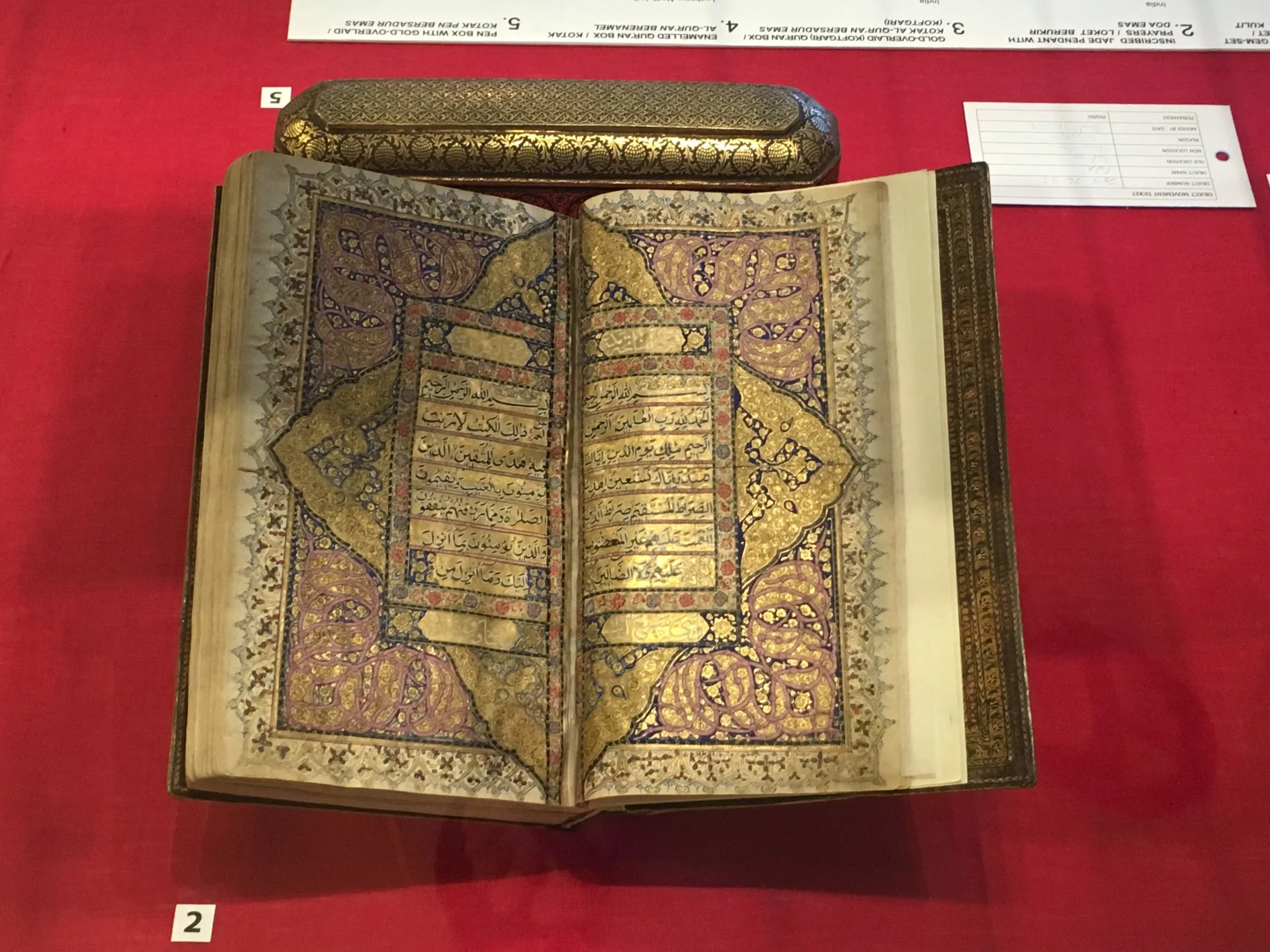
Malaysia is an officially Muslim country, and Islam plays a vitally important role in the country’s art and history. At this museum, you’ll see not only Malaysian art, but art from across the Islamic world. When I visited, I got to see an incredible exhibit about Qajar Dynasty ceramics from Persia.
a beautiful Quran on display at the Islamic Arts Museum, Kuala Lumpur, Malaysia
The Islamic Arts Museum is open daily from 9:30-18:00.
A ticket to the Museum of Islamic Arts in Kuala Lumpur costs 14 MYR.
National Planetarium of Malaysia (Planetarium Negara)
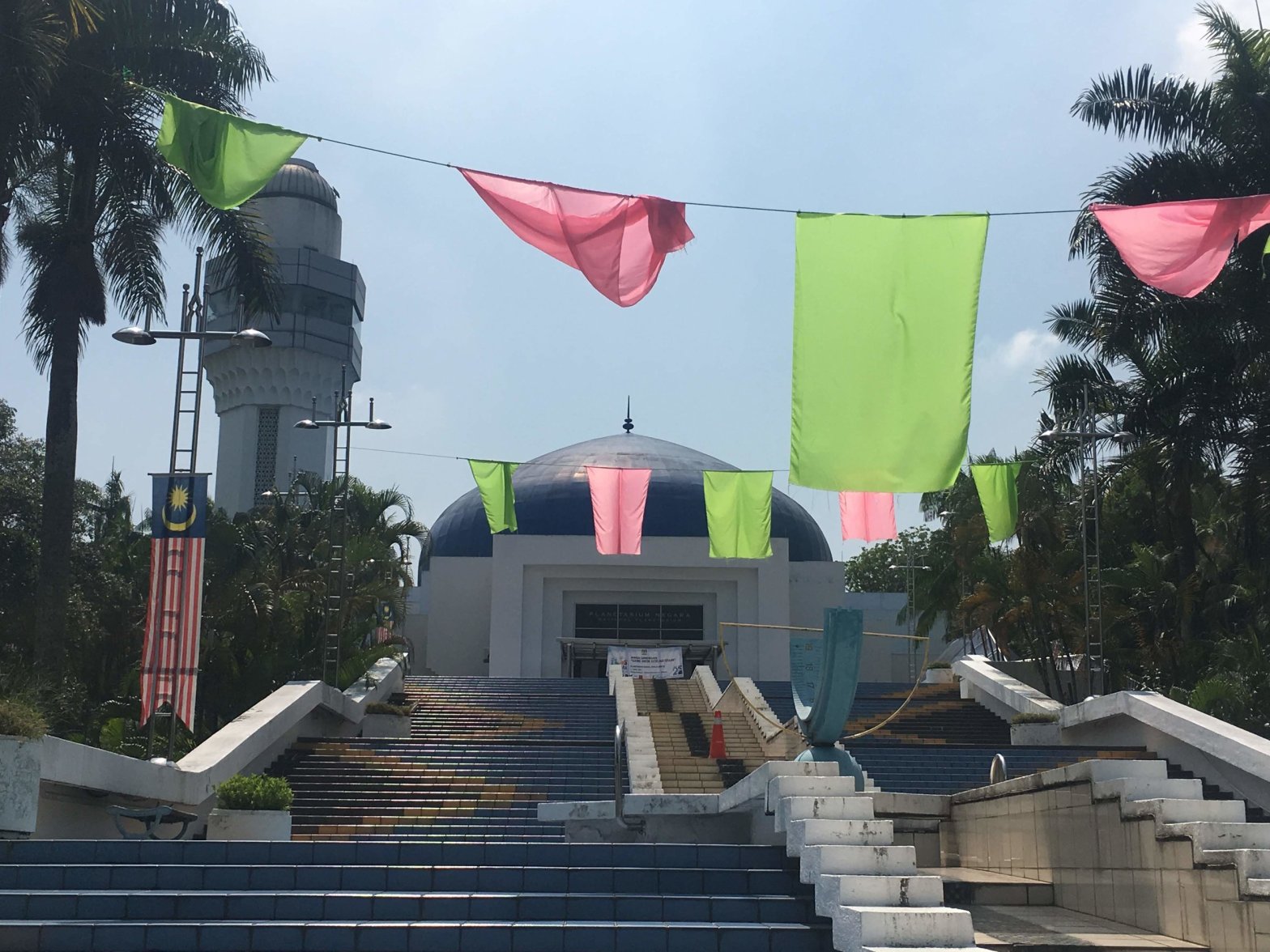
the National Planetarium of Malaysia in Kuala Lumpur
Near the Islamic Arts Museum is the Malaysian National Planetarium. Don’t pass it by if you are at all interested in space or astronomy! The planetarium is also home to the Malaysian Space Agency, and is surrounded by a lovely park.
Malaysian Space Agency
A trail runs through the park, winding past information signs teaching walkers about the planets of the solar system. There’s even a “mini Stonehenge” that you can find while exploring the grounds.
Mini Stonehenge at the National Planetarium of Malaysia
Malaysia’s National Planetarium is located near the Islamic Arts Museum and close to the National Mosque and Bird Park.
Entrance to the planetarium’s gallery and exhibits are free, but a ticket to watch the planetarium show costs 12 MYR.
National Textiles Museum
National Textile Museum of Malaysia in Kuala Lumpur
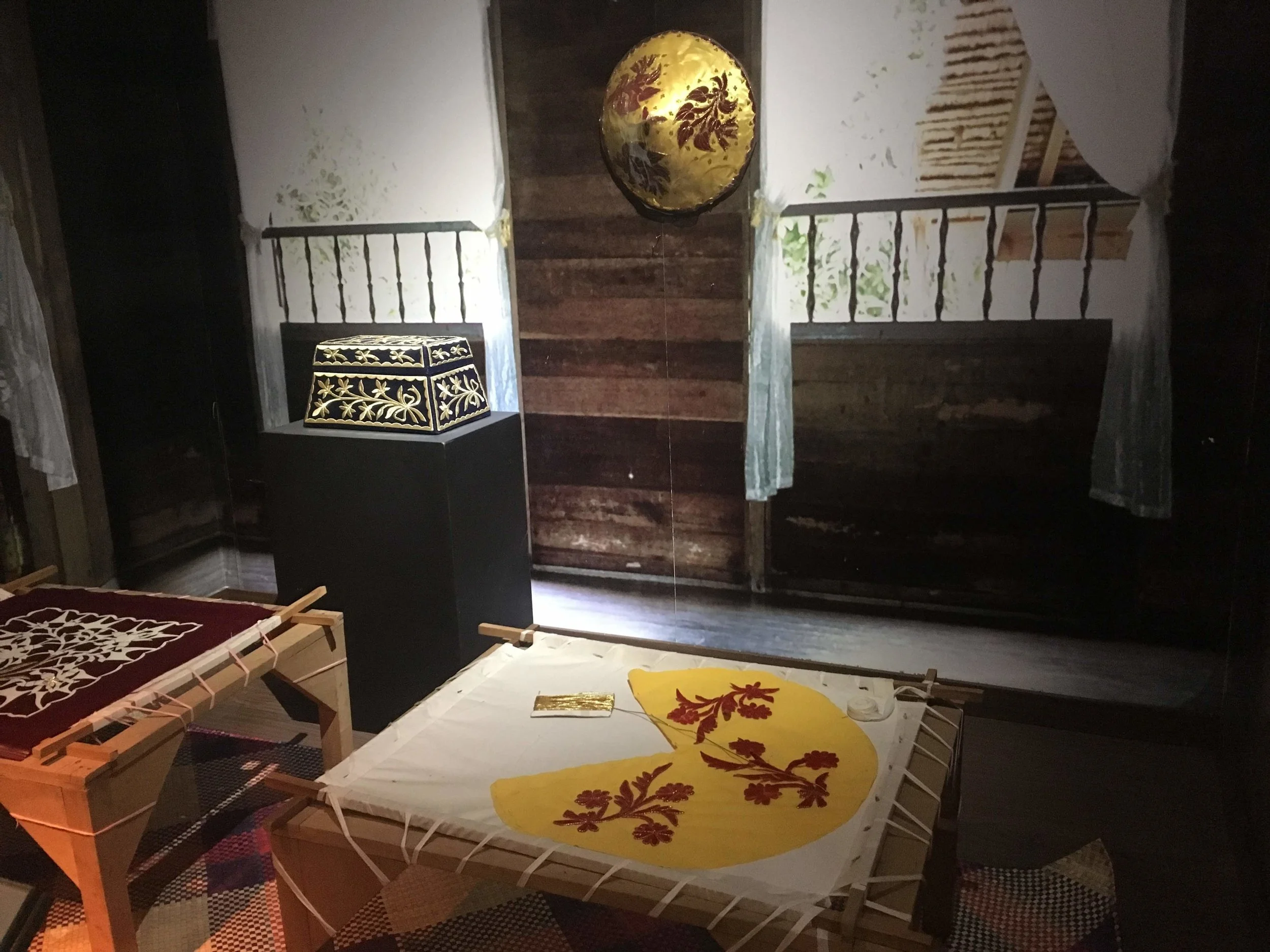
It may not sound like the most interesting museum in Kuala Lumpur, but don’t miss the National Textiles Museum. It’s a real hidden gem! Not only is the museum air-conditioned and free to visit, it’s also fascinating! Textiles are an important part of Malaysian culture, and at this museum you can learn about how the textiles were traditionally woven, the various patterns and meanings of the textiles, and the way that traditional textile-making techniques are being preserved. There’s also a very nice cafe inside the museum if you are tired and craving a delicious iced Malaysian coffee.
traditional outfits on display at Malaysia’s National Textile Museum
The National Textile Museum is located in the center of KL at Merdeka Square
Admission to Malaysia’s National Textile Museum is FREE!
Royal Malaysian Police Museum
the Malaysian Royal Police Museum in Kuala Lumpur
Another hidden gem in Kuala Lumpur, the National Police Museum is actually one of the best in the city! It’s never very crowded, and when I visited, the policemen on duty at the front desk of the museum were very excited to talk to me, and asked me all about where I was from. They were helpful and very friendly.
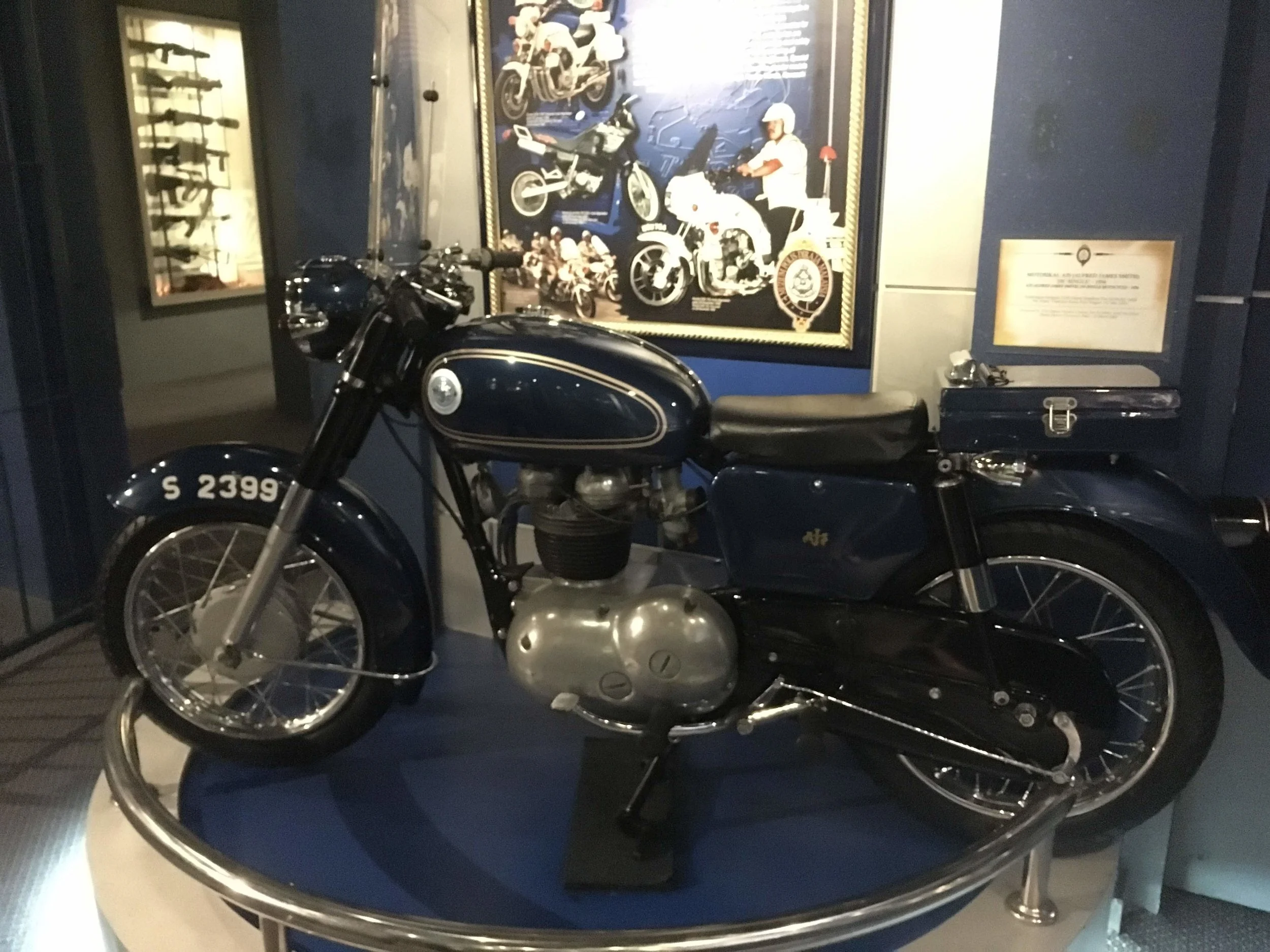
historical motorbike for the Malaysian Police
The Malaysian Royal Police Museum teaches visitors all about the history of the police force in Malaysia, from ancient times to the Dutch and British colonial periods, and through the modern day. The coolest part for me was the armory, which displayed weapons and tools from the Malaysian police force throughout the decades, and the collection of vehicles that you’ll find outside of the museum building.
historical uniforms of the Malaysian Royal Police
The Malaysian Royal Police Museum is also located near the National Planetarium and Museum of Islamic Arts. It’s convenient to visit all of these museums on the same day.
One of Kuala Lumpur’s top-rated destinations is the KL Bird Park, a little piece of jungle paradise right in the heart of the city. The Bird Park is located within walking distance to Malaysia’s National Mosque, and is a great place to visit, especially if traveling with a family. Younger kids will love seeing the 3000 birds that can fly free inside the bird park, and older visitors will be interested to learn more about ecology, conservation, and Malaysia’s fascinating bio-diversity.
a peacock at the Kuala Lumpur Bird Park
Kuala Lumpur Bird Park
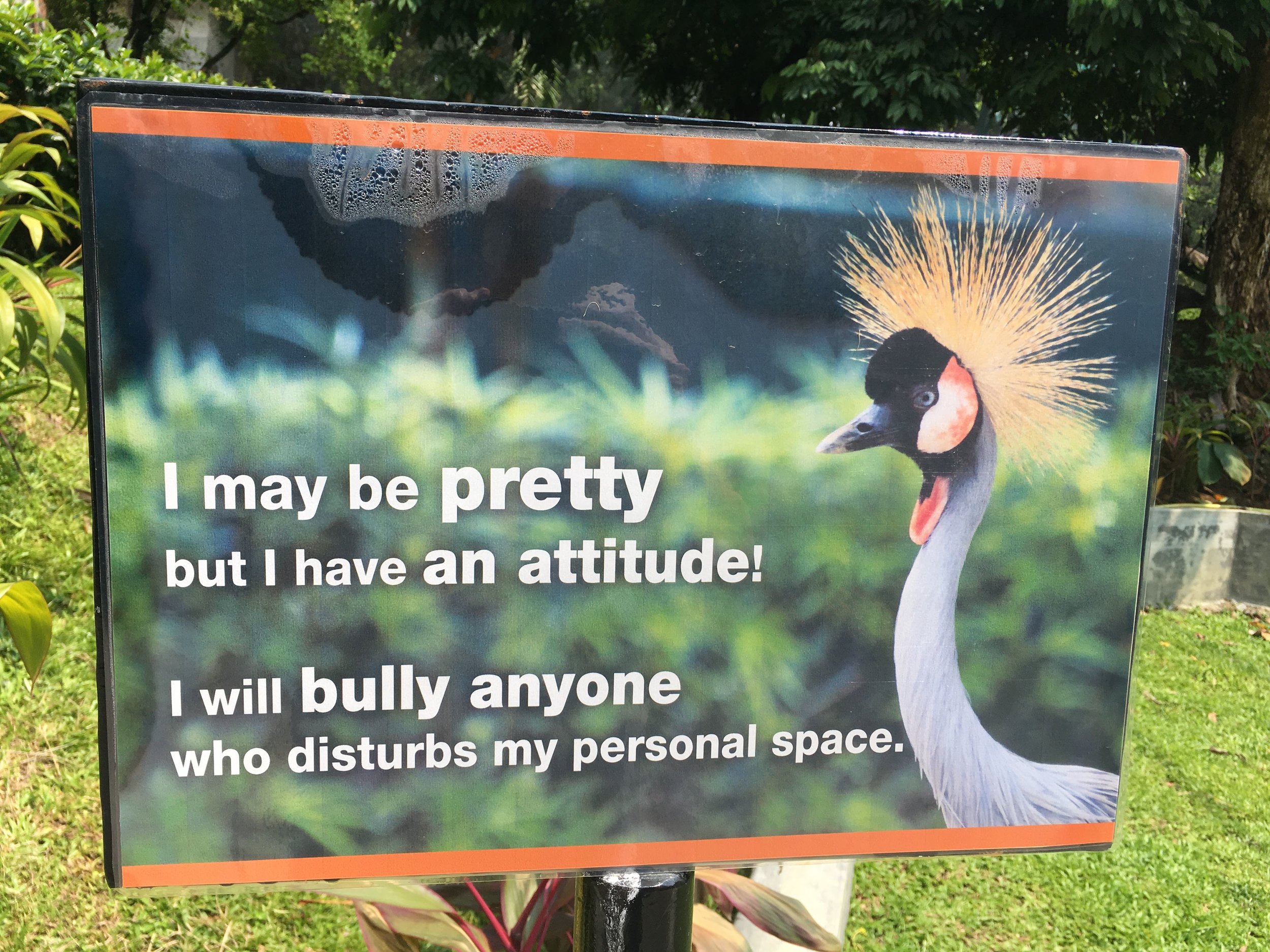
The Bird Park was founded in 1991 as a way to preserve some of Malaysia’s natural bio-diversity. The bird park is the world’s largest free-flight aviary! Although there is a net high above the trees to keep the birds from flying away, all of the birds have plenty of space to fly and roam freely inside the park.
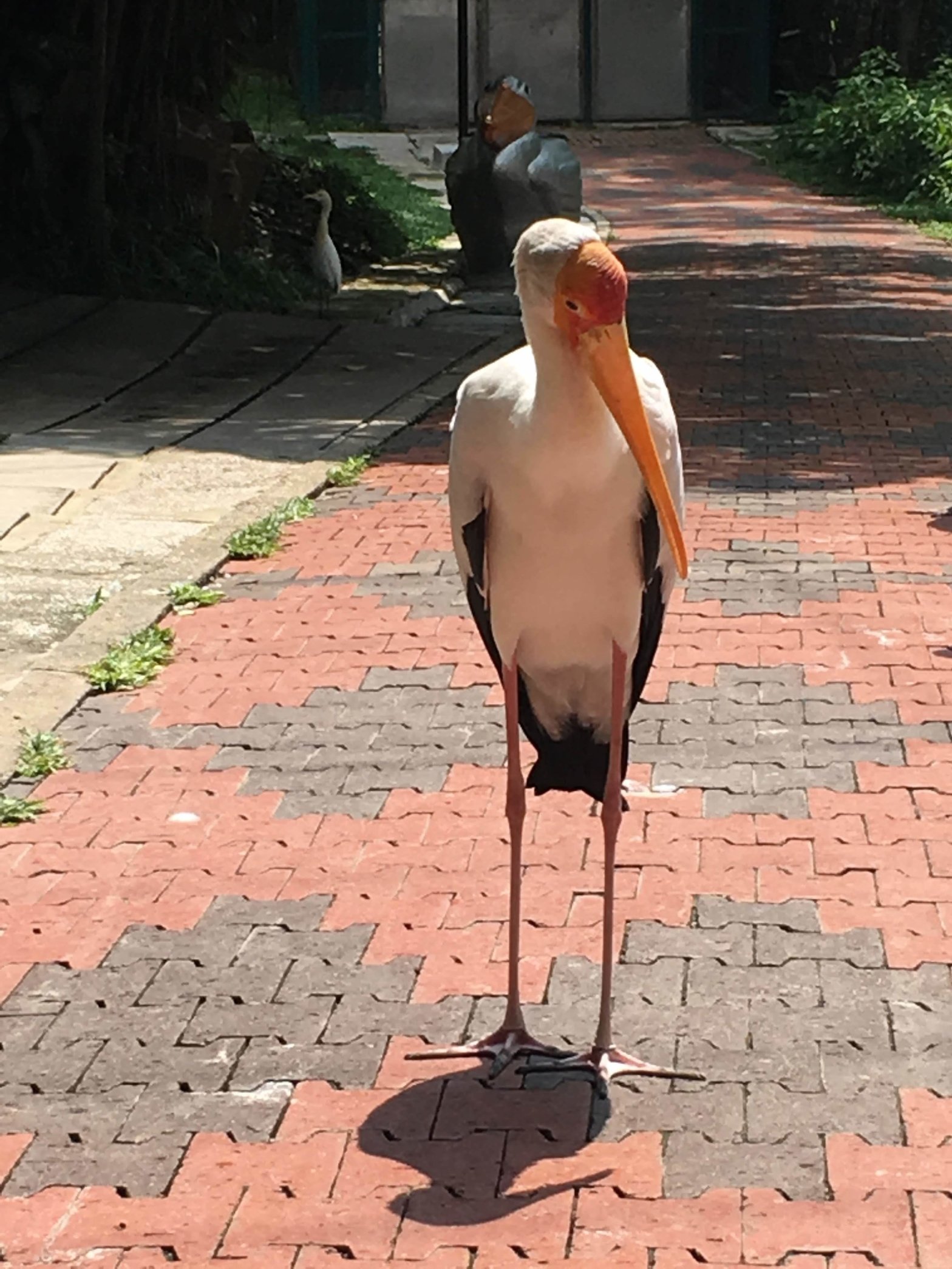
watch out for grumpy birds!
When visiting the KL Bird Park, visitors can freely explore the winding paths that twist through the beautiful jungle. Some parts of the path can get a bit steep, but there are ramps and stairs, and it’s not difficult to walk around.
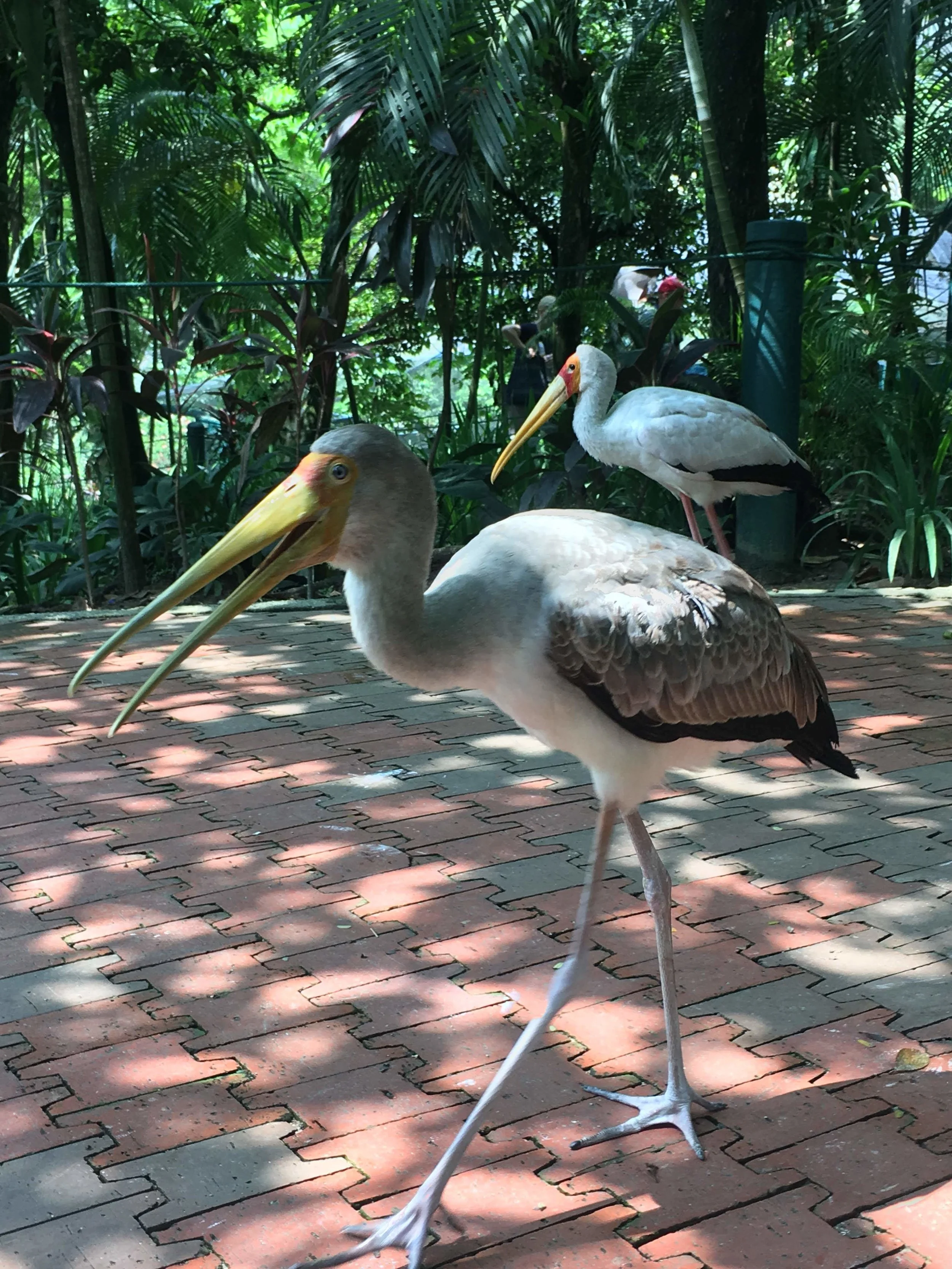
While exploring the park, you’ll have ample opportunities to get up close to the birds. The park is home to some 3000 birds of 200 different species, most being native to Malaysia.
wild cranes at KL Bird Park, Malaysia
Though the birds are free to fly as they please, there are feeding stations set up alongside the path to lure the exotic tropical birds to where visitors can see them.
feeding stations are set up throughout the bird park so that visitors can see many different birds
There are also talks and feeding demonstrations throughout the day, so check the time tables posted throughout the park to see when the daily shows will take place.
If you get hungry, there are a few restaurants at the park, as well as a small snack bar where you can get an iced coffee, cold water, or something to eat. Be sure to stay hydrated, as it can get very hot in Malaysia!
the birds at KL Bird Park are not afraid to walk near humans
To me, the most impressive part of the park was the artificial waterfall and lake. Here, visitors walk on a raised pathway above the water. It’s a little bit cooler here, and the birds seem to enjoy swimming and drinking from the water.
jungle inside KL Bird Park, Malaysia
KL Bird Park Opening Hours
Kuala Lumpur Bird Park is open daily from 9:00 – 18:00. I recommend visiting on a weekday when it’s less crowded. I also highly recommend visiting in the morning, when it’s not too hot yet.
a waterfall at the Kuala Lumpur Bird Park
KL Bird Park Admission and Ticket Price
Adult admission – 63 MYR ($15)
Child admission – 42 MYR ($10)
Discounted tickets are available for Malaysian citizens with a Mykad ID.
jungle path at KL Bird Park, Kuala Lumpur, Malaysia
Getting to the Kuala Lumpur Bird Park
The KL Bird Park isn’t too hard to get to. It’s located right in the center of Kuala Lumpur’s downtown area. You can reach it on foot from the National Mosque and the Museum of Islamic Art. The closest metro stations are KL Sentral and Kuala Lumpur Station (commuter rail), but the easiest way to get to the park is by hop-on-hop-off tourist bus, or by taking a taxi. A Grab taxi from KL Sentral to Bird Park will only cost a few ringgit.
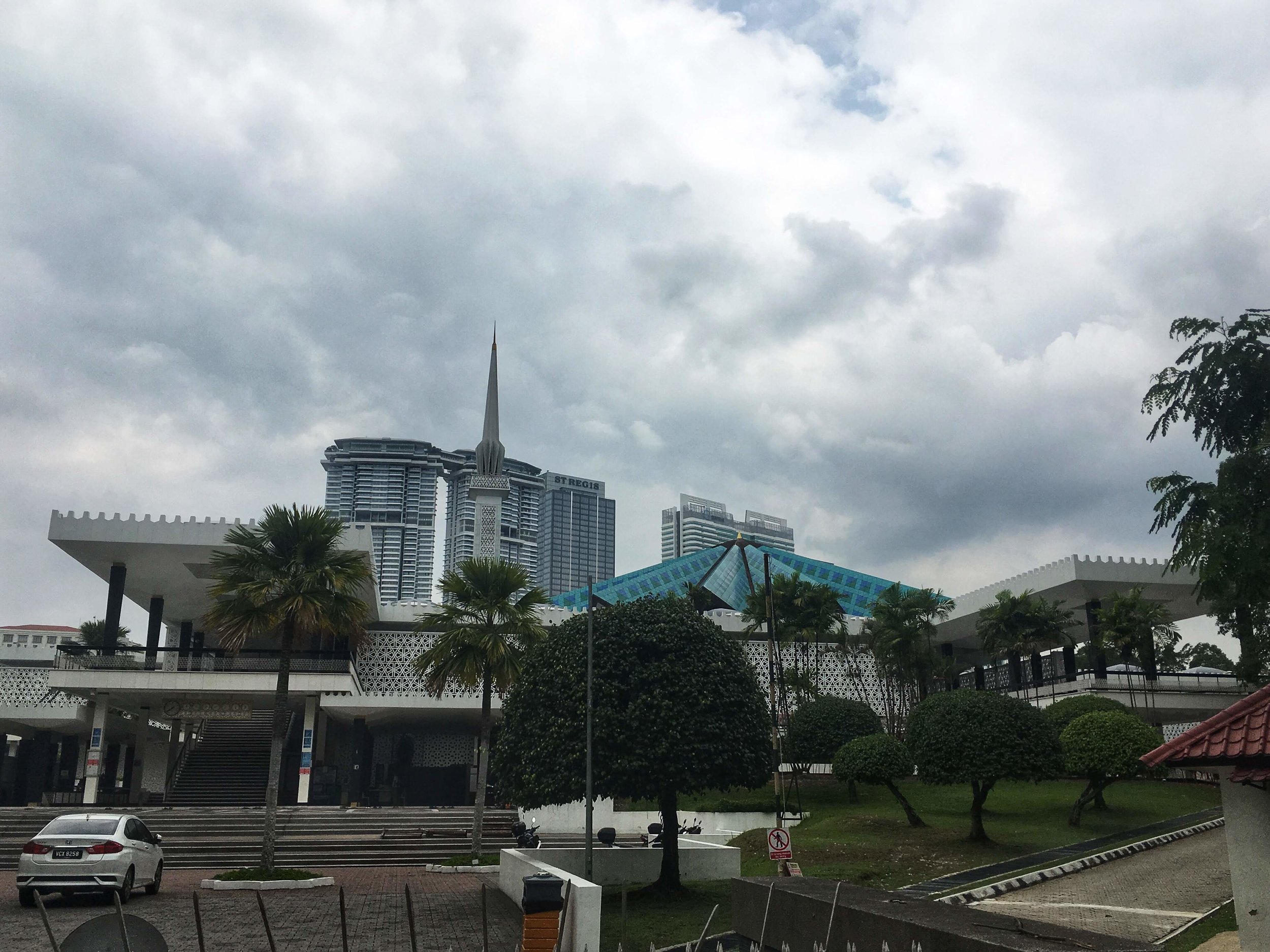
You can’t miss Malaysia’s uniquely modern National Mosque. The Masjid Negara, which is located right in the center of Kuala Lumpur, looks like no mosque I’ve ever seen before! The space-age modern architecture of the prayer hall looks something like an unfurled umbrella, and the interior is bathed in the colored light from stained-glass windows.
Malaysia is an officially Muslim country, so it’s no surprise that the country’s national mosque is fittingly grand. Visitors, even non-Muslims, are welcome to visit the National Mosque during certain hours. Here’s what you need to know about the National Mosque of Malaysia before you go.
Masjid Negara – the National Mosque of Malaysia in Kuala Lumpur
Where is Malaysia’s National Mosque?
Masjid Negara, the National Mosque of Malaysia, is located in the center of Kuala Lumpur. The mosque is located just across from the Islamic Arts Museum and within walking distance to the Bird Park and National Planetarium.
How to get to the National Mosque in KL
You can reach the National Mosque on foot from Masjid Jemak Station and Central Market, but there is also a free (red line) bus (GoKL) that runs to the mosque from KL Sentral Station.
Alternately, take a taxi for a few ringgit from the city center.
Masjid Negara, the National Mosque of Malaysia
Jalan Perdana, Tasik Perdana, 50480 Kuala Lumpur, Wilayah Persekutuan Kuala Lumpur, Malaysia
Non-Muslims are welcome to visit Malaysia’s National Mosque during certain visiting hours. Visitors are asked to follow certain rules, such as adhering to a strict dress code and removing their shoes. If you are not wearing proper clothes, you will be lent a hooded robe to wear when entering the mosque. Women must keep their heads covered inside the mosque.
Photography is allowed during visiting hours, and there are guides on hand to answer any questions that you have about the mosque.
Malaysia’s National Mosque is open to visitors during select hours
When can tourists visit the National Mosque of Malaysia?
Non-Muslims are not allowed to visit the mosque during daily prayers and are restricted to certain visiting hours. All visitors are welcome during visiting hours, which vary by day.
Monday-Sunday
9:00-12:00
15:00-16:00
17:30-18:30
Friday
15:00-16:00
17:30-18:30
the mosque was built in the 1960s
What to know about visiting the National Mosque in Kuala Lumpur
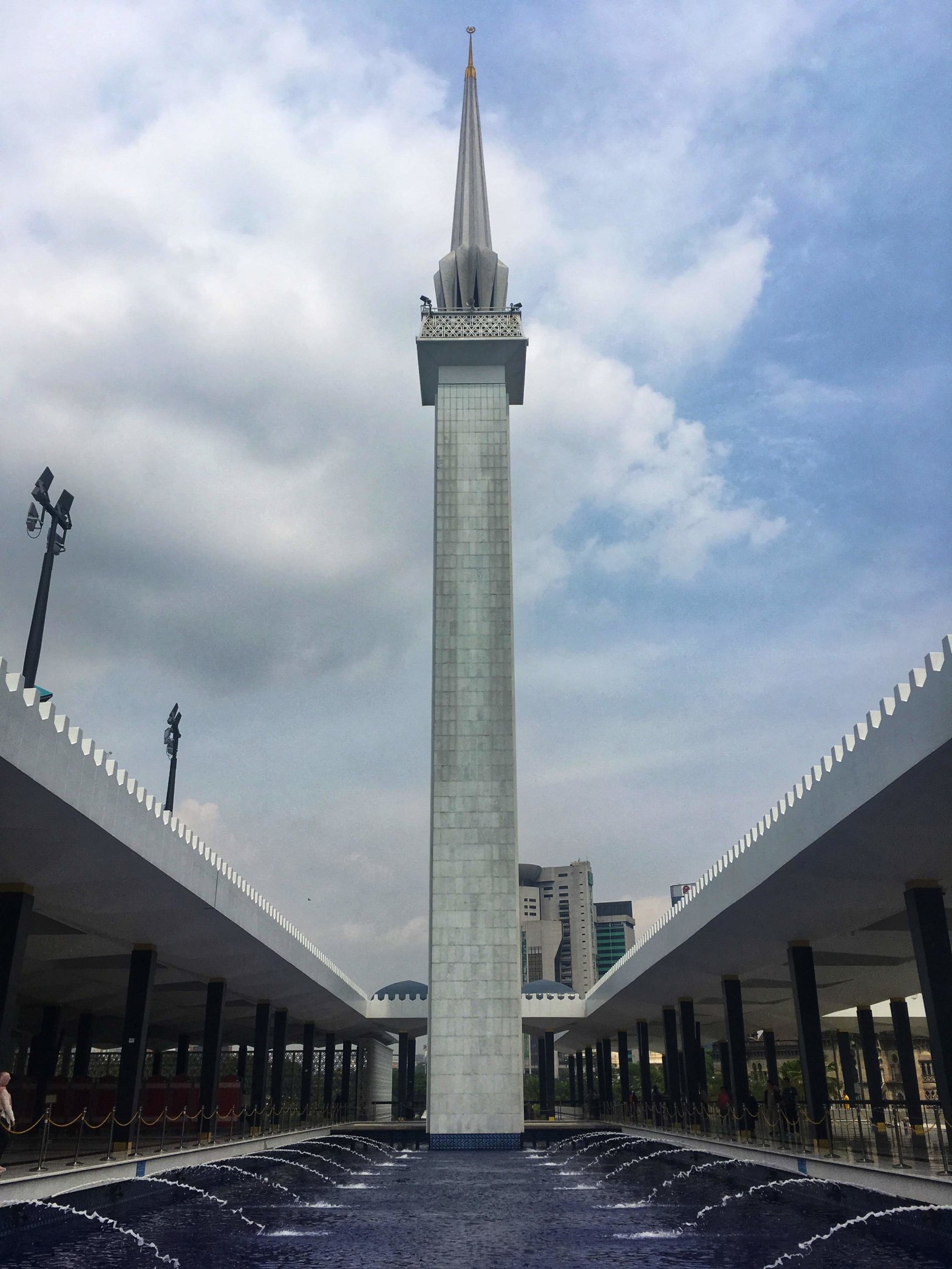
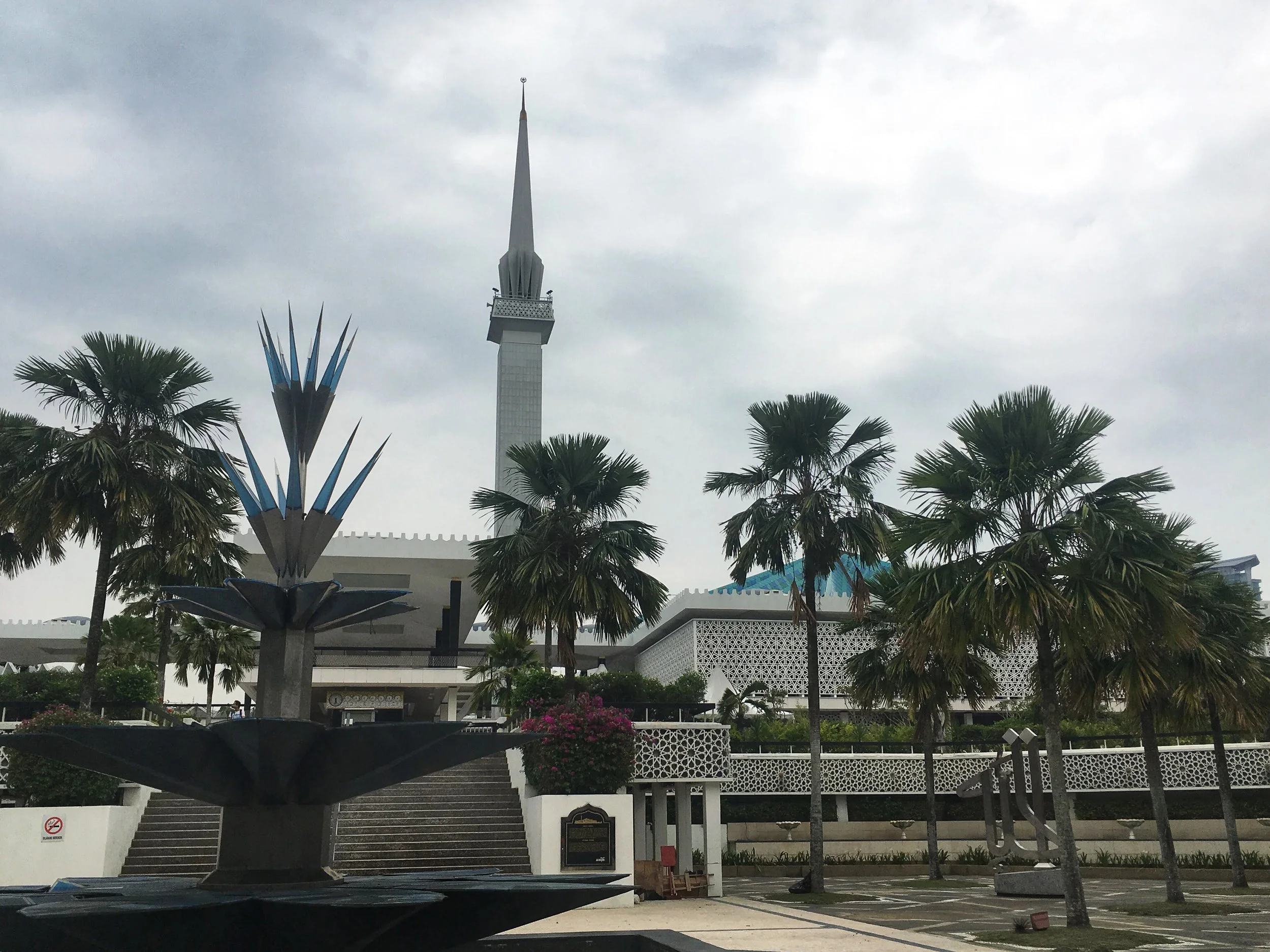
The National Mosque was built in 1965 to celebrate Malaysian unity and independence. The architecture of the mosque is a sign of its time, built in a modern style that looks beautifully retro today. The prayer hall is built in the shape of a 16-pointed star, and the minaret rises an impressive 73 meters above a sparkling fountain.
The prayer hall is big enough to hold 15,000 worshipers at any given time.
There is a small museum inside the mosque that tells about the architecture, construction, and history of the building.
the tall minaret of Malaysia’s National Mosque
Non-Muslims cannot enter the prayer hall, but may take photographs from the outside. Visitors are free to walk around and explore the beautiful mosque and surrounding gardens.
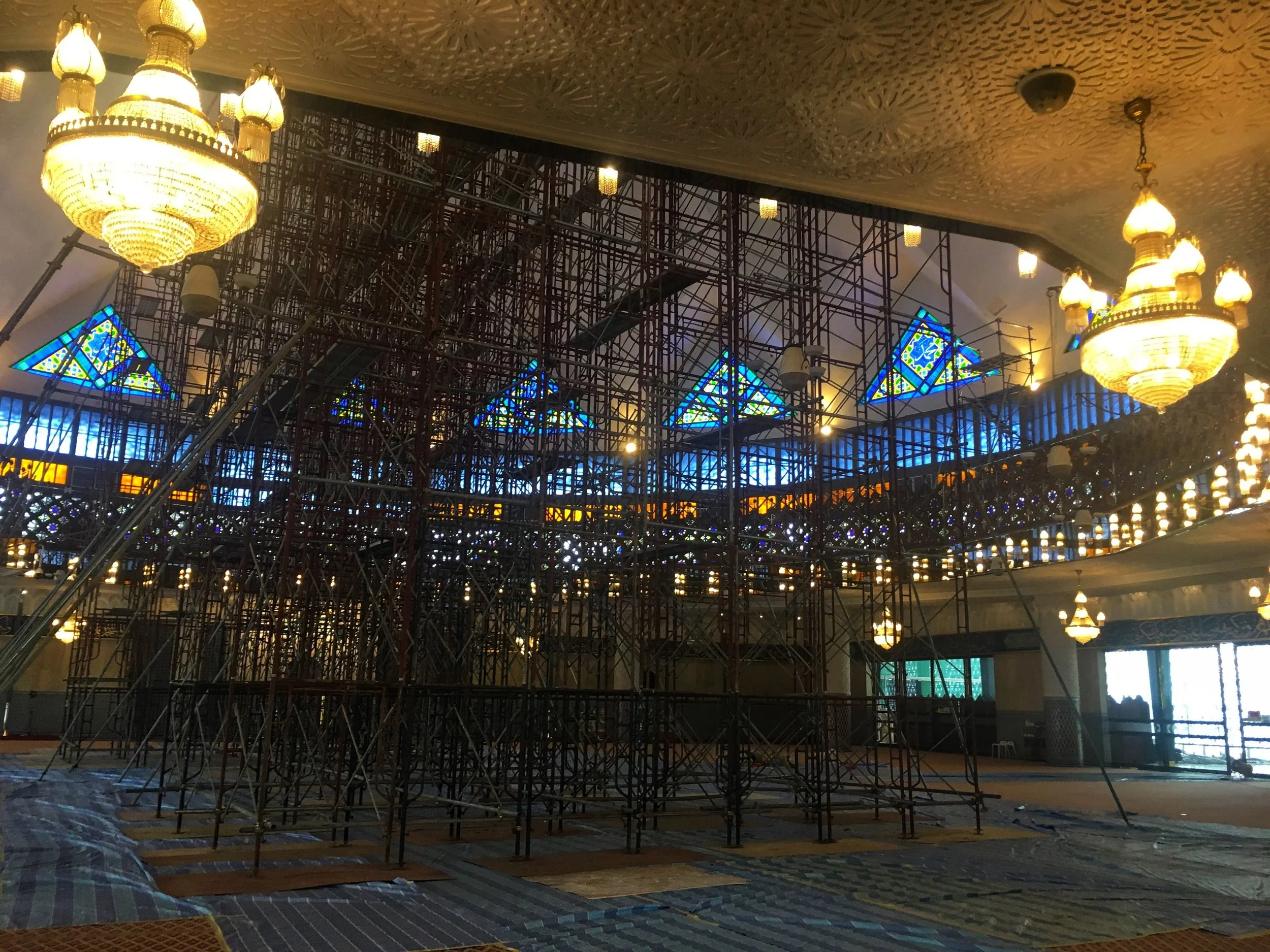
the prayer hall at Malaysia’s National Mosque was under renovation when I visited
The National Hero’s Mausoleum
Behind the mosque is the Makham Pahlawan, the National Hero’s Mausoleum. Here, Malaysian national heroes, including former prime ministers, are interred in a place of supreme honor at the National Mosque.
Makam Pahlawan, the Hero’s Mausoleum of Malaysia at the National Mosque
When it comes to amazing islands and beaches, Thailand has more than its fair share. With world-famous destinations like Phuket, Koh Samui, and Koh Samet, it’s no surprise that some of the country’s smaller islands tend to get a bit overlooked.
Located outside of Bangkok in the Gulf of Thailand, Koh Sichang is an island that certainly doesn’t deserve to get overlooked. While not nearly as popular as Thailand’s other famous beaches, a weekend trip to Koh Sichang is an easy, affordable getaway from the big city.
Koh Sichang offers visitors a unique experience on a small, quiet island. The island is home to a historic palace museum, several beautiful Buddhist temples, and a sunny beach. It may not be the most stunning island in Thailand, but for its proximity to Bangkok and how affordable the island is, it just can’t be beat.
You can get to Koh Sichang by ferry from Siracha, Thailand
How to get to Koh Sichang
the ferry to Koh Sichang costs only 50 Thai baht (about $1.50) and takes around 40 minutes
Koh Sichang is the closest nice beach to Bangkok. Located just outside of Siracha in Thailand’s Chonburi Province, the island is easy to get to from Bangkok.
First, you have to get from Bangkok to Siracha. Buses and minibuses leave every hour from Bangkok’s Ekkamai Bus Terminal (BTS Ekkamai Station). One-way tickets cost 100 THB, and the ride takes around 1.5 hours.
The bus stops in Siracha. From there, take a tuk-tuk (80 THB) to the tourist ferry pier. Ferries leave every hour during the day, and a one-way ticket costs 50 THB. Once on the island, rent a motorbike, hire a tuk-tuk driver, or just walk. The island is small enough that you can get around the main village area on foot.
the tourist pier on Koh Sichang
What to do on Koh Sichang
Koh Sichang – the closest and easiest island to visit from Bangkok, Thailand
Visit the Summer Palace
The main attraction, and what puts Koh Sichang on the map (at least for Thai visitors) is Phra Chuthathut Palace. The island was once the summer residence of King Chulalongkorn (Rama V) who ruled Thailand from 1853-1910. The beloved Thai monarch built his palace along the beach on Koh Sichang.
beautiful Koh Sichang in the Gulf of Thailand
In 1893, the island was invaded by France during the Franco-Siamese Wars. The palace was abandoned. After a Siamese victory, the king had his palace moved piece-by-piece to Bangkok. Today, you can visit the former Phra Chutathut Palace in the capital. It is now known as the Vimanmek Teak Mansion.
a villa at the Phra Chuthathut Palace Museum on Koh Sichang, Thailand
The palace was the only royal Thai palace built on an island. Today, the foundation of the palace remains, along with several former villas which now house the palace museum. Visiting the museum is free, and there is no strict dress code. You can spend a lazy afternoon wandering through the former palace grounds, and when you are tired, visit the museum cafe for a cool iced coffee.
Phra Chuthathut Palace was the old Summer Palace of King Chulalongkorn of Thailand
Hike to the island viewpoint
the Square Pagoda on the hike up to the Koh Sichang viewpoint
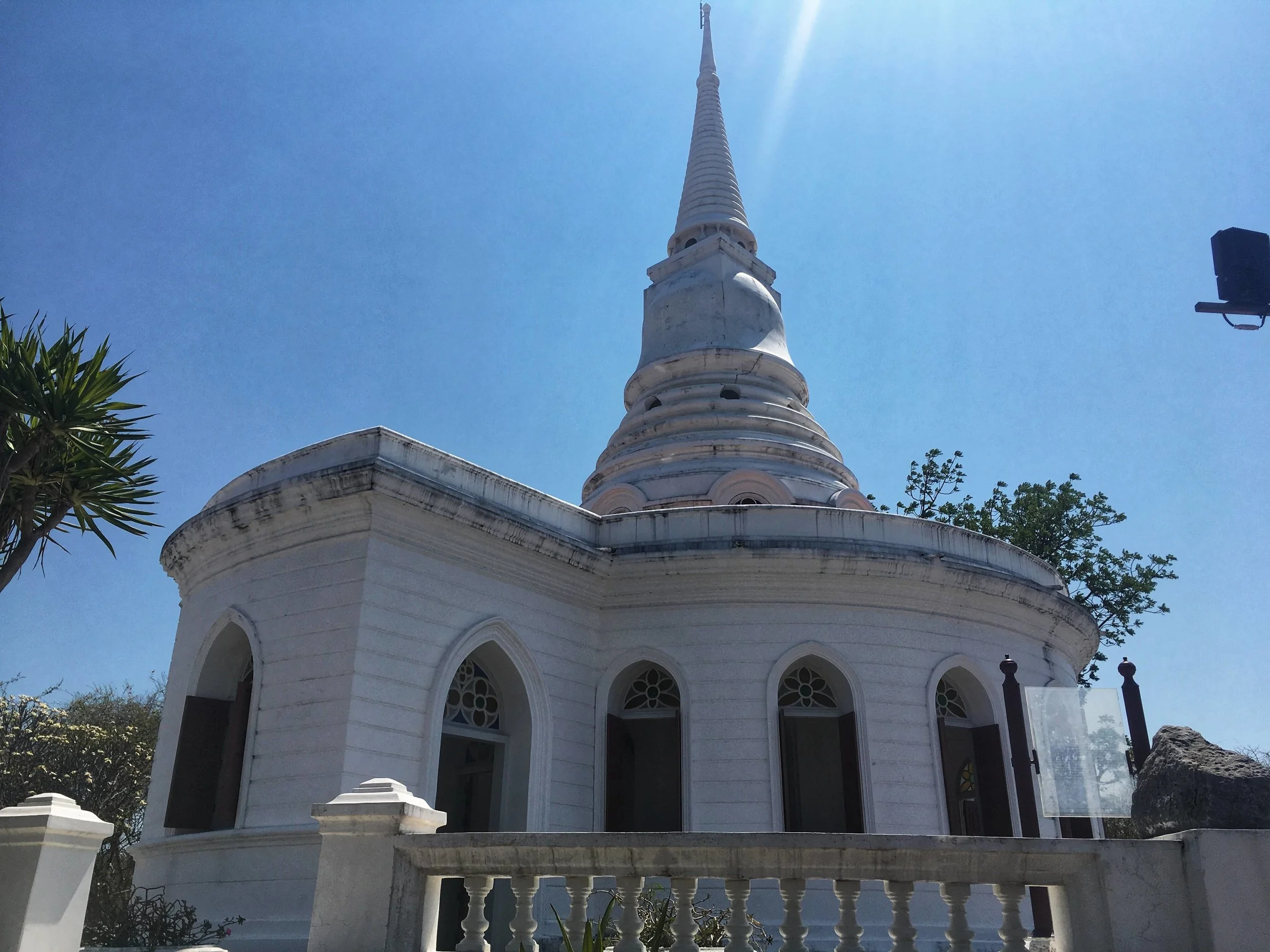
A trail winds up the mountainside from the palace to the island’s viewpoint. Along the way, the trail passes several structures that were once part of the palace, including the Square Pagoda and a white Buddhist shrine built by the orders of King Chulalongkorn. The forward-thinking monarch was the first Thai king to travel to Europe, and was inspired by the art, culture, and architecture of the West. He ordered this Buddhist shrine to be designed in the style of a Christian chapel, complete with marble floors, a whitewashed exterior, stained glass, and a marble altar. It’s one of the most unique shrines in Thailand.
a western-style Buddhist temple on Koh Sichang Island was designed to look like a church
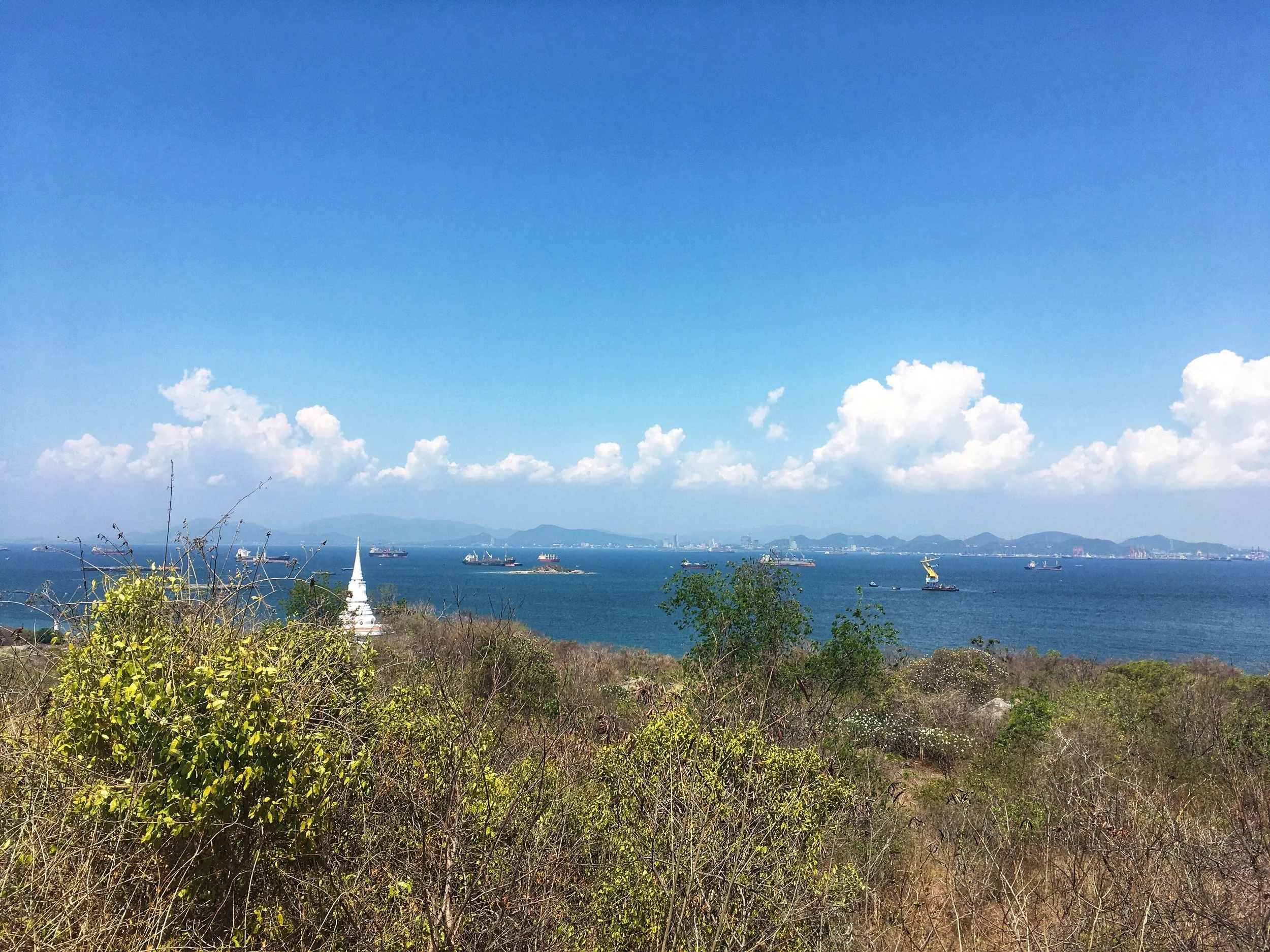
From the viewpoint, you can look out over the sea and surrounding area. The hike isn’t too hard. It’s relatively flat, and less than a kilometer from the palace to the viewpoint. There isn’t much shade along the way, so be sure to bring a hat or wear sunscreen.
the view from the Koh Sichang viewpoint
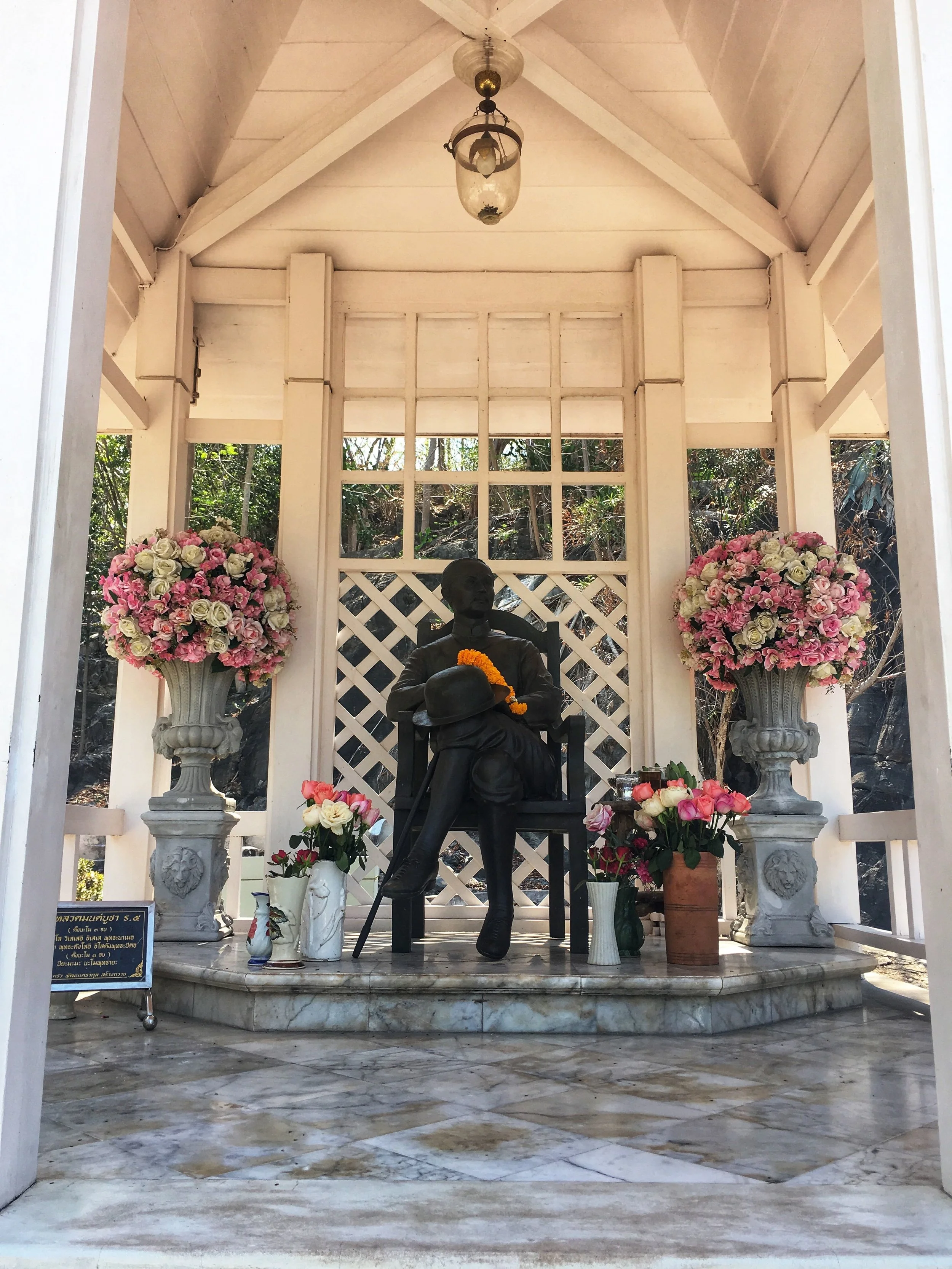
On the way back down from the viewpoint, stop by the monument to King Chulalongkorn, the man who put Koh Sichang on the map a century ago.
a memorial to King Chulalongkorn on Koh Sichang Island
Tham Pang Beach
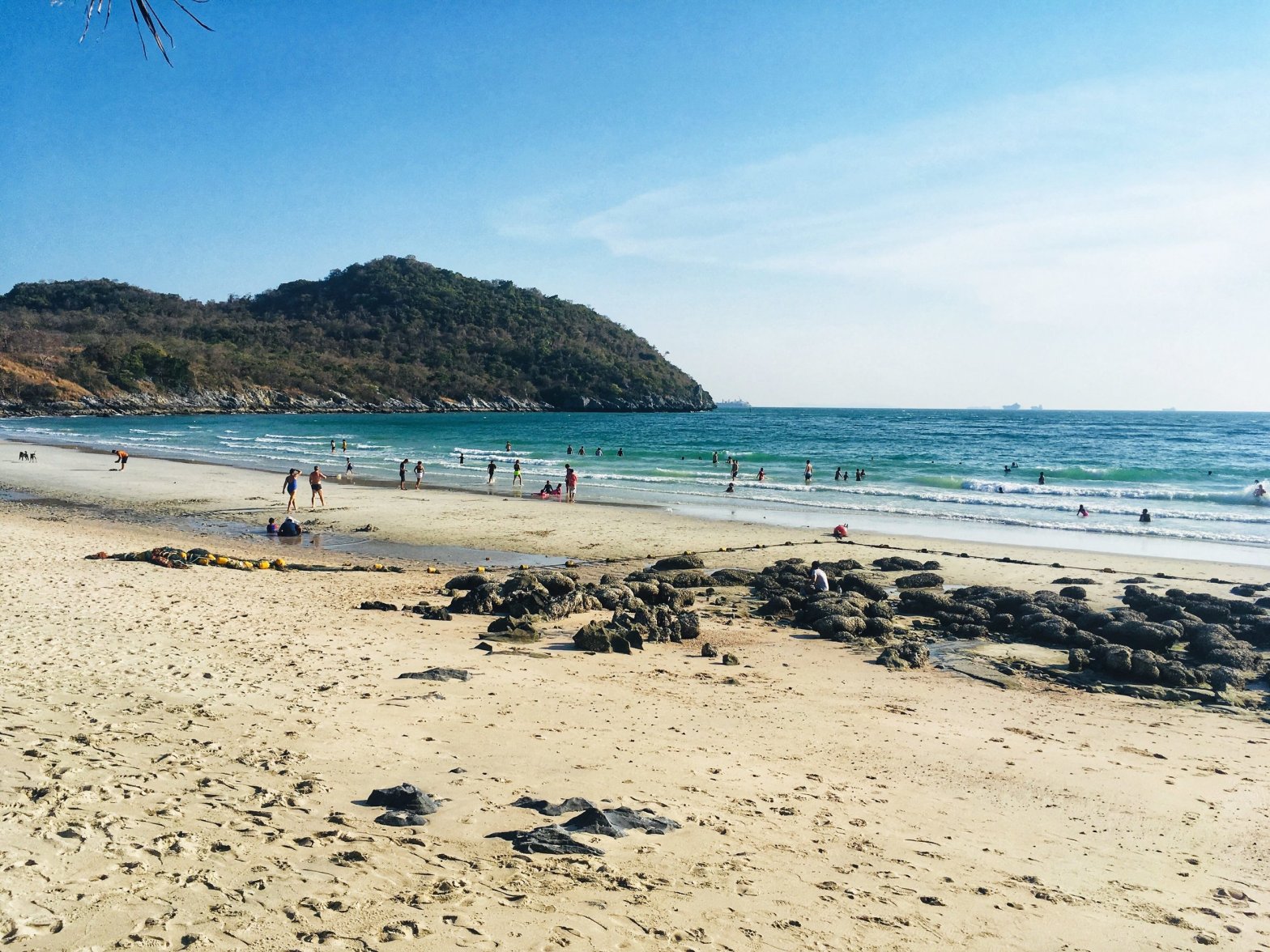
Tham Phang Beach, Koh Sichang Island, Thailand
The nicest beach on Koh Sichang is Tham Phang Beach. It’s located across the island from the village. While you can walk, the climb is steep and exhausting. If you want to visit the beach from the village, rent a motorbike, hire a motorbike taxi, or get a driver to take you. It’s just a kilometer or so up and over a hill.
Tam Phang Beach
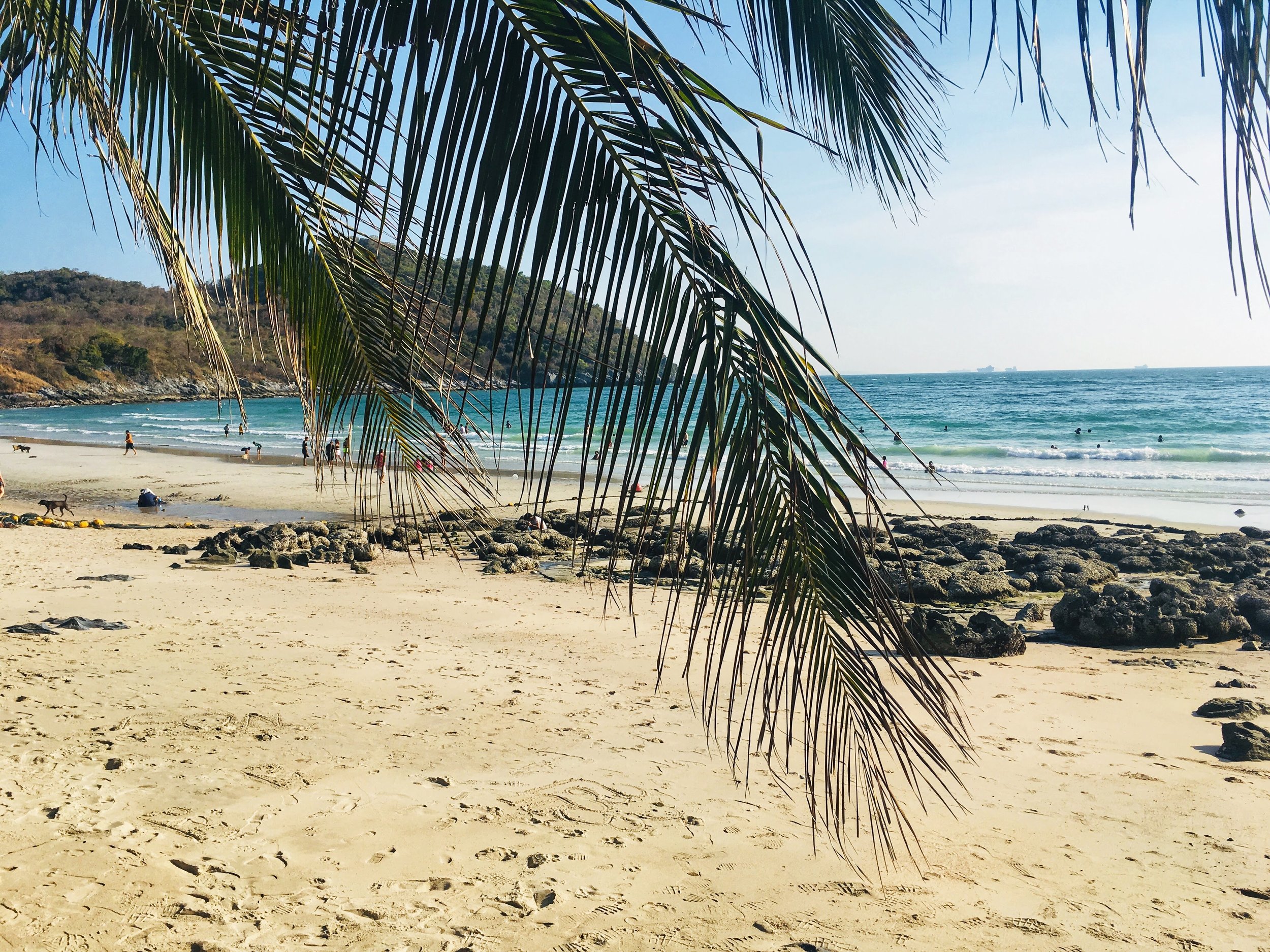
The beach is a bit rocky, so watch your step! There’s a swimming area, and the waves and current are fairly mild. It’s never very crowded, either. Few foreigners know about Koh Sichang, so it’s not really popular with tourists. If you do visit during the off season, you’ll nearly have the whole beach to yourself.
Tham Phang Beach on Koh Sichang Island is the closest and nicest beach to Bangkok
There are several restaurants and food shops set up along the beach. Prices here tend to be a bit more expensive than back in the village, though very cheap by normal Thai island standards. You can rent a beach chair and umbrella for free as long as you buy a drink (try a cold coconut or mango smoothie!), and you can sit there as long as you like.
there are plenty of restaurants and shops on Tham Phang Beach
Sunset and seafood dinner
sunset on Koh Sichang
The nicest thing about Koh Sichang is that there really isn’t that much to do. In the evening, sit by the sea and watch the sunset with a few cold beers and a plate of seafood.
When I visited Koh Sichang recently, I had dinner at the De’Anchor Hotel, located within walking distance of the tourist pier. I ordered the softshell crab fried rice. Softshell crab is one of my all-time favorite treats, and I was amazed with the amount of food that I got. For only 180 THB, they served me a plate with two FULL softshell crabs! Absolutely delicious, with incredible views too. I didn’t stay at the hotel, since there are much cheaper places on the island and I’m a budget traveler, but their food is surprisingly affordable and super delicious. Wash it all down with a cold beer while the sun slips away behind the horizon.
amazing soft shell crab fried rice – only 180 THB for this HUGE portion and two full crabs!
The cheapest island in Thailand?
Usually, when you visit an island in Thailand, you can expect prices to be 2-3 times higher than they would be in Bangkok, even more so if you visit a popular place like Pattaya, Phuket, or Koh Samui. Koh Sichang, however, is surprisingly affordable, and even cheap! A weekend getaway to Koh Sichang from Bangkok won’t break the bank, leaving you extra money to spend on delicious seafood and ice cold beer. Since Koh Sichang is one of the lesser-known destinations in Thailand, especially among foreigners and tourists, the prices are much more reasonable than you would expect.
How much does it cost to visit Koh Sichang?
Bus ticket from Bangkok to Siracha – 100 THB
Ferry from Siracha to Koh Sichang – 50 THB
Motorbike rental on Koh Sichang – 300 THB/day
Bungalow rental – 300-500 THB/night
Seafood dinner – 200 THB
Visiting Phra Chuthathut Palace – FREE
Visiting Tham Phang Beach – FREE
Visiting the Buddhist temples – FREE
Where to stay on Koh Sichang?
There’s no shortage of cheap hostels and bungalows on the island. If you want to stay somewhere nicer, there are a handfull of resorts as well. Generally, you can just show up and see if there is any availability at a bungalow hotel. The island is rarely full. I recommend booking your stay in advance. Bungalows cost 300-500 THB a night, and a nicer resort will cost between 2000-3000 THB per night.
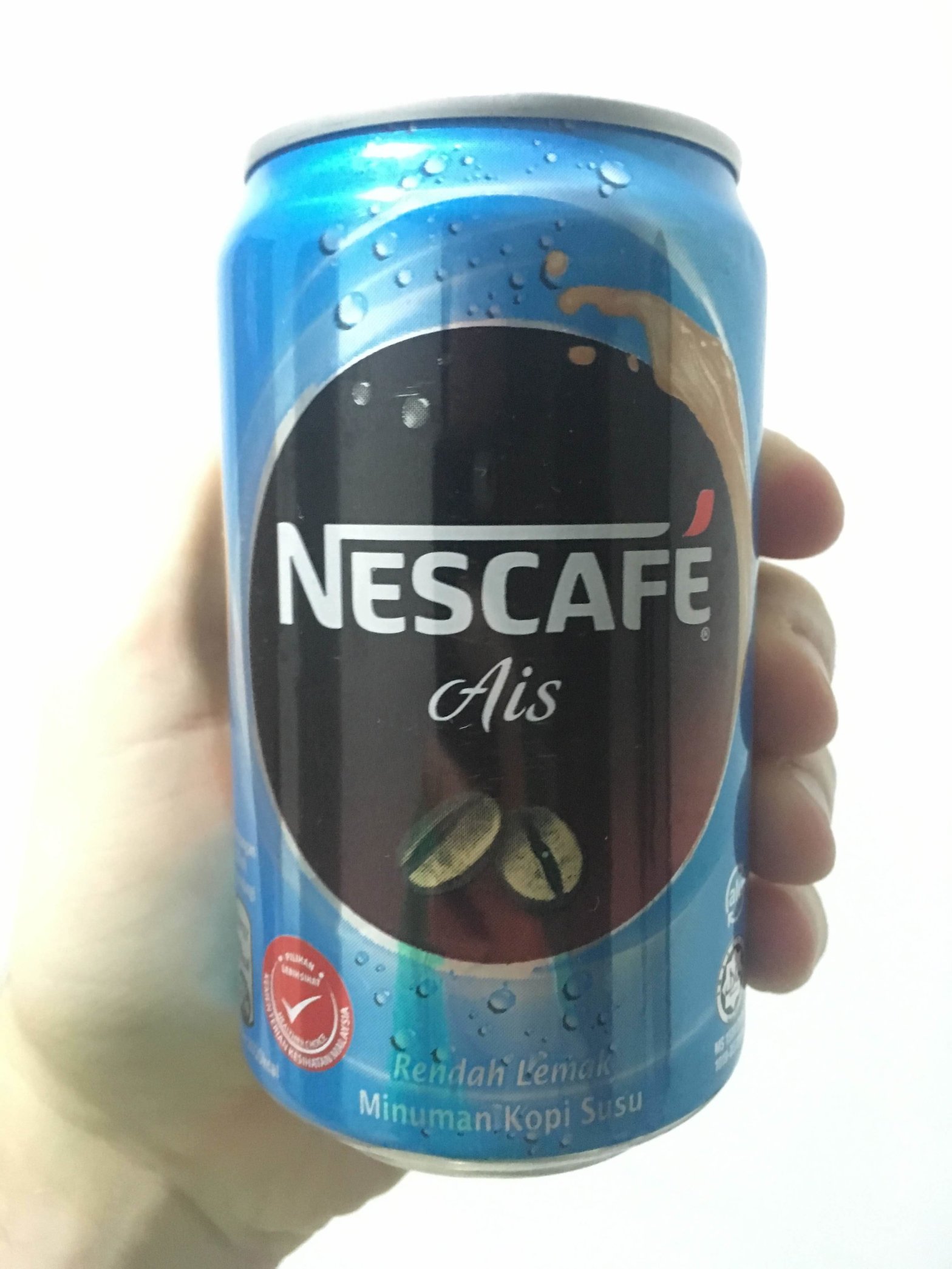
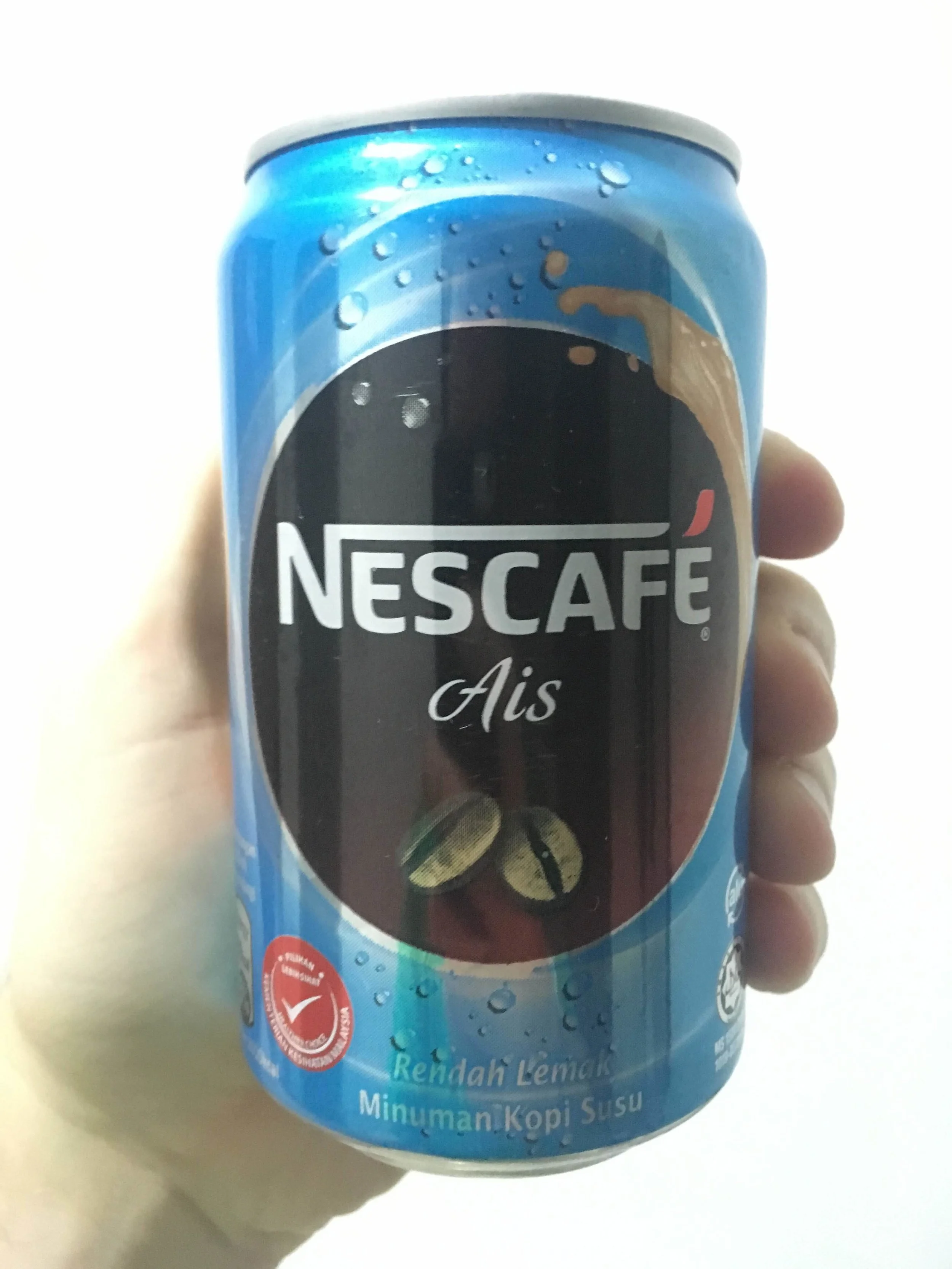
Do you remember those weird “cooling sensation” potato chips that I found a few weeks ago? Well, here I am with something brand-new along those same lines. I was in Malaysia recently, and picked up what I thought was just a can of iced coffee from the store.
Nescafe Ais from Malaysia – cooling canned coffee
I thought that the “ice” in this coffee’s name just referred to it being an iced coffee, so imagine my surprise when my mouth was hit with a weird menthol-like cooling sensation after the first sip!
First, you taste a pretty basic iced coffee. A few seconds after swallowing, however, your mouth suddenly feels ice cold! It’s a weird feeling, but I have to admit that I kind of like it. It works a lot better than the cooling sensation potato chips that I reviewed a while back.
Since the coffee itself is already chilled, the sudden icy feeling isn’t so shocking. It just makes the drink taste colder and cool you down a bit better. It’s still a little weird, but not bad at all.
Even though Kuala Lumpur is the official national and royal capital of Malaysia, since 2001, the federal administrative capital of the country has been moved to the brand-new planned city of Putrajaya, located about 35km from KL. Putrajaya is a beautiful, green, eco-friendly city that is home to many of Malaysia’s government ministries, including the Prime Minister’s office. Putrajaya is also home to one of Malaysia’s most beautiful mosques, the Masjid Putra, or the Pink Mosque of Putrajaya. The mosque is a stunning example of Malay Islamic architecture, and is open to non-Muslim visitors. It’s a must-see on your trip to Kuala Lumpur.
How to get to Putrajaya from Kuala Lumpur
Putrajaya is relatively close to Kuala Lumpur, and even closer to Kuala Lumpur International Airport, and is easily reached by train, car, or bus. There are bus lines that run between the two cities, but the quickest and easiest way to travel between KL and Putrajaya is by train.
KLIA Transit station at KL Sentral Station
Putrajaya sits along the KLIA Transit Line (NOT the KLIA Ekspress – if you get on this train, you’ll go right past Putrajaya on the way to the airport!). The trains depart from KL Sentral Station. You can purchase a ticket from the automatic console. If you pay with a debit or credit card, you can book the ticket with a slight discount. I purchased a round-trip ticket for 25.20 ringgit (about $6 USD). The ticket was valid for the day.
purchasing a ticket from Kuala Lumpur to Putrajaya
The KLIA Transit trains are very much like the KLIA Express trains – clean and comfortable. Trains depart from KL Sentral Station every 15-20 minutes, and the trip takes around 35 minutes. The KLIA Transit rail runs between KL Sentral and KLIA Airport. Be sure to hop off at Putrajaya/Cyberjaya Sentral Station!
riding the KLIA Transit train from Kuala Lumpur, Malyasia to Putrajaya
Getting around Putrajaya, Malaysia
Even though Putrajaya is the federal capital of Malaysia, it’s a fairly big, empty city. Plans to build a city monorail have been put on hold for the time being. It’s easy enough to get around, however. The city operates a few bus lines, but the easiest way is to hire a taxi or use the Grab app on your phone. A taxi ride around the city will only cost a few ringgit. I booked a taxi using Grab, and the trip to the Pink Mosque from Putrajaya/Cyberjaya Sentral cost only 8 ringgit.
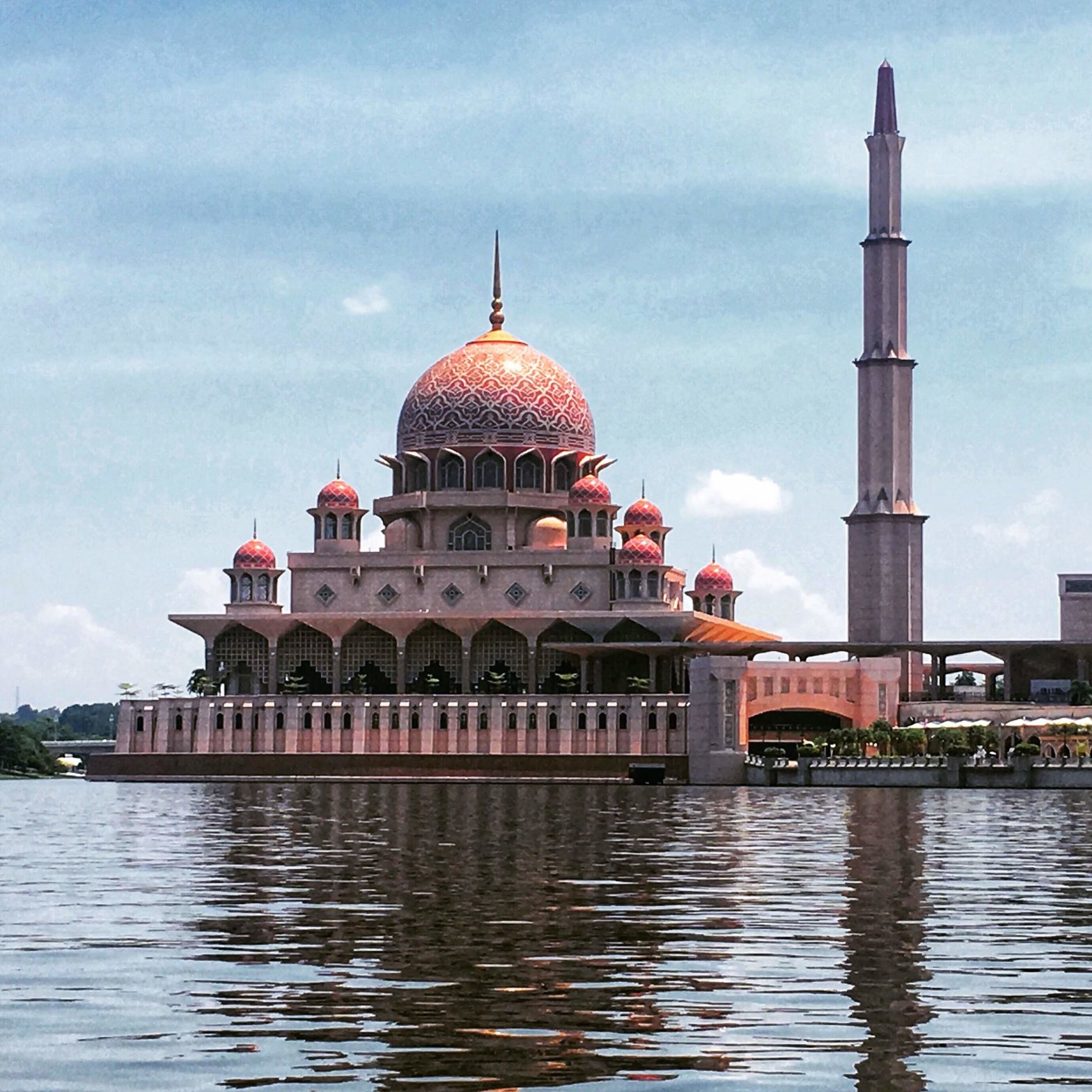
the Masjid Putra in Putrajaya, Malaysia
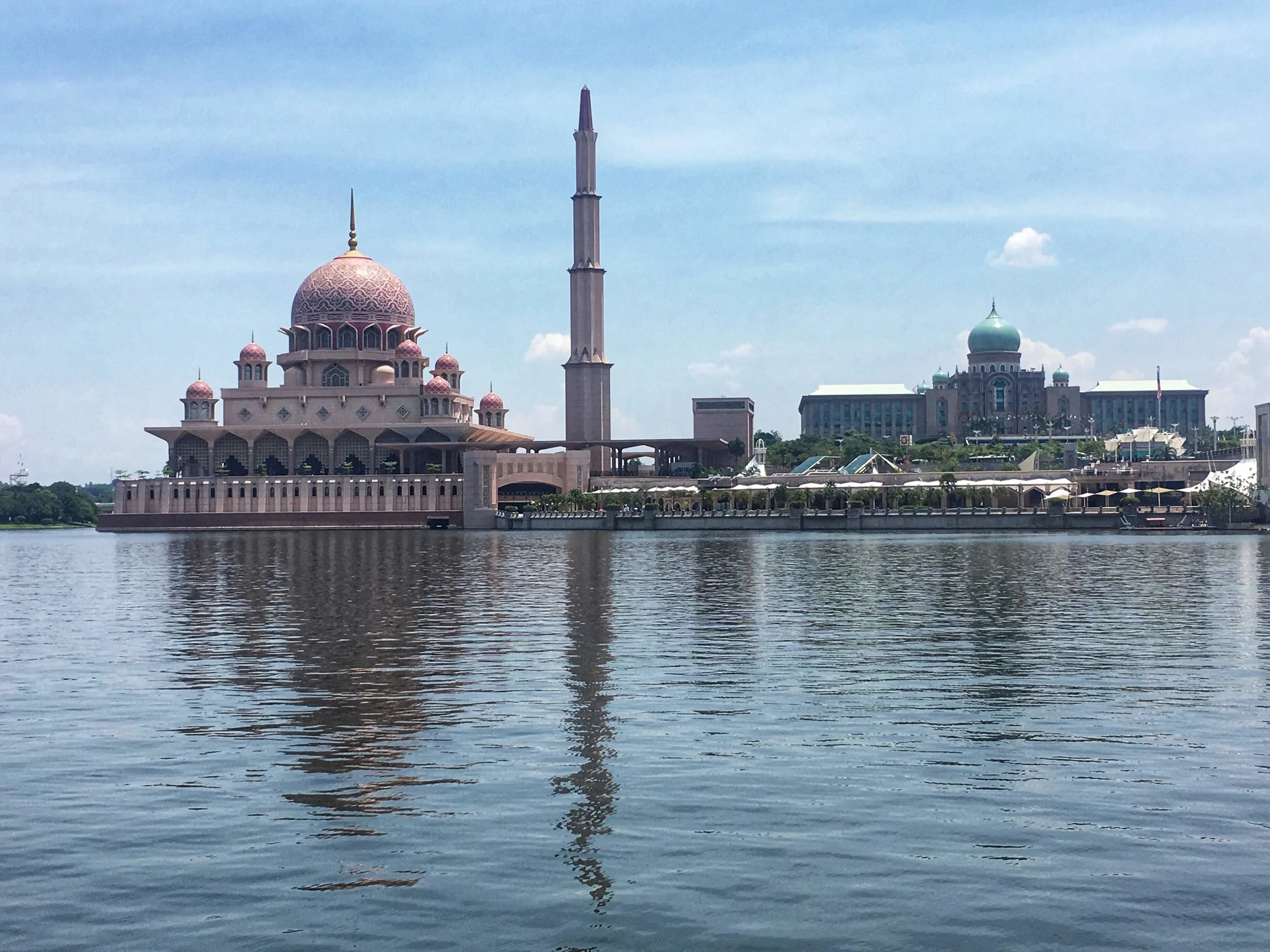
The Pink Mosque is located on the banks of the man-made Putrajaya Lake. Next to it is the office of the Prime Minister, which looks a bit like Agrabah from Disney’s Aladdin. Depending on what time you arrive, you may have to wait before visiting the Pink Mosque. While non-Muslim tourists are welcome, and even encouraged to visit the Masjid Putra, it is restricted to Muslim visitors during certain hours of the day (during daily prayers). There are plenty of restaurants, souvenir shops, cafes, and more on the Putrajaya Promenade where you can spend your time waiting. The promenade is located just down a set of stairs from the mosque along the lake.
the office of the Prime Minister of Malaysia in Putrajaya
Visiting Masjid Putra – the Pink Mosque of Putrajaya
Masjid Putra, the Pink Mosque of Putrajaya, is one of the most beautiful in all of Malaysia
When can you visit the Pink Mosque (visiting hours for non-Muslims)
Visitors are welcome to visit the Pink Mosque Saturday-Thursday from 9:00-12:30, 14:00-16:00, and 17:30-18:00. Non-Muslim visitors and tourists are welcome to visit the Pink Mosque, but entrance is restricted to Muslims during the daily prayers.
On Friday, visiting hours are restricted to 15:00-16:00 nd 17:30-18:00.
There are rules and regulations that visitors should follow when visiting any mosque. Below are the rules for visiting the Pink Mosque. Be aware that there is a strict dress code, although visitors can borrow a robe free of charge to cover up if they aren’t in the appropriate attire.
visiting hours, rules, and regulations for visiting the Pink Mosque, Putrajaya, Malaysia
What to wear at the Pink Mosque – dress code for visitors
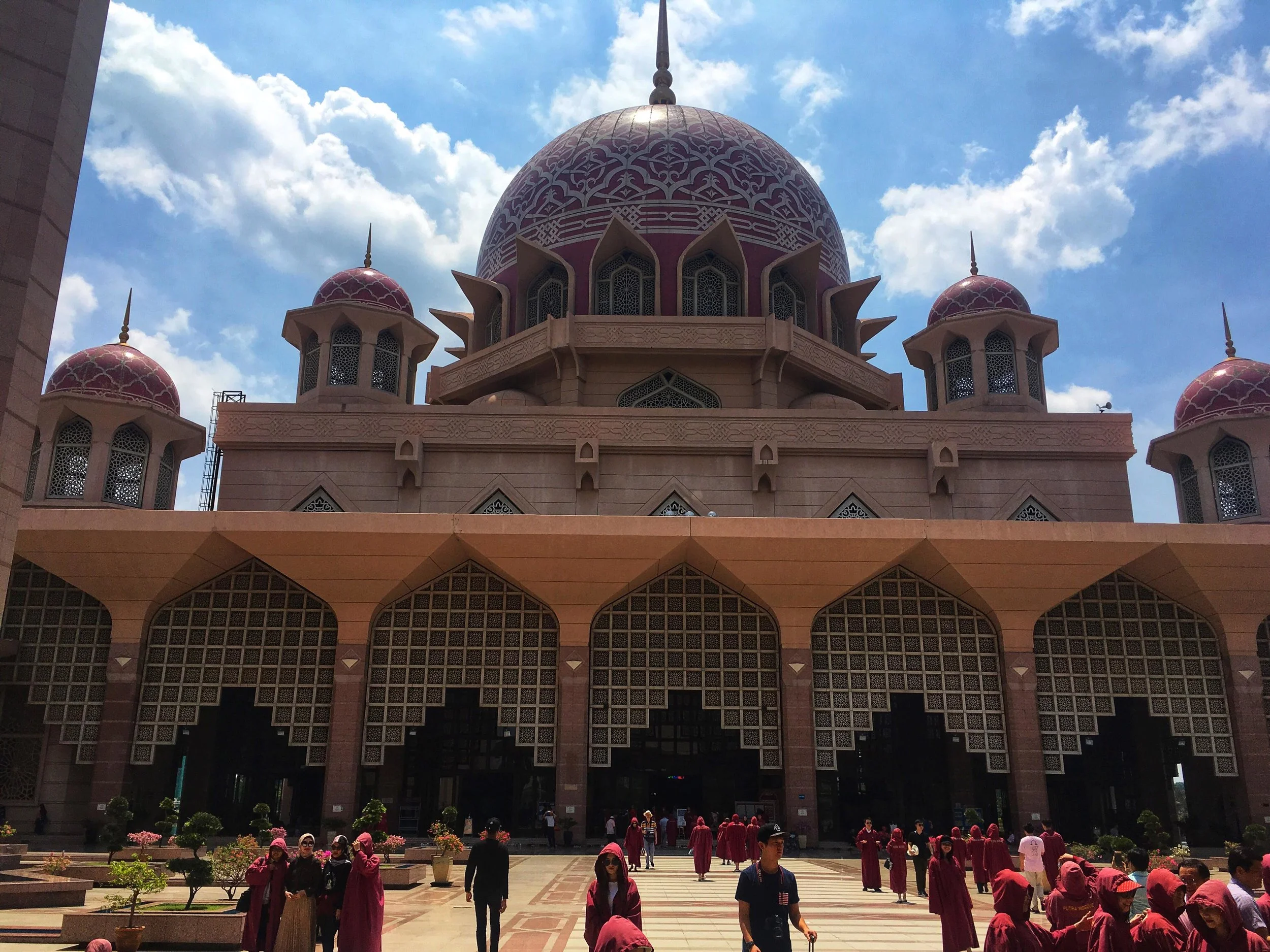
The Masjid Putra, like any mosque, maintains a strict dress code. Women must cover their arms, legs, and head. Men must cover their legs and arms. If you didn’t pack the right clothes, don’t worry! The mosque provides loose maroon robes to visitors to wear so that they can enter the mosque. Visiting the mosque is free, and it doesn’t cost anything to borrow a robe either.
visiting the Pink Mosque
About the Pink Mosque – what to see at the Masjid Putra
Malyasia’s Pink Mosque was constructed in 1999, just before the federal capital was moved to Putrajaya.
The dome is 50 meters high.
At 116 meters tall, the minaret is the third-tallest in the world!
The mosque is constructed out of beautiful pink granite.
It is large enough to hold 15,000 worshipers at any given time.
the interior of the Pink Mosque in Putrajayathe central dome of the Masjid Putra
There is a small souvenir shop at the mosque where you can buy small gifts, postcards, and snacks and drinks.
If you have any questions about the mosque, there are some very helpful Engish-speaking guides who work at the mosque to answer any questions that you have about Islam or the mosque itself. The guides won’t charge you anything, and won’t try to convert you. They are there to help and to make you feel comfortable visiting the mosque.
When I visited, the Pink Mosque was hosting a display about Islam and about all of the verses in the Quran that condem terrorism and extremism. If you are interested in religion and culture, it’s a really interesting place to visit. Even if you are not, a visit to the mosque is a great day trip from Kuala Lumpur. The building is breathtaking, and it’s amazing to see.
Lately, I’ve been having a lot of fun visiting a McDonald’s once in each country that I visit and ordering something special off of the menu that can be found nowhere else. Now, I’m in Malaysia. After landing, I was feeling hungry, so I hit up a local McDonald’s to see what Malaysia’s special menu items are.
I want to be clear, though, when I’m travelling, I almost always eat the local food. I think it’s a great way to get a feel for the local culture, and I’m realy something of a foodie. In fact, I even started a second blog all about the great street food that I’ve tried around the world. That being said, visiting a McDonald’s while traveing is a bit of a hobby of mine, especially when you can find something on the menu that isn’t available back home.
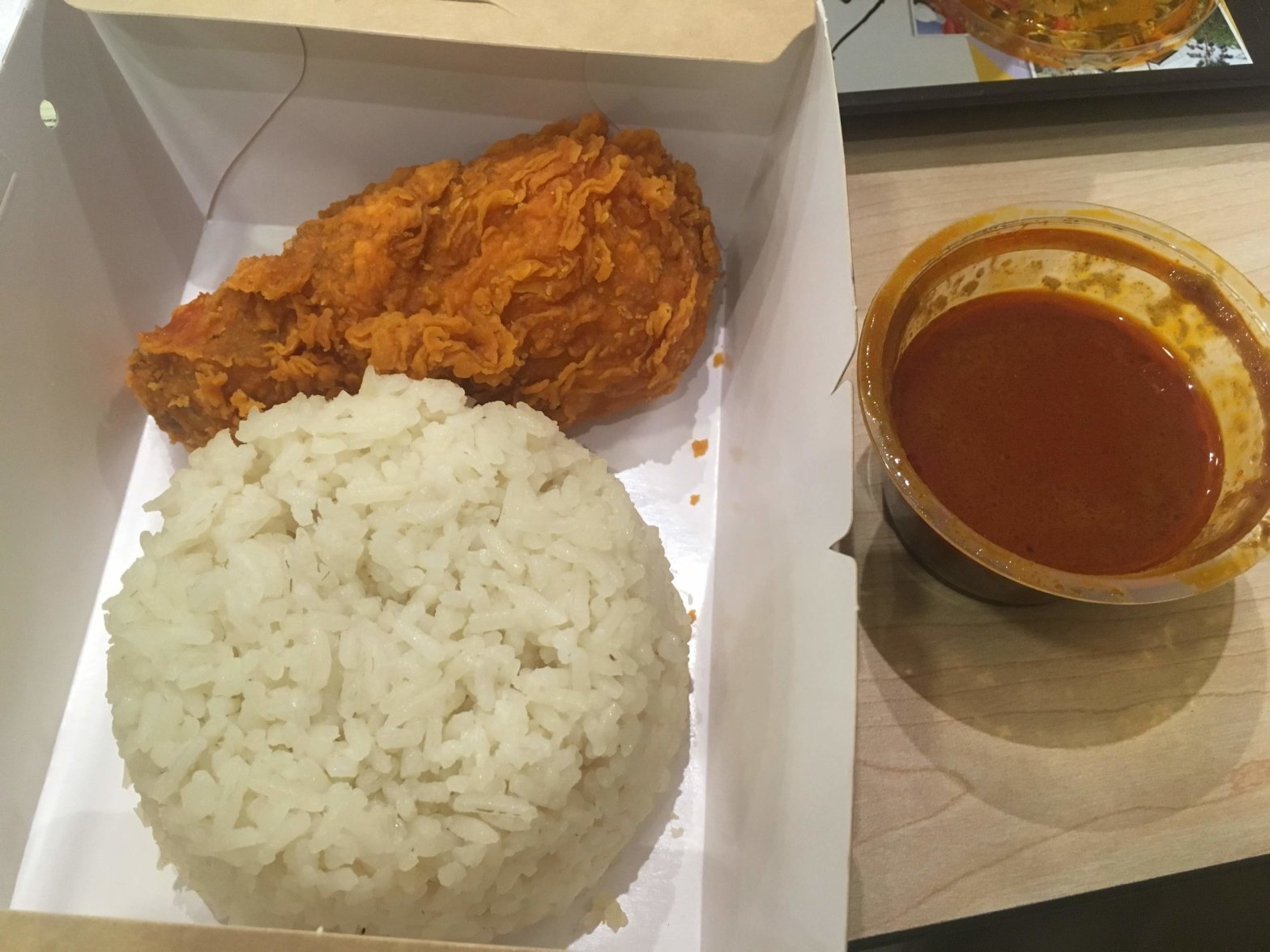
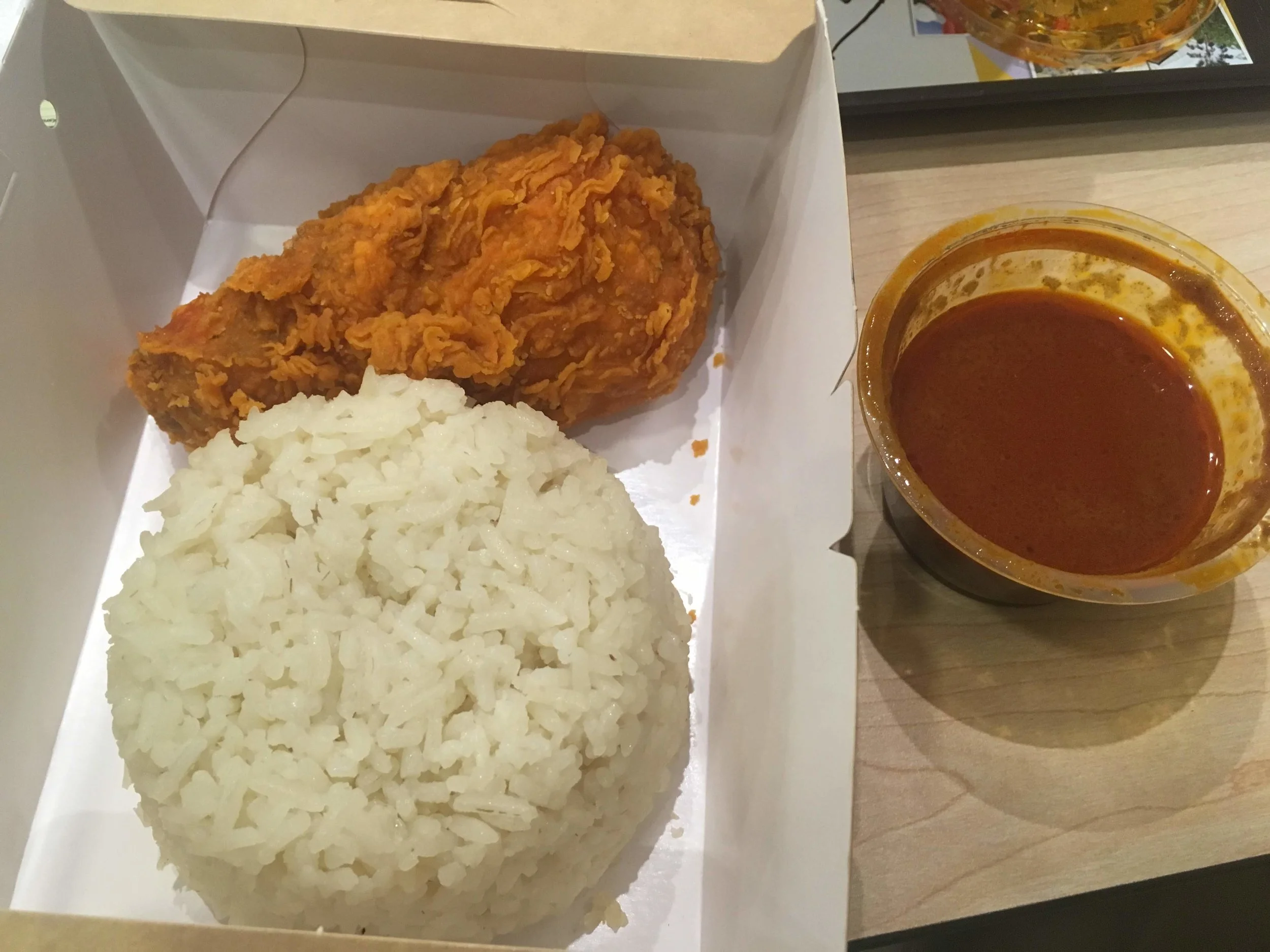
Ayam Goreng McD (spicy chicken and rice) ordered at a McDonald’s in Kuala Lumpur, Malaysia
When you visit a McDonad’s in Malaysia, try ordering the Ayam Goreng McD (and get the spicy version if you like spicy food). This is McDonald’s twist on the classic Malaysian fried rice and chicken dish. I opted for the spicy version. The chicken itself wasn’t overly spicy, but the curry-style sauce (I wish I remembered the name) that they gave me with the dish sure was! (The sauce is really good to dip fries in, by the way)!
Kuala Lumpur, Malaysia’s bustling capital city, is one of the most modern and convenient to get around in all of Southeast Asia. When landing at the airport just outside of town, you have a few options for how to get to the city center: you can take the city bus (the budget option), get a taxi or a Grab car, or take the KLIA Ekspress Train (the fastest option).
Here’s everything you need to know about the KLIA Ekspress:
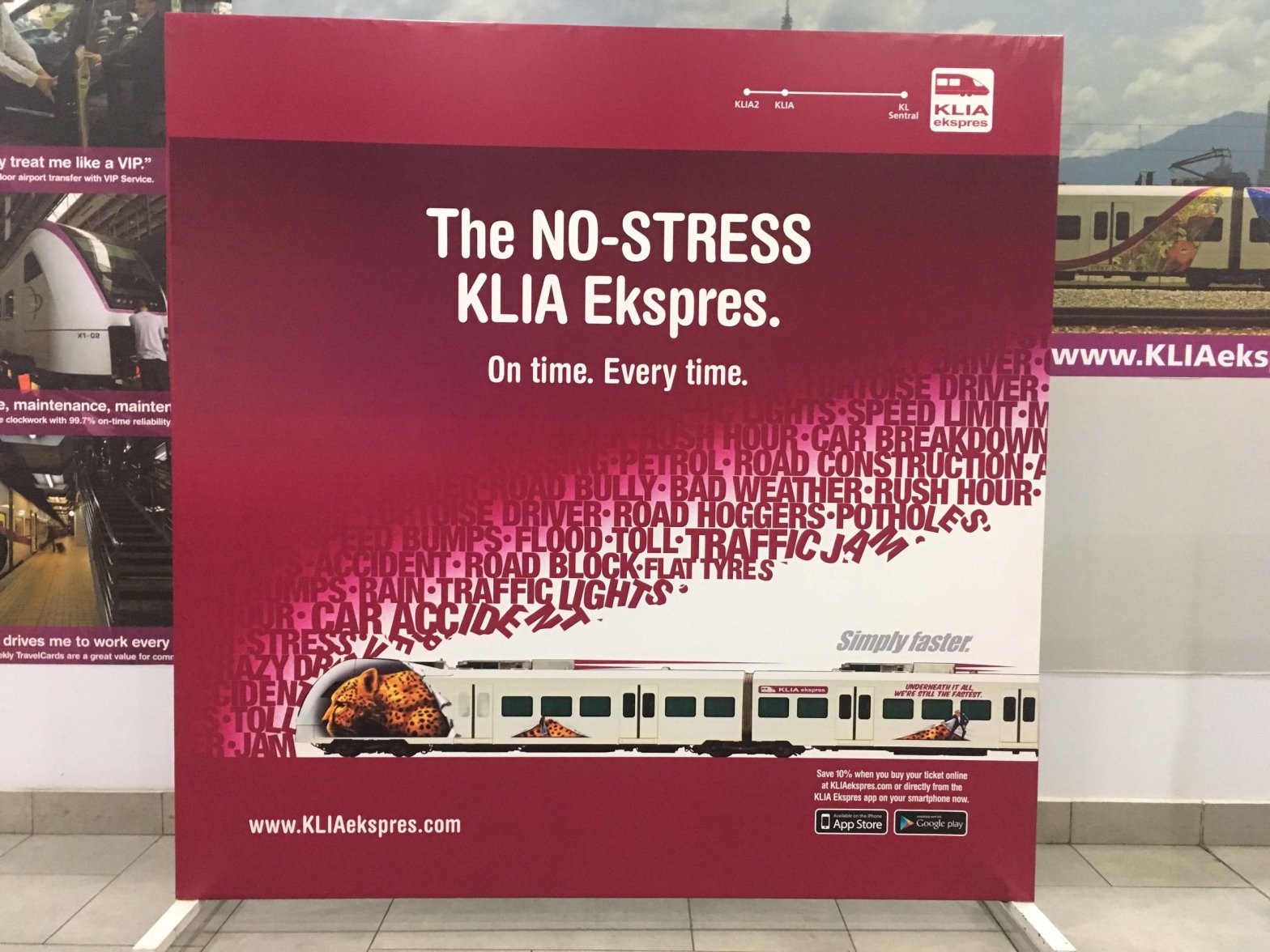
KLIA Ekspress – Kuala Lumpur airport rail express train
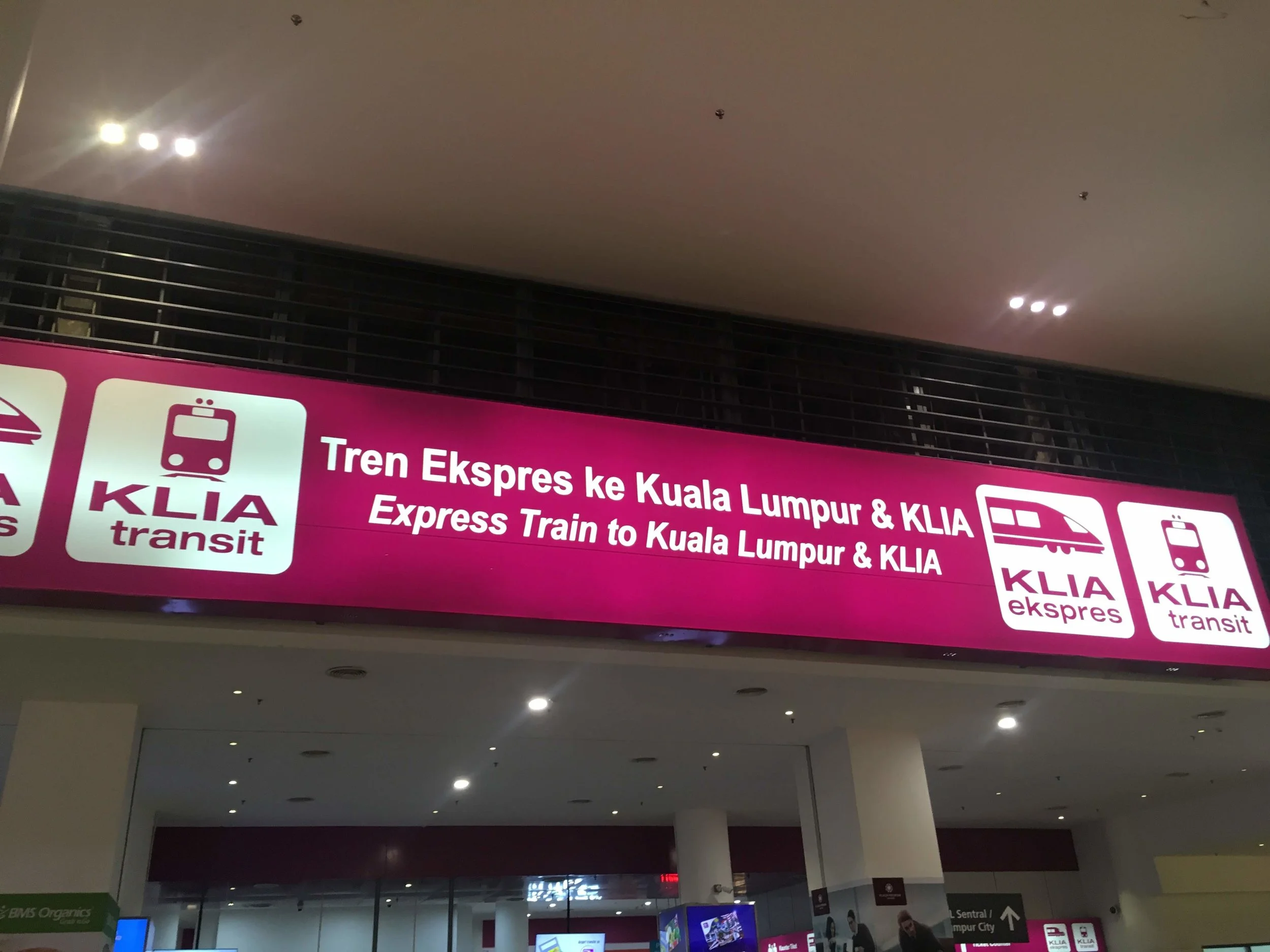
After leaving the customs area, it’s really easy to find your way to the KLIA Ekspress station. The way is clearly marked and impossible to miss. Before boarding the train to the city center, you’ll need to buy a ticket.
If you are looking at a map of the Kuala Lumpur public transportation system, the KLIA Ekspress is the purple line (Line 6).
A one-way ticket from Kuala Lumpur International Airport to the city center (KL Sentral Station) costs 55 MYR (about $13 USD).
A round-trip pass to and from the airport to the city costs 100 MYR (about $24 USD) and is valid for one month. If you will be visiting Malaysia for shorter than a month, your best budget deal is to go ahead and book the round-trip ticket. Don’t loose your ticket card!
If you have a debit or credit card that uses Visa contactless “tap to pay” technology, you can pay with your card at the airport ticket counter for the KLIA Ekspress train for a 10% discount on your tickets.
After you have your ticket, you can go to the KLIA station. Check the departure time for the next train. The station is just downstairs from the arrivals terminal. Be sure to use the toilet before you go to the station – there are restrooms in the airport terminal and on the train, but not in the KLIA station itself.
KLIA Ekspress station at Kuala Lumpur International Airport
The KLIA Ekspress trains are high-speed rail trains that trave the 57 kilometer trip from Kuala Lumpur International Airport to KL city center in around half an hour.
the KLIA Ekspress train arriving at Kuala Lumpur International Airport
The interior of the train is very comfortable. There are toilets available and free wifi on board. There are also plenty of places for passengers to stow their luggage during the trip.
onboard the KLIA Ekspress train – comfortable seating and free wifi!
The train travels quickly to the city center, stopping just once in between the airport and KL Sentral station. KL Sentral is the main transit hub for Kuala Lumpur’s public transporation system, and you can get to any part of the city on other metro lines from the station.
the view from the KLIA Ekspress while traveling from the airport to Kuala Lumpur city center
It’s no secret that I’m a coffee lover. When I’m traveling around the world, I’m always interested in trying the local coffee, especially if there’s something unusual or unique about it.
While visiting Vietnam, I learned about two really special and delicious coffee drinks: egg coffee from Hanoi and salt coffee from Hue. Both were unexpectedly tasty!
This week, Thailand’s Cafe Amazon chain released a brand-new drink that sort of combines both of those flavors. Today, I taste and review the NEW Cafe Amazon salted egg yolk coffee!
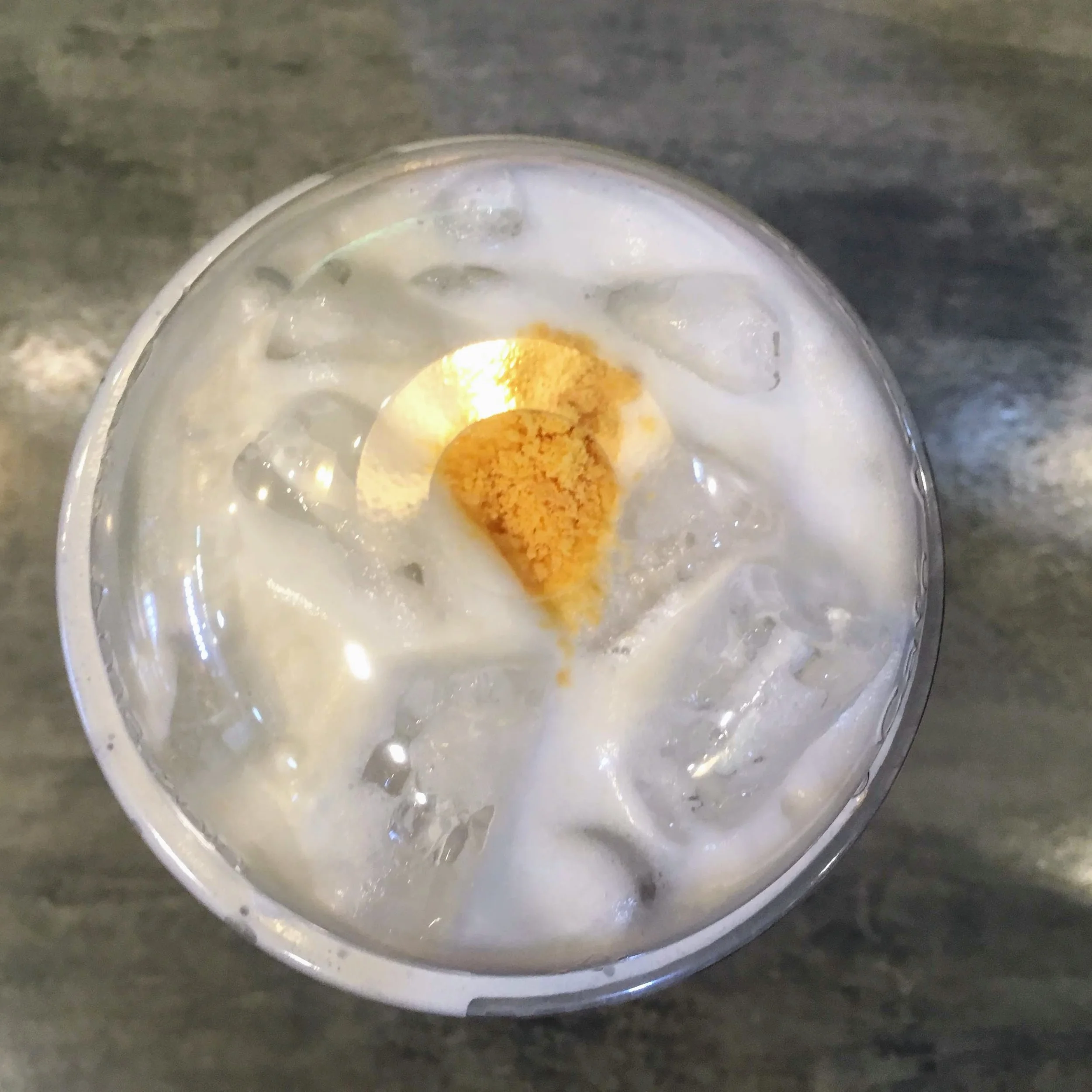
salted egg yolk and dark chocolate coffee from Cafe Amazon, Thailand
Salted eggs have long been a part of Thai cuisine, but I have to admit that I’ve never been particularly fond of them… too salty! But, after visiting Vietnam and learning how oddly tasty salty coffee could be, I figured I would give this drink a try.
Cafe Amazon offers two new salted egg drinks: salted egg late and salted egg dark chocolate. I had already had coffee earlier in the morning, so I opted for the salted egg dark chocolate drink.
salted egg yolk in dark chocolate coffee, Thailand
The drink was sweet… maybe too sweet, but the saltiness from the egg yolk helped to cut through it a bit. Don’t forget to give the drink a stir, as the salted egg yolk sits right on top of the cream. Once all of the flavors are mixed in, it’s a really good, well-balanced drink with lots of flavors. The salt from the egg yolk brings out the natural sweetness of the chocolate. And don’t worry, it’s not eggy at all!
Cafe Amazon, Thailand – salted egg dark chocolate coffee




































 LB convert