Free walking tour guide for Macao (9 free things to do besides visiting casinos)

What to do in Macau for FREE

Macau is a fascinating place that has more than just casinos to discover. Macau is full of historical places influenced from the city’s unique blend of Portuguese and Chinese heritage. We enjoyed exploring the city by feet. Here we will show you FREE walking tour! Places that let you visit for FREE!

Follow this guide and the handy Google Maps links that we’ve included for a self-guided clockwise loop around peninsular Macau. This guide will skip the casinos, but will take you past some of the most important historical sites in the city’s old town.

We love free stuff! Check out our other guides for great FREE things to do around the world:

Free things to do in Singapore

Free things to do in Vientiane, Laos

Free things to do in central Siagon (Ho Chi Minh City), Vietnam

1. Ruins Of St.Paul’s (Ruinas de S.Paulo)

 Ruins of St.Paul’s, Famous spot of Macau
Ruins of St.Paul’s, Famous spot of Macau

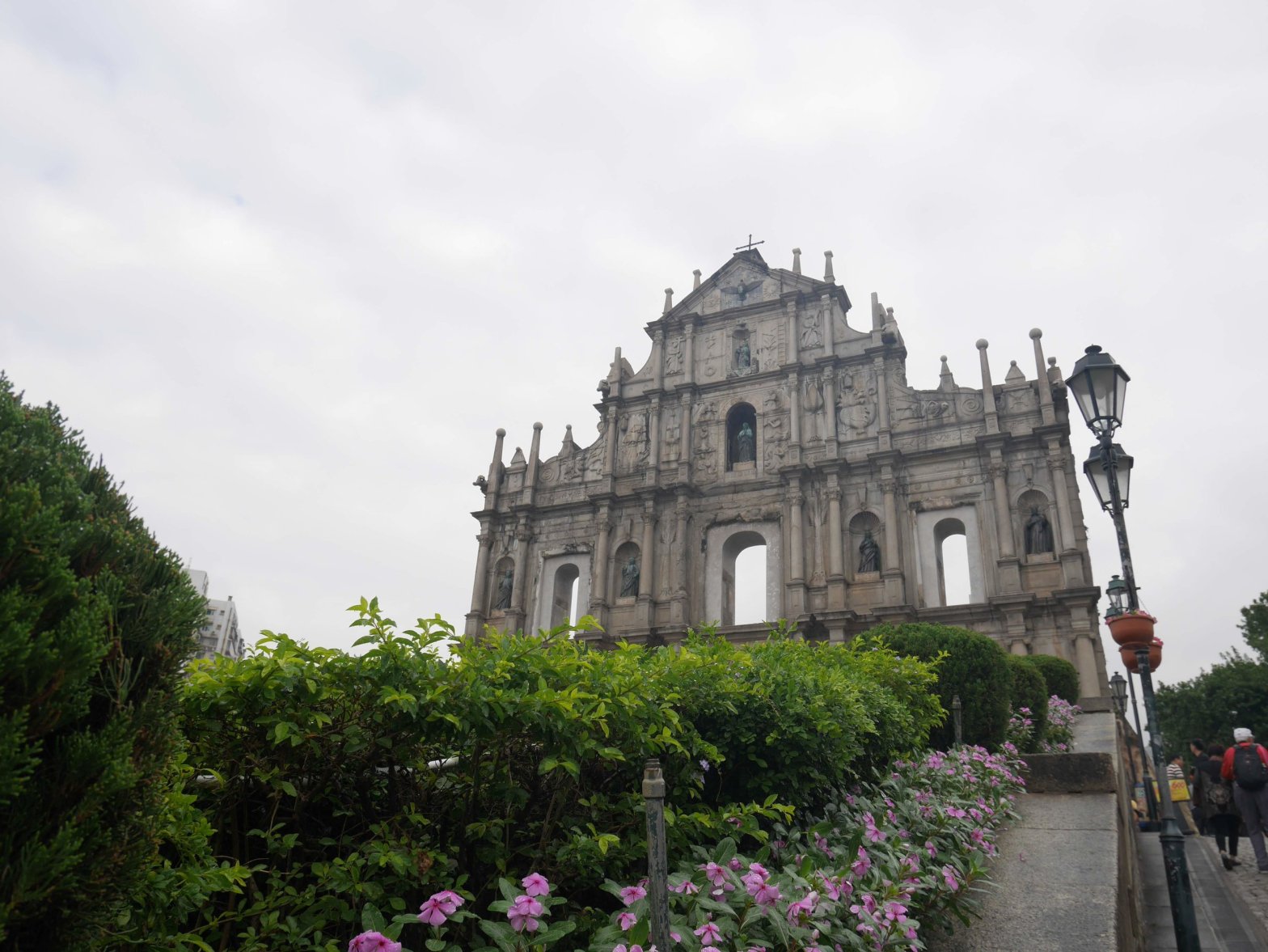
The Ruins of St. Paul’s Church is the one spot that you can’t miss out in Macau. The ruins appear on the 5 pataca coin and the 20 pataca note. In fact, the old church facade is so famous and iconic, that it’s become recognized as the symbol of Macu. It can get quite crowded, so visit the site early, or be prepared to get lots of other tourists in all of your photos.

It’s crowded for good reason, though! Step through the imposing facade, now all that remains of a once-powerful Jesuit base of operations in Macau. Don’t miss paying a reverential visit to the crypt beneath the church!

Tip: I suggest you go there quite early in the morning, as it’s a lot less crowded. If you don’t want too many tourists in the picture, you may walk on the sidewalk on the road (next to the staircase) and duck down. You will get a view like this one below!

Read more about St. Paul’s – This old church has a fascinating history. Don’t miss the crypts beneath the church that hold the remains of several prominent Asian martyrs. If you are a history buff, you’ll love visiting and learning more about the 17th century Jesuit church and its fascinating history.

 The Ruins of St. Paul’s Church - Macau
The Ruins of St. Paul’s Church – Macau

St. Paul’s Church, Macau Opening Hours and Location

Open 9:00-18:00

Located at: https://goo.gl/maps/Dv62TCL7NCM2

2. Mount Fortress (Fortaleza do Monte) & Macau Museum

 Mount Fortress (Fortaleza do Mont), Macau
Mount Fortress (Fortaleza do Mont), Macau

After visiting the Ruins of St.Paul’s, it takes no more than 5 minutes to walk to this historic old Portuguese fort. You will have to walk up the stairs (pass through the beautiful garden) to get to the top, where you can see great views across the city. If you don’t feel like climbing any stairs, just go inside the on-site Macau Museum and take the escalator up. From the top of the fort, you can see almost the whole city. Check out the historical cannons!

This UNESCO World Heritage Site was built by the Portuguese Empire in the early 17th century, and was the military center of Portuguese Macau.

Tip: Don’t miss the incredible Macau Museum. If you are lucky enough to visit on a Tuesday, the museum is FREE too!

Fortaleza do Monte opening hours and location

Fortress and garden open 7:00-19:00; Macau Museum open 10:00-18:00 (free on Tuesdays).

The fortress and the Macau Museum are located just next to the Ruins of St. Paul at https://goo.gl/maps/s9ALP3SaqPG2

3. Visit St. Lazarus Church and St. Michael Archangel Cemetery

 St.Michael Archangel Cemetery, Macao
St.Michael Archangel Cemetery, Macao

If you are on a history kick, head to St. Lazarus and St. Michael, a historic Catholic church and nearby cemetery. Wander through the cemetery (which, despite being super crowded is still active!) and look at the tombs, headstones, and mausoleums dating back hundreds of years!

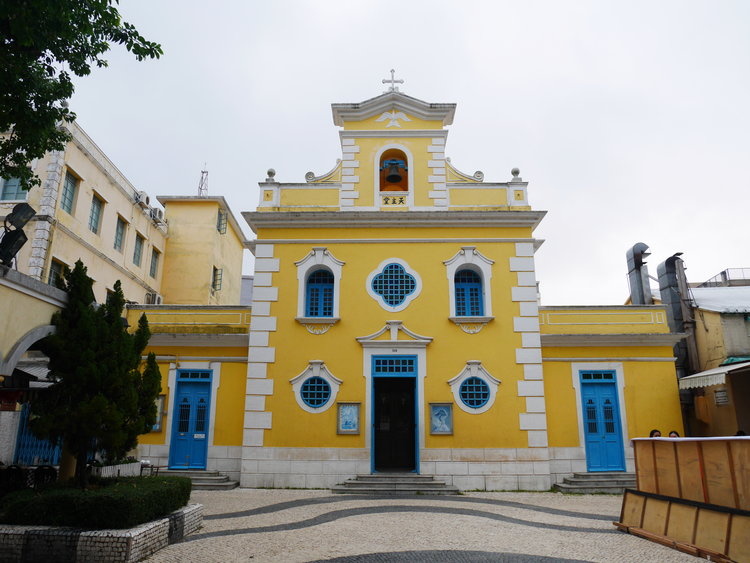
The St. Lazarus chapel is small, but very beautiful and peaceful. The pastel coloring of the building is part of Macau’s iconic old town architecture, which is heavily influenced by Portuguese architecture.

 St.Michael Archangel Cemetery, Macao
St.Michael Archangel Cemetery, Macao

St. Lazarus Church and St. Michael Cemetery Location

St. Lazarus Church and St. Michael Cemetery are located at https://goo.gl/maps/ovnRRmsJmrT2

4. Visit Macau Tea Culture House and Lou Lim Loc Garden
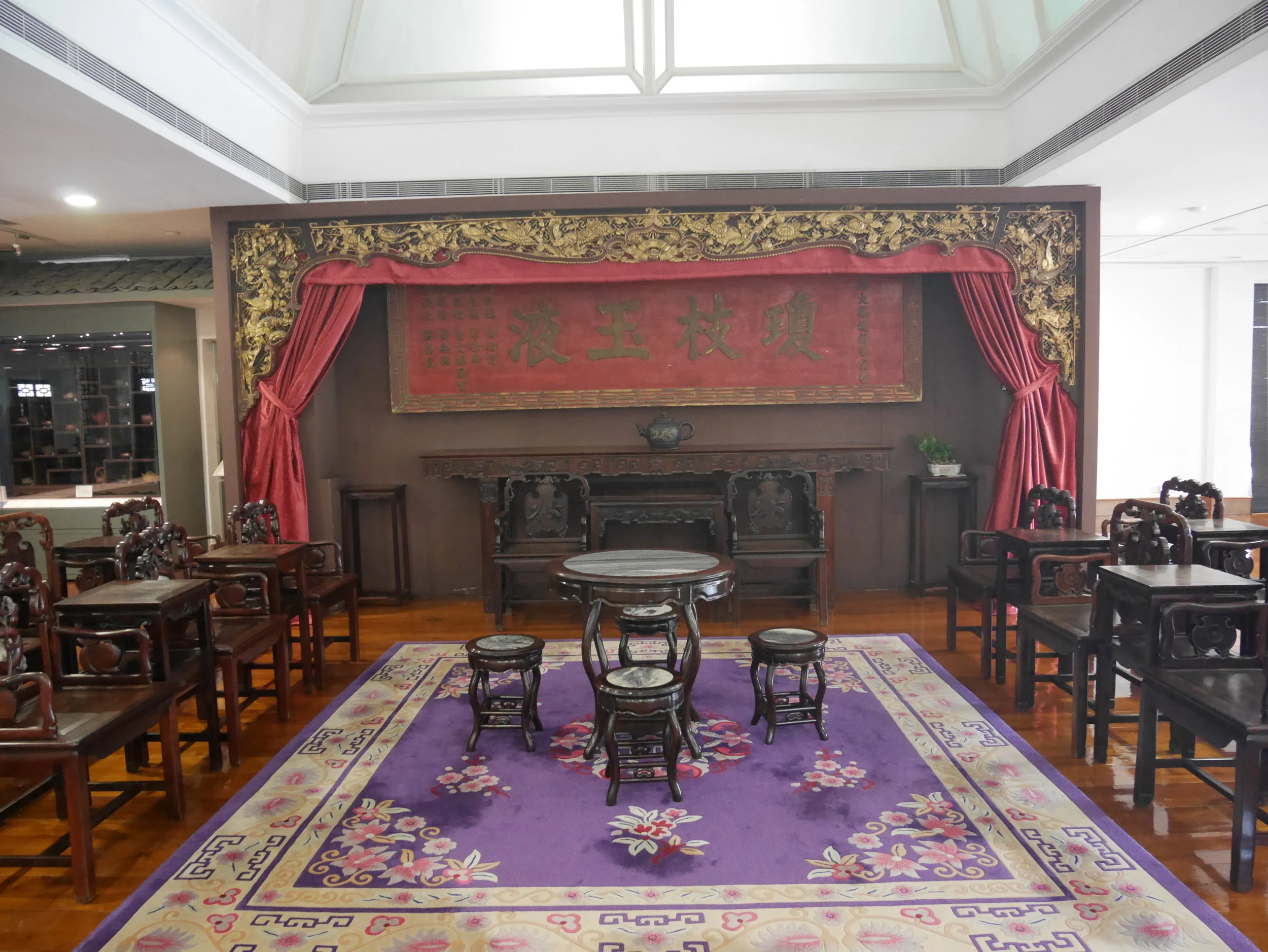
 Macau Tea Culture House
Macau Tea Culture House

The Macau Tea Culture House is a very good museum where visitors can learn all about the history and process of tea making, and view an impressive collection of tea pots, tea wear, and tea house artifacts.

I only wish that this museum offered a tea tasting too. I enjoy museums as much as I enjoy tea (which is to say, a lot)!

After you’ve spent some time at the free museum, exit from the back of the tea house. You will enter Lou Lim loc Garden. It’s a very peaceful and calm garden and public city park where you can watch (or join in) local people practicing Tai Chi, or just generally enjoying the calm and serene gardens.

The garden has a pond full of fish, a traditional Macanese-style pavilion, and a Portuguese exhibition building. The park was once the private garden of the residence of one of Macau’s most prominent families, but has since been made into a public park that anyone can enjoy.

 Lou Lim loc Garden
Lou Lim loc Garden

Lou Lim Loc Garden and Macau Tea Culture House Museum opening hours and location

Lou Lim Loc Garden and the Macau Tea Culture House are located at https://goo.gl/maps/tg6NftahmfN2

The museum is open from 9:00 – 19:00 every day except Monday.

5. Kun Iam Tong Temple (Templo Kun Iam)

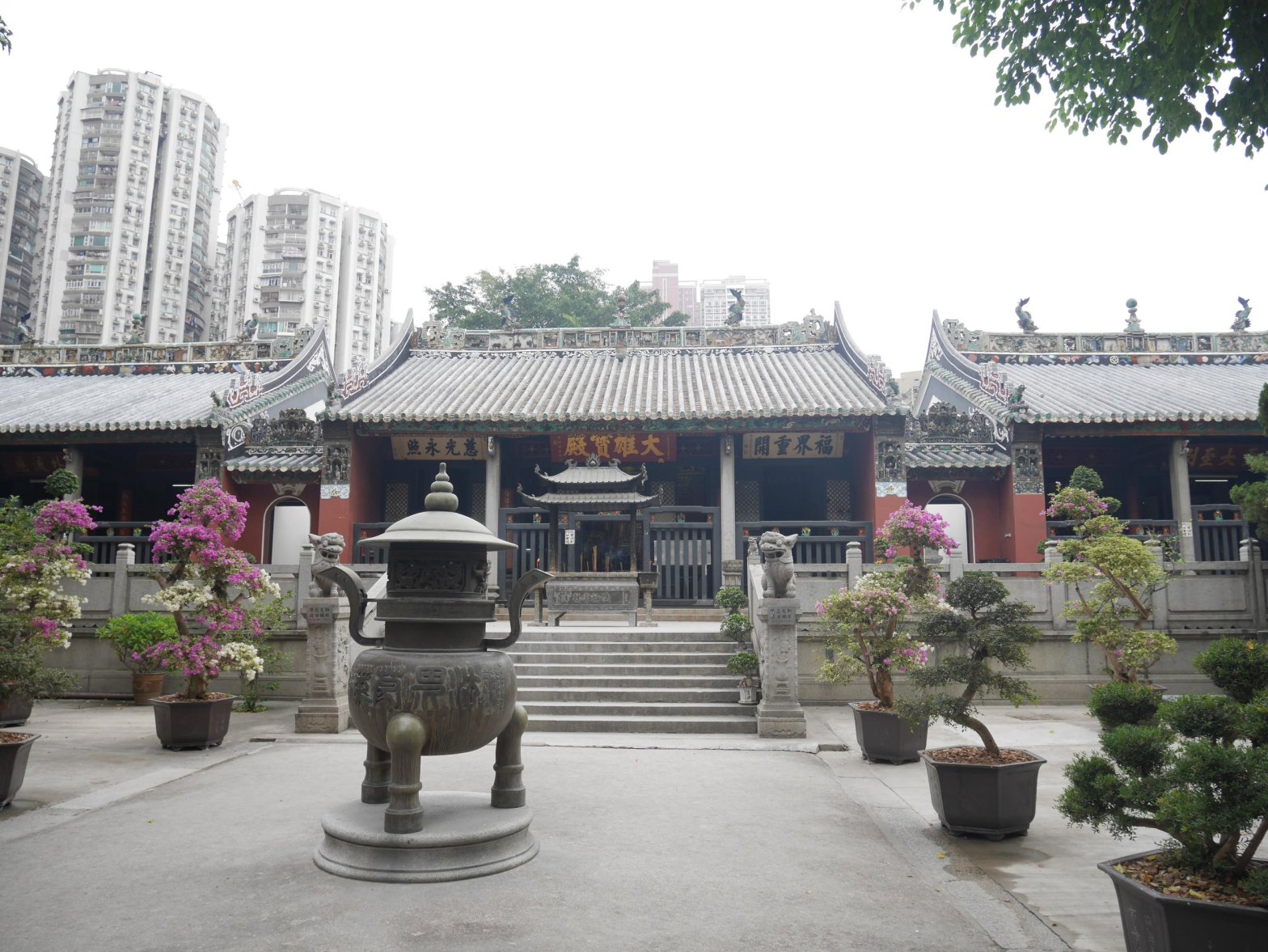
 Kun Iam Temple - the temple to the Chinese goddess of mercy, Guanyin
Kun Iam Temple – the temple to the Chinese goddess of mercy, Guanyin

Kun Iam is the Cantonese name for Guanyin, the Chinese goddess of mercy. This temple is one of the oldest in the city, and it’s also one of the most atmospheric.

 inner courtyard at Kun Iam Temple, Macau
inner courtyard at Kun Iam Temple, Macau

This temple is one of the three ancient temples in Macao. An iron bell in the temple has an inscription of year 1632.

Kun Iam Temple, Macau location

The Kun Iam Temple is located at https://goo.gl/maps/wArR9CjUGvx

6. Guia Fortress and Guia Hill Municipal Park
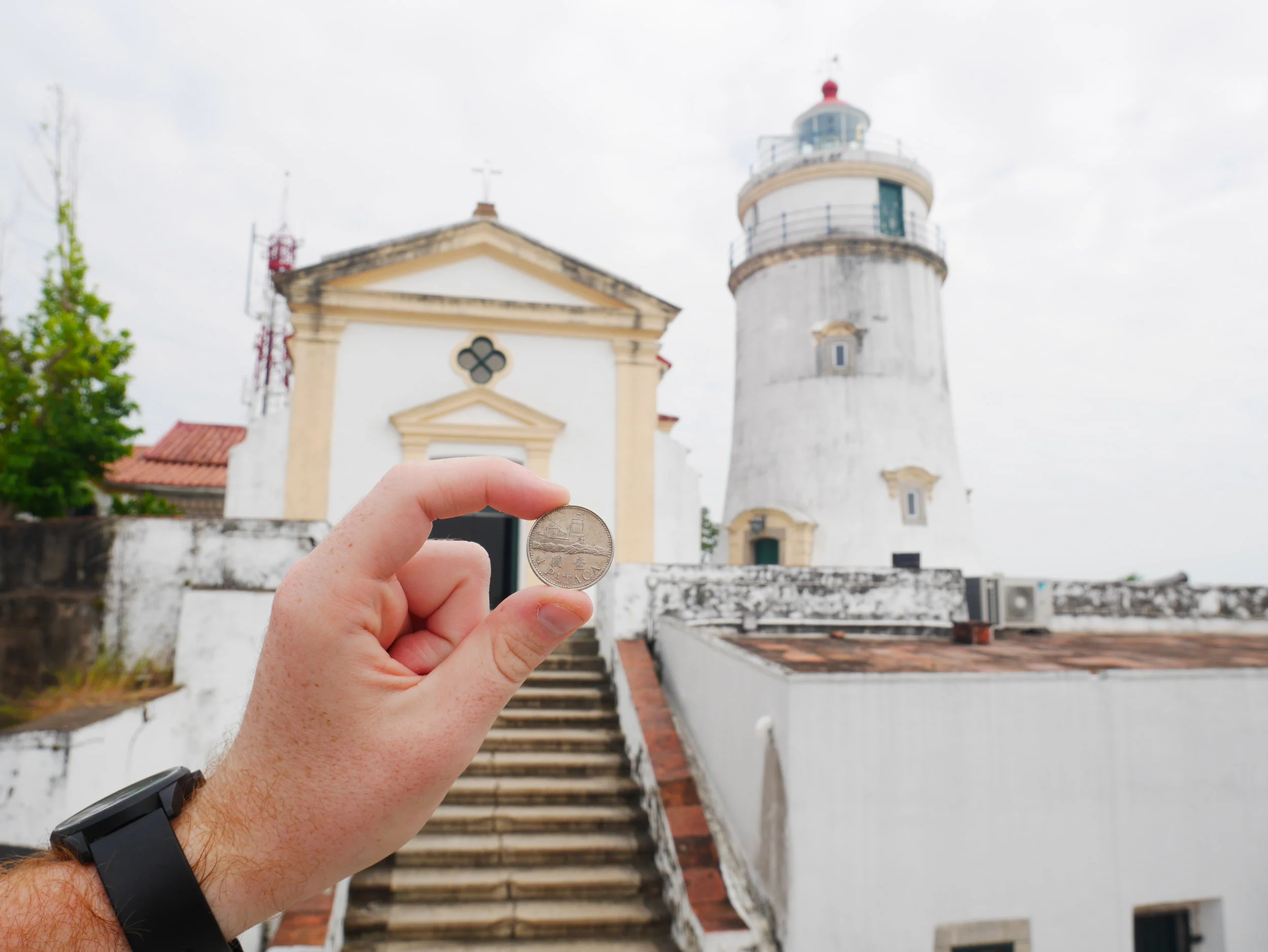
 Guia Fortress, Macau
Guia Fortress, Macau

Guia Fortress, which you’ll see on the back of the 1 pataca coin, is another old Portuguese fort located near the Kun Iam Temple. This fortress, which includes a small chapel and a lighthouse, sits atop a hill at the tallest point in the city. From the fortress, you can look across all of Macau and get some of the best views in all of the city.

Guia Fortress is located in Guia Hill Municipal Park. It’s a popular place for local people to get away from the cramped city for some fresh air and exercise, and it’s common to see people jogging up and down Guia Hill.

The 17th century fortress and UNESCO World Heritage Site was instrumental in defending Portuguese Macau from invasion attempts by the Dutch, their rival colonial power in east Asia. It’s one of the oldest surviving Portuguese structures in Macao.

Tip: You can walk up the hill, but it’s a long, steep climb. If you don’t feel much like walking, you can take a cable car from the park to the hilltop where the fortress is located. It’s just 2 patacas for a one way trip, and 3 patacas for a round-trip ticket. Even with a ticket to ride the cable car, at around $0.30 USD, it’s almost free.

Guia Hill Fortress Location

The fortress is located in Hill Municipal Park. https://goo.gl/maps/ojSAkeDedwE2

7. Fisherman’s Wharf

Fisherman’s Warf is kind of a weird area, to be honest. But I can’t help but like this harbor-front area. Despite its name, Fisherman’s Warf has little to nothing to do with the actual fishing industry. It’s more of a waterfront dining and entertaining district that is designed to make you feel like you are in Europe. It’s not a bad place to chill with a cold glass of Macau Beer!

Fisherman’s Warf can be a little bit tacky, but in a casino town like Macao, that’s part of the charm!

 Macau’s Fisherman’s Warf
Macau’s Fisherman’s Warf

Macau Fisherman’s Warf Location

Fisherman’s Warf is located near the southeast end of the Macau Peninsula https://goo.gl/maps/1ezkGcKgT632

8. Kun Iam Ecumenical Center

Like the Kun Iam Temple, the Ecumenical Center is dedicated to the Chinese goddess of mercy.

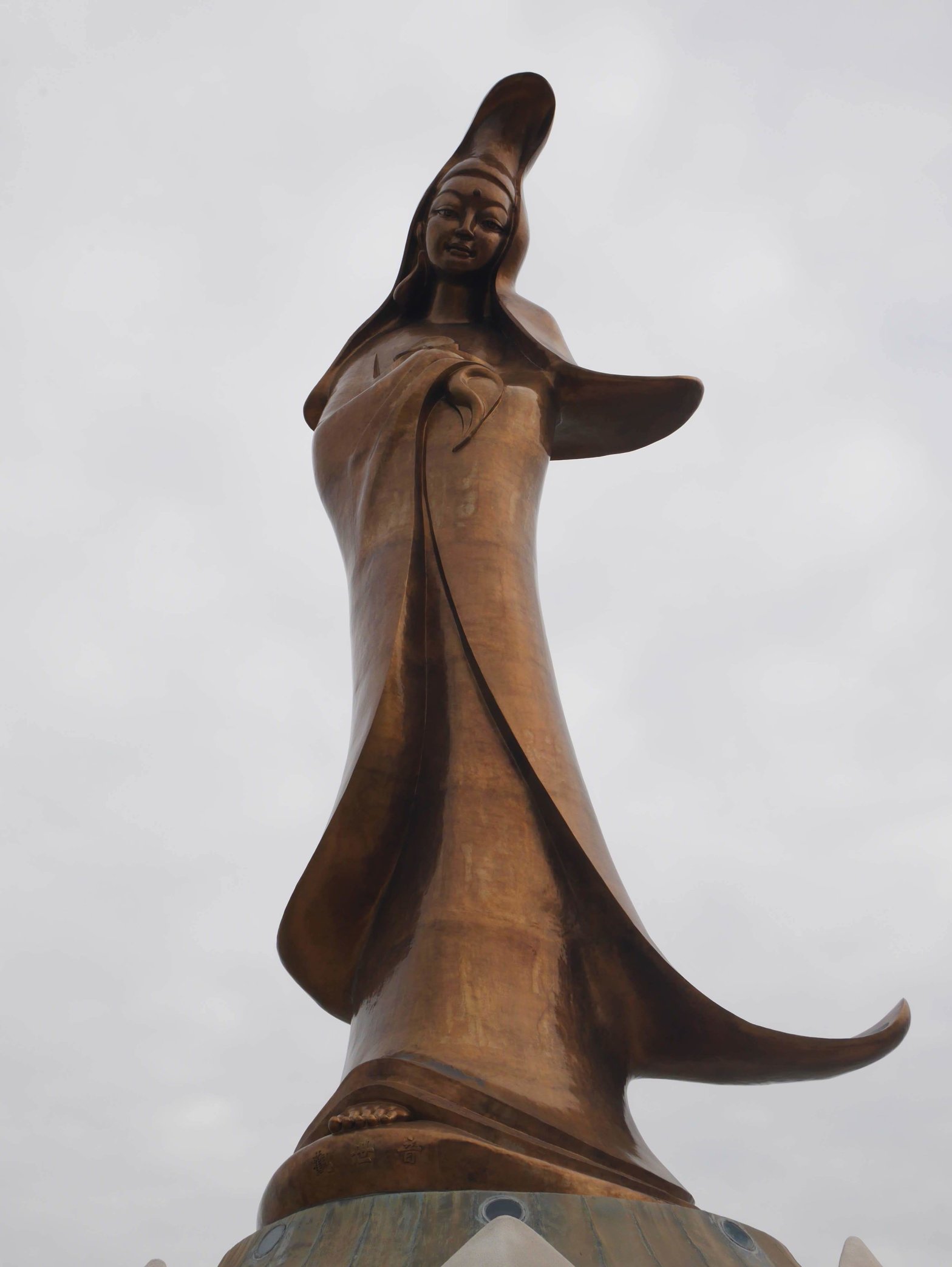
The 20 meter tall Kun Iam Center is part religious statue, part cultural center, part museum, and part art installation. Designed by Portuguese artist Cristina Rocha Leiria in 1999, the center was built during the handover of Macau from Portugal to China, and was designed to be a celebration of the unity of East and West.
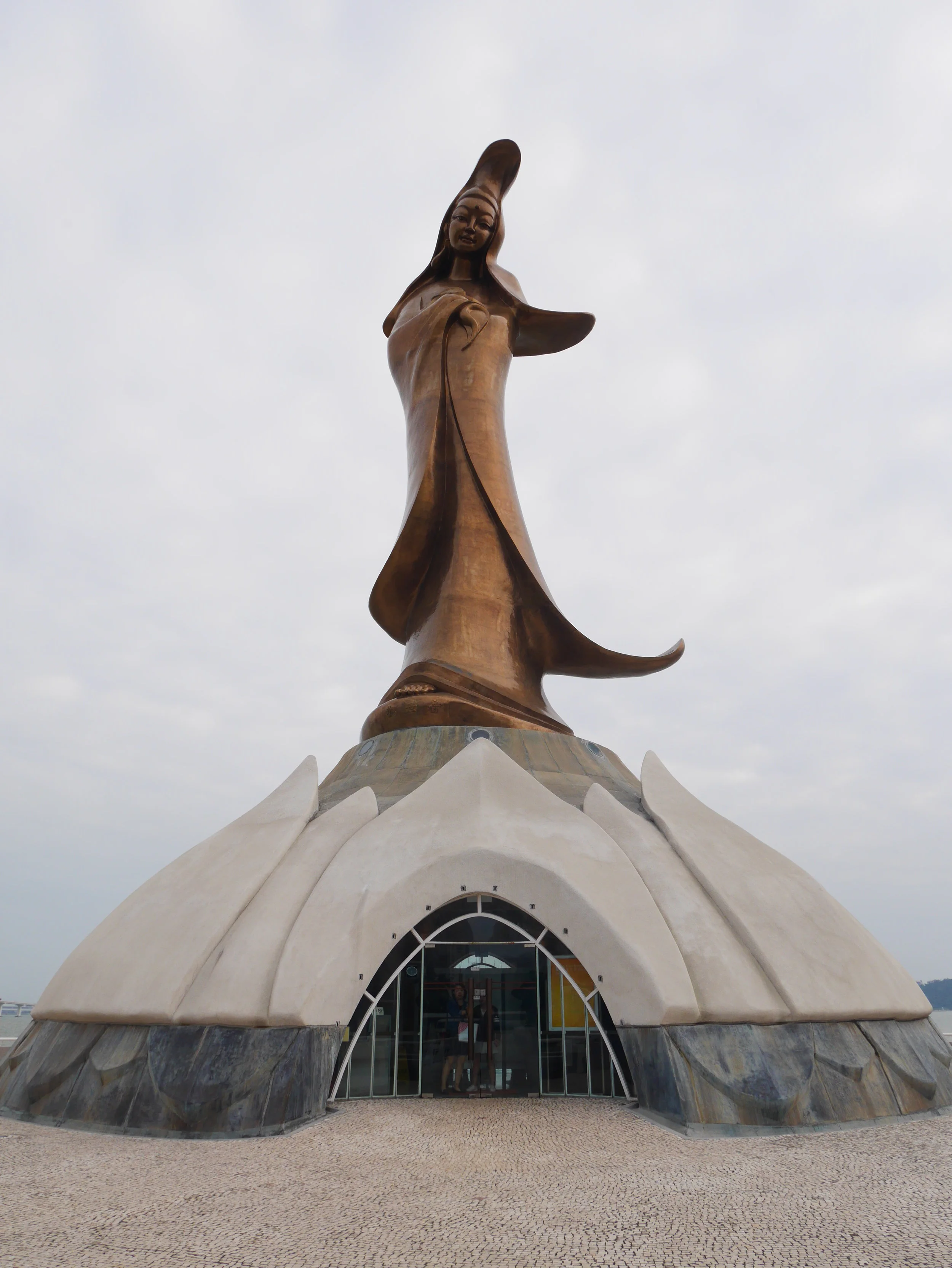
 the Kun Iam Ecumenical Center in Macau
the Kun Iam Ecumenical Center in Macau

Kun Iam Ecumenical Center Location

Kun Iam Ecumenical Center is located at the southern part of the Macau Peninsula, slightly west of the Fisherman’s Warf. https://goo.gl/maps/SBLtGezguy92

Learn more about the center in our post HERE.

9. A-Ma Temple

The UNESCO recognized A-Ma Temple is dedicated to the sea goddess Mazu, from whom Macao gets its name. This temple dates back to the 1400s, and is the oldest temple in Macau.

 A-Ma Temple, the oldest temple in Macau
A-Ma Temple, the oldest temple in Macau

The A-Ma Temple is one of the historical and architectural treasures of Macau. Each part of the temple is representative of classical Chinese architecture. Walk among the thick clouds of incense smoke for a look at pre-colonial Chinese culture in Macau.

A-Ma Temple opening hours and location

A-Ma Temple is open from 7:00 – 18:00

The temple is located at the southwest part of the Macau Peninsula. https://goo.gl/maps/BhUjuUNYHFB2

It is possible to visit all nine of these great free sites in one day. By the end of your walking tour, you’ll have a look at ancient Chinese culture, Portuguese Jesuit architecture, and modern Macau. If it feels like too far to walk, I recommend Macau’s excellent bus system. To save money, pick up a Macau Pass card at a vending machine or local convenience store.
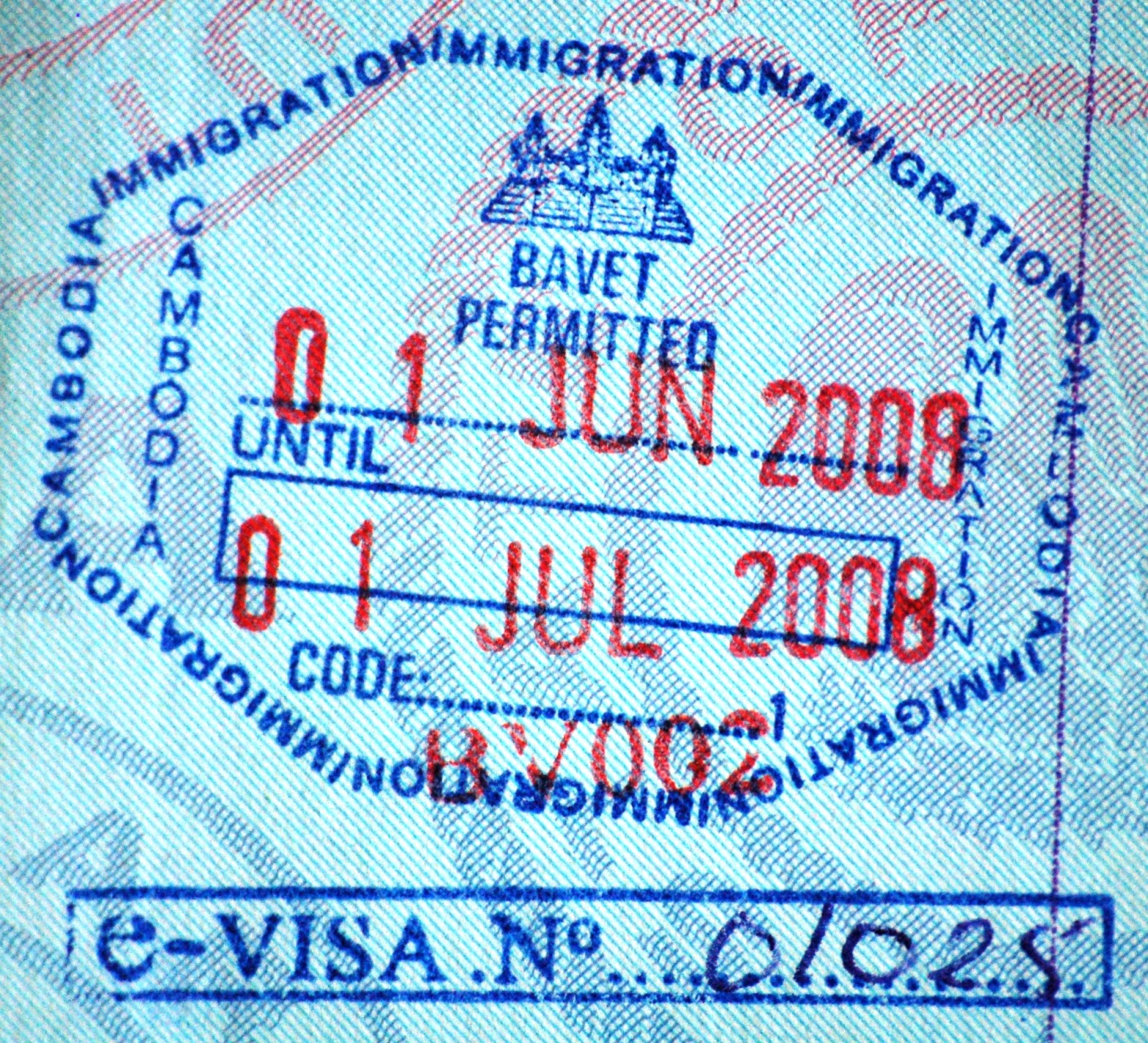
Everything you need to know about Cambodia’s Visa (and eVisa) policy

The Kingdom of Cambodia is becoming one of Southeast Asia’s most popular destinations for tourists, backpackers, and digital nomads alike. The laid-back and beautiful country that borders Thailand, Laos, and Vietnam is home to the stunning ruins of the ancient Khmer Empire at Angkor Wat and some of the region’s most incredible untouched beaches.

>> Our guide to visiting Angkor Wat

>> Our guide to Koh Rong island

Before you go on your trip to Cambodia, make sure that you have the proper visa! Citizens of most countries can apply for a visa-upon-arrival at any of Cambodia’s international airports and most border crossings. If you want to save time at the airport, skip the lines by applying for a Cambodian evisa in advance.

Here’s everything you need to know about Cambodian visas:

 Alex Steffler [Public domain], via Wikimedia Commons
Alex Steffler [Public domain], via Wikimedia Commons

Visa-free travel to Cambodia

Who can visit Cambodia visa free?

Passport-holders from Thailand, Malaysia, the Philippines, Brunei, Indonesia, Laos, Seychelles, Singapore, and Vietnam do not need a visa to visit Cambodia.

If you are a citizen of any other country than the ones listed above, you will need to apply for an evisa in advance, or a visa on arrival at the airport in Cambodia.

Cambodian tourist visa on arrival

Who can get a Cambodian visa on arrival?

Most people can get a visa on arrival in Cambodia. The exception are citizens of: Afghanistan, Algeria, Bangladesh, Iran, Iraq, Pakistan, Saudi Arabia, Sri Lanka, Sudan and Syria who MUST apply for a visa or evisa in advance.

Cambodia has a very wide and open visa policy. Citizens of all other countries other than the ones mentioned above do not need to apply for a visa in advance, and can receive one upon arrival at a Cambodian airport or border crossing.

How much does a visa to Cambodia cost?

A Cambodian tourist visa-upon-arrival costs $30 (payable in USD, the de facto currency of Cambodia). You must fill out a simple form and supply a passport-size photo. If you do not have a photo with you, you will be charged an extra dollar.

This process is quick and easy, especially at the airport.

How do you get a visa at the airport in Cambodia?

After landing, just follow the signs at Siem Reap International Airport, Phnom Penh International Airport, or Sihanoukville International Airport directing visitors towards the visa-upon-arrival area.

There is a one-page document to fill out. Bring your passport, visa application, and USD (having exact change is advised) to the visa counter, and soon you’ll have a big full-page visa sticker admitting you to Cambodia as a tourist for 30 days.

How to apply for a visa at the border crossing

The process can be a bit trickier at the border. It’s not that applying for a visa at a land border crossing is any different, but that the border area itself is more confusing and stressful.

You’ll have to deal with “friendly” strangers who want to show you where to go and fill out your paperwork for you (for a steep fee, of course). Politely but firmly refuse, or ignore them and proceed to fill out and apply for your visa on your own.

Unfortunately, there have been reports of corruption at the land border crossings. Visitors may be asked to pay a few extra dollars for a “stamping fee” or other unposted fees. Although its unfair, it’s best not to argue, and just to pay up if you want to get your visa.

Instead of dealing with this, I recommend arriving in Cambodia by air, or at the very least applying for an evisa in advance. With an evisa, you never need to deal with the visa application process.

Cambodia evisa

Who can get a Cambodian evisa?

Anyone can apply for a Cambodian evisa. An evisa works just like a regular paper visa, except you can apply for the visa and pay online. When you arrive in Cambodia, just show your printed document to the passport agent, and you will be admitted to the country.

How does a Cambodian evisa work?

You can apply for a Cambodian evisa on the government’s official evisa website:

https://www.evisa.gov.kh/

You’ll need to upload a photograph of yourself and a scan of your passport information page. After that, just pay the $36 fee.

They say that it can take up to 3 days to receive your visa, but I’ve always had a response within a few hours. The quickest I ever got my visa back was in 30 minutes! Be sure to apply for your visa a few days in advance, anyway. Your tourist evisa allows you to enter Camboda for 30 days.

Print out two copies of the evisa pdf that you will be send after your visa request is approved, and present them to the passport agent upon arrival. Easy!

How much does a Cambodian evisa cost?

An evisa costs $36. Admittedly, it’s a little bit more expensive than an visa-on-arrival, but worth it to save the stress and headache of trying to apply for a visa at the airport.

Personally, I always apply for an evisa whenever I go to Cambodia, especially if I’ll be crossing the border. I like having the peace of mind of already having my visa in my hand, and being able to skip most of the lines at the border checkpoint or at the airport.

****

Oh, and if you want to learn more, why not have a look at the small guidebook that I published about visiting Siem Reap? It’s available on Amazon, or from the store on this very website!

A Budget Traveller’s Guide to Siem Reap

Amazon.com link

Buy the book from the store on acoupleofdestinations.com

Tom Yum Kung Pizza from The Pizza Company Thailand REVIEW

Food like pizza or fried chicken seem like they should be pretty universal. And, for the most part, they are! But sometimes, you might be surprised by the dishes that are available at western-style restaurants throughout the world.

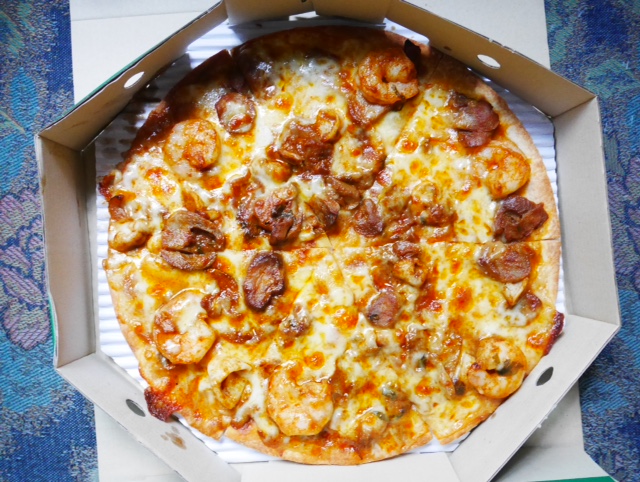
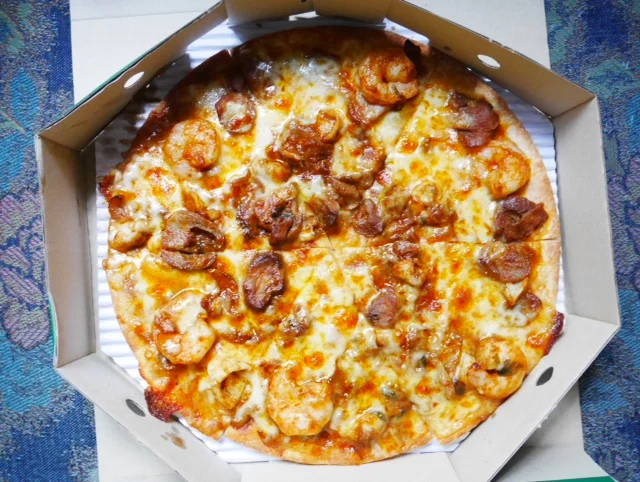
For example, delivery pizza in Thailand has far more than the usual pepperoni/sausage/Hawaiian offerings. At The Pizza Company, you’ll be able to order a Tom Yum Kung pizza – a very Thai-flavored dish.

 Pizza Company Tom Yum Kung Pizza
Pizza Company Tom Yum Kung Pizza

What is Tom Yum Kung?

Tom Yum Kung is one of the national dishes of Thailand. It’s a type of spicy soup with a coconut-based broth, stuffed full of herbs like lemongrass, galangal, and kaffir lime, and served with delicious Thai river prawns.

The Tom Yum Kung pizza from the Pizza Company in Thailand, while not nearly as spicy as it could be. is true to maintaining the herbal flavor and rich shrimp taste of traditional Tom Yum soup.

5 must-try local restaurants in Luang Prabang, Laos

Luang Prabang, Laos is such a peaceful and laid-back city that lures travelers from ever part of the world to admire its history, beauty, and culture. While the city may be calm, the Laotian food that you’ll find there is anything but! The food in Luang Prabang is exciting, unique, spicy and flavorful!

I always believe that embracing local food is a genuine way to get to know a bit of the local life. I found that it is so true, especially when I choose to eat at an authentic local restaurant that is also popular among the local people. While traveling in Luang Prabang, these were some of the most delicious local meals that I enjoyed.

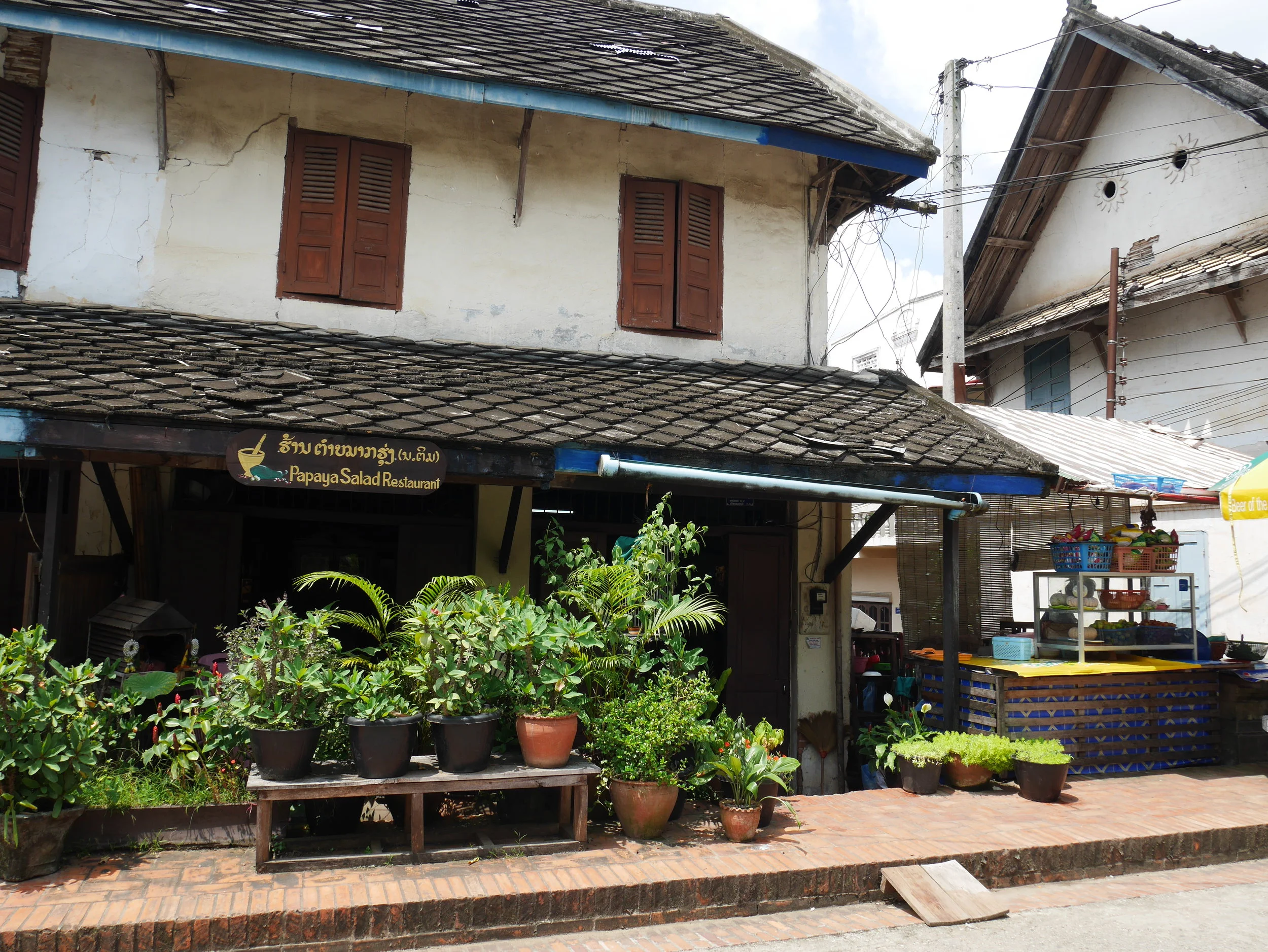
  1. Papaya Salad Restaurant (TIM&HUM)

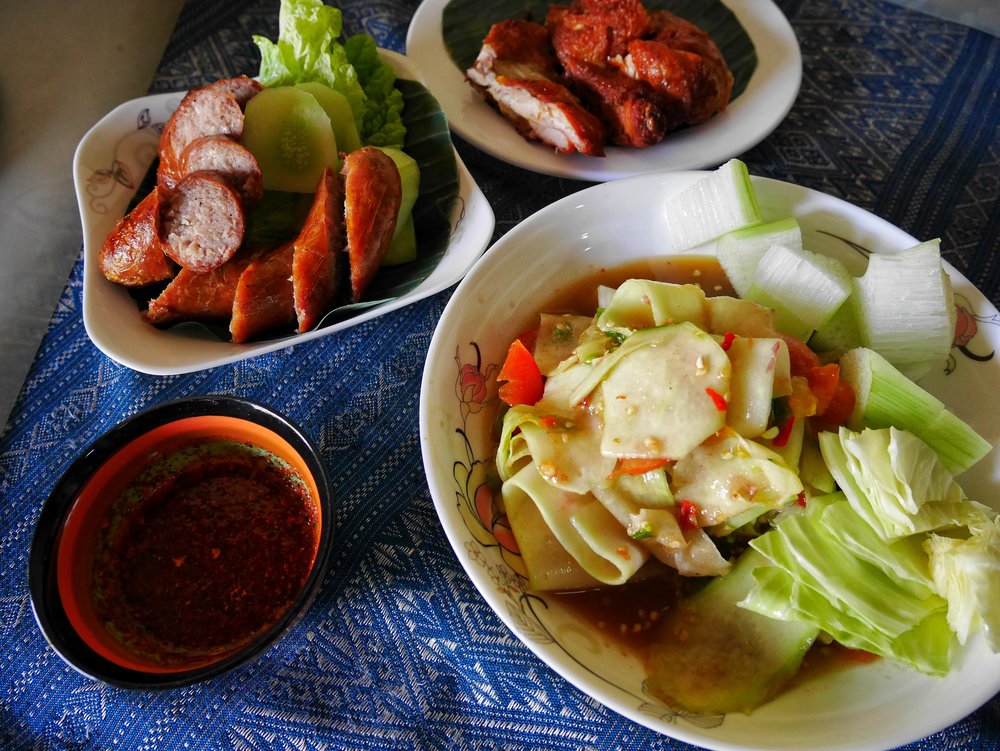
 Superb Laotian Food; Papaya salad, fried chicken, Lao sausage
Superb Laotian Food; Papaya salad, fried chicken, Lao sausage

This is a secret gem with some very traditional food! Here, you’ll find an authentic Laotian restaurant that will give you the taste of real Lao food made by locals for locals.

They have no more than 10 items on the menu. I highly recommend that you order papaya salad, fried chicken, and Lao sausage. When I visited, the lady who took my order asked me for the level of spiciness, and I said “medium” :D….we will see!

Tam Mak Houng (Lao Papaya salad) is something you just have to try for the real taste of Laos. It’s a bit different from the papaya salad (or Som Tam) that you’ll find in neighboring Thailand. The papaya comes in a flat thin slice, which makes it really crispy. The dish is sweet, sour, and savory, and medium spice is a great level of spicy for me.

Their fried chicken, however, is the menu that made me keep coming back again and again. It’s my love at first bite! The chicken is so crispy when I bite, but so soft and tender inside. I love how they marinated the chicken. Their sausage is also very yummy. Her BIG SECRET FOR DELICIOUS FOOD is that she uses a hot air fryer instead of a pan filled with oil. That’s what make chicken and sausage soooooooo GOOD and not oily at all.

The shop located in the old town area, and is very easy to find and walk to. The staff are really nice and can speak English. They have a few tables inside the restaurant, but you can also sit outside. It’s not the cheapest dish in Luang Prabang, but this is one of my favorite things that I ate while I was there.

Price : Papaya salad 15,000 kip/ Fried chicken and sausage are 40.000 kip each/sticky rice 5.000 kip ($)

Location : Papaya Salad Restaurant (open 10AM – 4PM)

2. Tam Mak Houng, Nang Tang

 Tam Mak Houng, Luang Prabang
Tam Mak Houng, Luang Prabang

This is an amazingly delicious local restaurant with the greatest prices that I can find in Luang Prabang. There are few different dishes to choose from, and I took a picture of the menu for you (below).

As soon as I entered her restaurant, I was greeted by the warm smile of the chef. She makes an amazing Tam Mak Houng (green papaya salad). She asked me for my level of spiciness, and began mashing all of the ingredients with her mortar and pestle right before my eyes. It’s DELICIOUS! Savory, crispy, with a little spicy and sour, this Tam Mak Houng is just perfect.

Tam Mak Houng is Lao papaya salad, and it is similar to somtam from Thailand. The special ingredient in Lao papaya salad seems to be pickled fish (or pla-rah) that adds a little unique taste and scent for the dish. The shop is very easy to find in old town area, and is very clean and friendly. The portion that I was served was big enough to share.

The restaurant seems to be very popular with local people who live in the neighborhood, and though it’s always busy, the service is fast. Highly recommend!

Price : 10.000 kip for papaya salad/ 5.000 kip for sticky rice ($)

Location: https://goo.gl/maps/vvHQxbEyQgw

 menu choices
menu choices

3. Porridge (or joke) Prachaniyom Coffee Shop

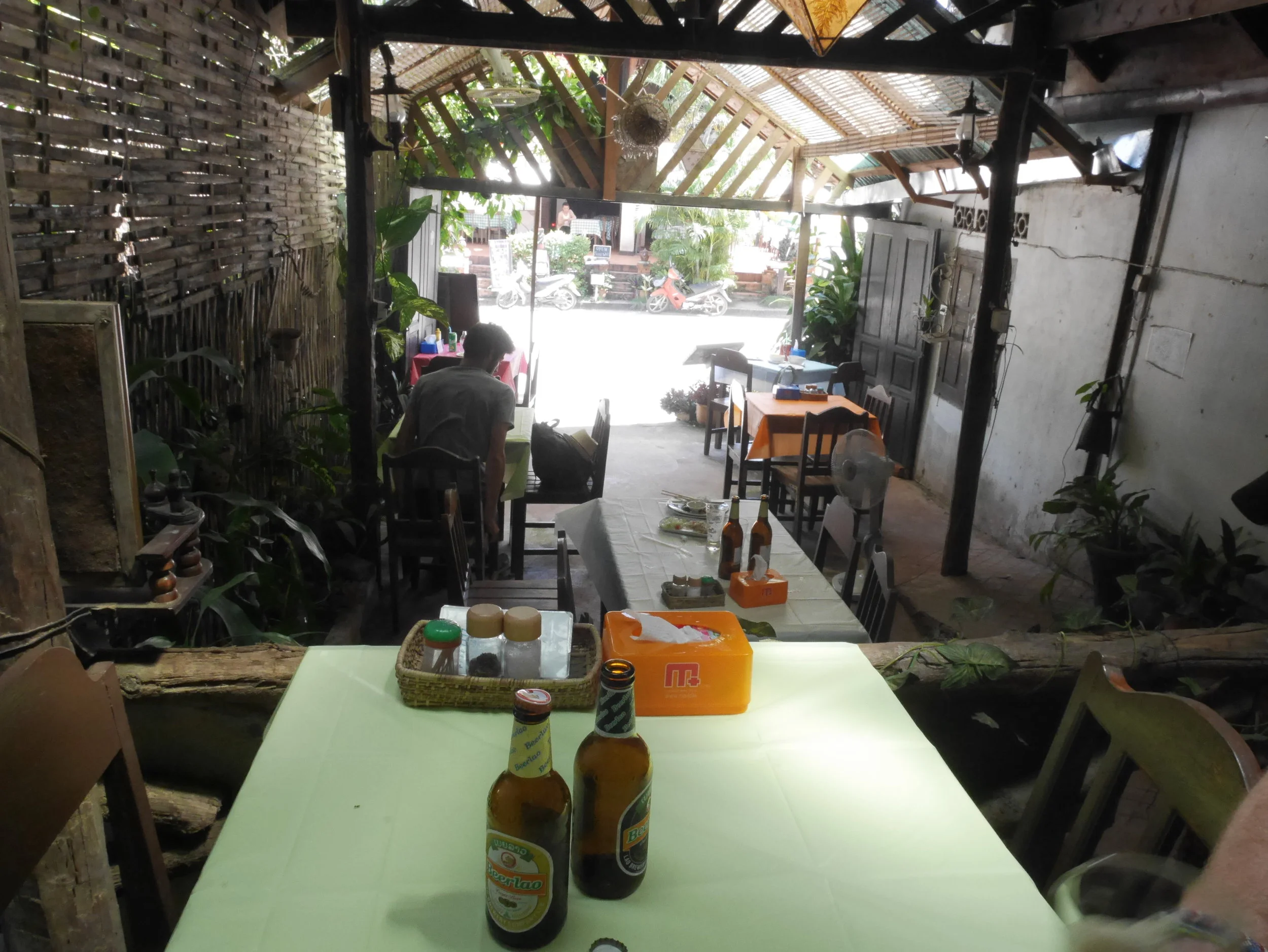
The best way to enjoy an amazing cup of coffee is with an amazing view. At this tiny coffee shop and noodle restaurant, you’ll be able to enjoy views of Luang Prabang’s famous river and mountain scenery. If you love something LOCAL, DELICIOUS, and CHEAP, this is the place for you.

Start you day by ordering a bowl of their delicious pork joke (rice porridge) with egg and Lao coffee. The porridge is smooth and tasty with a perfect savory kick of dried onion. If you are lucky, you may find tiny shrimp or pieces of squid in the bowl.

If you want to add a little sour flavor, adding a slice of lime can make a big different in kicking up the porridge to the perfect notch, but I recommend you try it as served first… just one tiny thing to watch out for though: you may find tiny pork bones in the pork. This lets you know that the pork has been stewed on the bone, but be careful not to chomp down too hard just in case.

As for the coffee, I think it’s the best and richest coffee in all of LP. This place is more popular among locals than tourists, and it’s a perfect way to start your long day of temple-hopping in Luang Prabang.

Price: Porridge + egg 8.000 kip , Coffee 8.000 kip

Location: Prachaniyom Coffee Shop open from 4 am -11 am

 Best Lao Coffee in Luang Prabang with river view
Best Lao Coffee in Luang Prabang with river view
 Prachaniyom Coffee Shop, Luang Prabang, Laos
Prachaniyom Coffee Shop, Luang Prabang, Laos

4. Xieng Thong Noodle Shop

Do you like garlic? If so, please visit my favorite noodle shop in Laos.

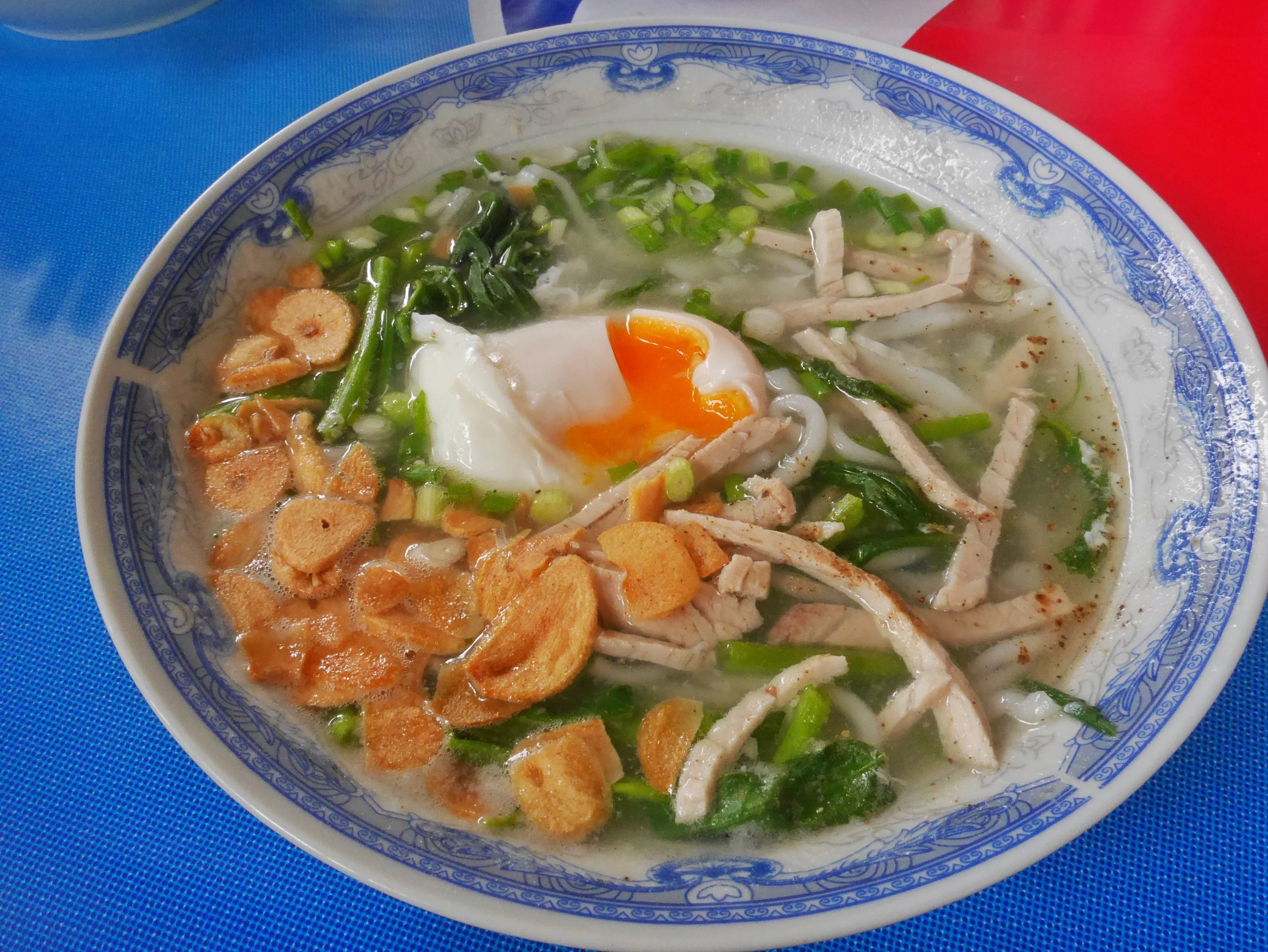
I recommend ordering the pork noodles with egg. You will get an AMAZING noodle bowl which comes with soft and chewy noodles, soft and tender sliced pork, and a poached egg in clear, thick soup. The bowl is topped with crispy garlic slices and shallots.

The soup itself is very peppery and savory with a great kick of garlic that I love so much. Try it plain first, but I really recommend adding mashed ginger, a tiny bit of Lao fried chili (be careful, fried chili is much spicier than fresh chili and can turn your breath into dragon fire!), and a slice of lime which is on the table. All the flavors and good scents together make it the best noodles that I’ve had in all of Laos!

The restaurant is in a very great spot in town, just next to Wat Xieng Thong, one of the coolest old temples in the city. It’s nice and clean. I keep coming back here many times.

Price: $ (15.000 kip)

Location: Xieng Thong Noodle open from 7am to 1 or 2pm

5. Banpa Restaurant

Another fine place to enjoy Laotian meals is Banpa Restaurant, located right in the center of town near most of the guesthouses.

I went there at lunch time, and while it was a little crowded, I was able to get a place to sit. I ordered papaya salad and Lao sausage (called Sai-Ua in Lao). While the papaya salad was very tasty, it wasn’t so traditional. Instead, it was adjusted a bit to match the taste of foreign visitors. If super spicy flavors, or the taste of fermented fish that is sometimes used in traditional Lao papaya salad isn’t your thing, this can be a great way to get introduced to papaya salad.

The Lao sausage is also really good. They have a very wide variety of food with a good price. The staff are friendly and can speak English well, and the restaurant is very comfy.

Price: Papaya salad 15.000 kip/ Lao sausage 45.000 kip ($)

Location: Banpa Restaurant

Luang Prabang Public Library – a great way to give back in Laos

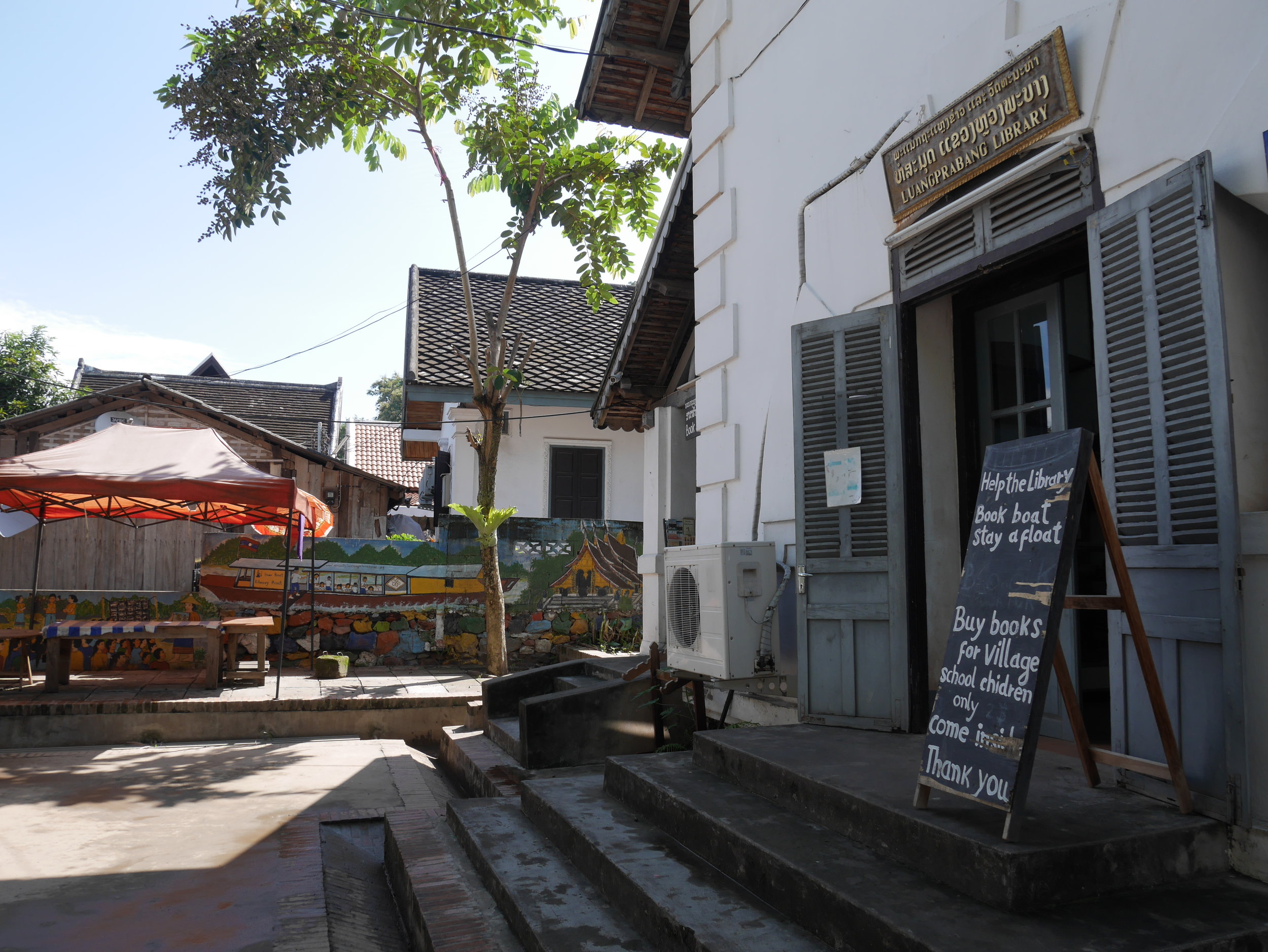
While exploring Luang Prabang, Laos, don’t overlook the unassuming Luang Prabang Public Library. The library is much more than just a place to borrow books; in fact, it’s a great organization that encourages literacy and education throughout Laos. Be sure to include a visit to the Luang Prabang Public Library, which is located nearby to the old Royal Palace and the Haw Phra Bang.

 visiting the Luang Prabang Public Library
visiting the Luang Prabang Public Library

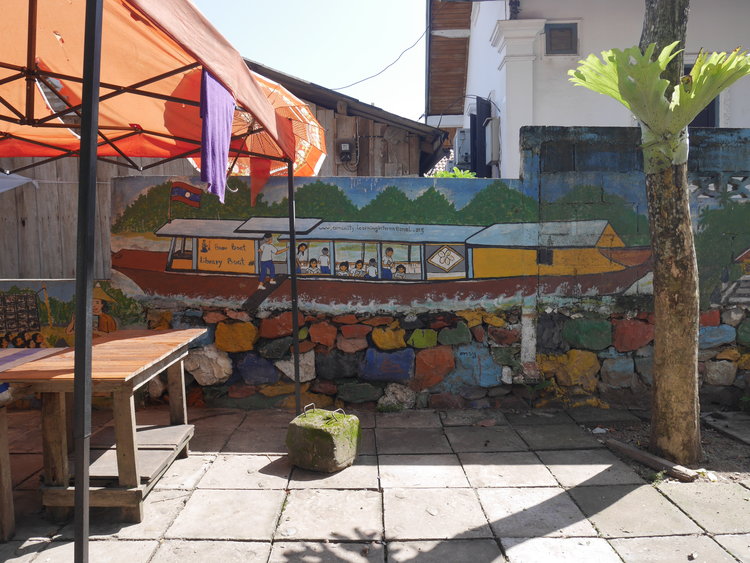
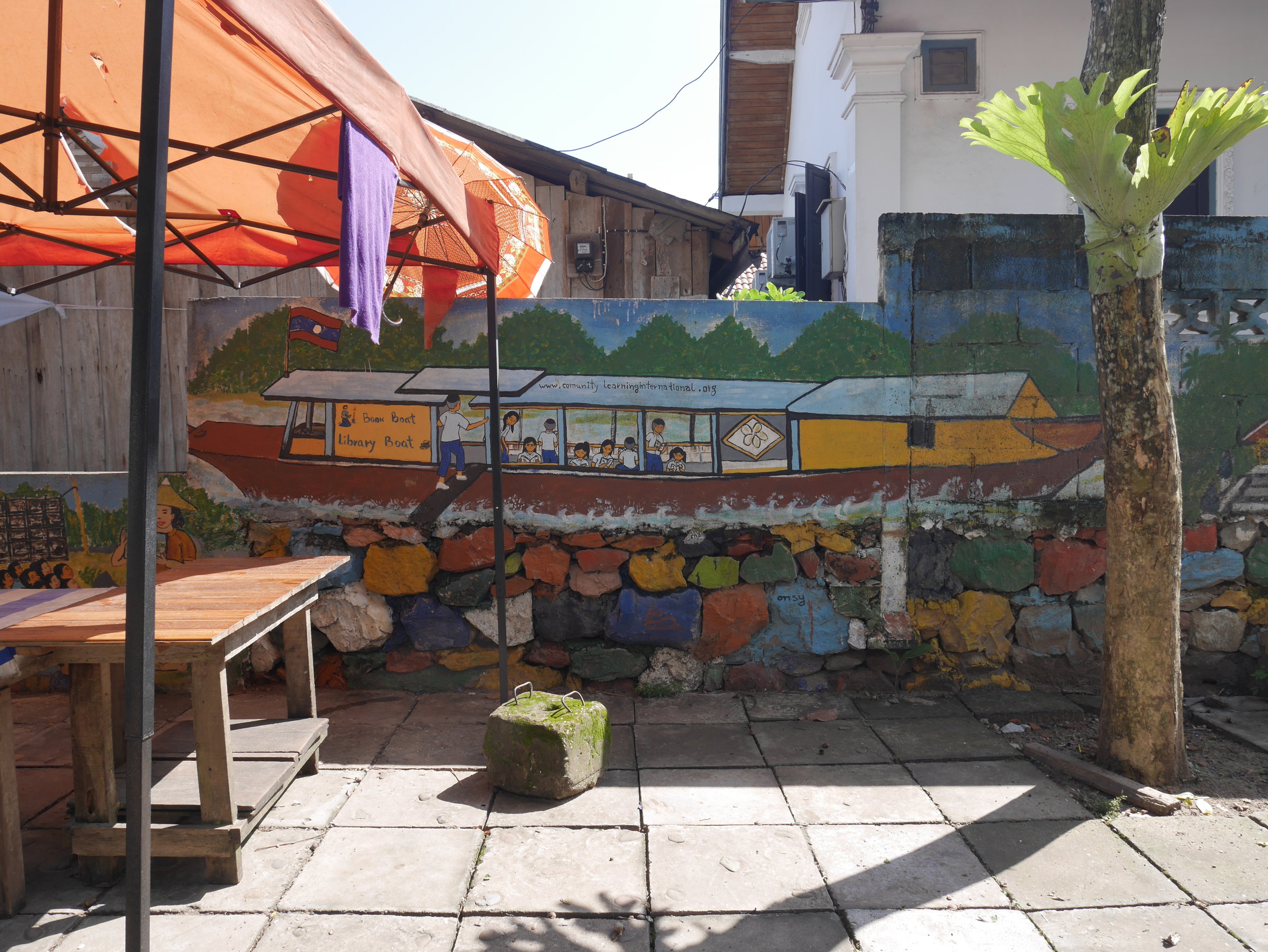
There’s a small shop at the library where visitors can buy books – new and used. Many are about Laos, but there are plenty of new and used books on a wide variety of subjects in many languages (mainly English and French). You can also buy souvenirs and traditional Lao handicrafts. The cool thing is that proceeds from buying a book or souvenir goes to funding the library’s literacy efforts. Additionally, visitors can make a small donation. Just $2 can buy books for the “library boat”, which travels along the rivers of the country bringing books to remote and otherwise inaccessible locations.

As an English teacher, I believe that literacy and education are so important. Laos has had a painful and difficult history, but through education, hopefully the country will continue to develop and grow. Even if you don’t want to buy anything at the library, I suggest at least looking around and learning a little bit about the programs that the library sponsors to help rural kids throughout Laos learn how to read.

And, why not take home a souvenir that goes directly to promoting one of the worthiest causes – education.

The Luang Prabang Public Library is located just down the road from the Royal Palace.

https://goo.gl/maps/NSyh9tuatp12

The library is open daily from 9:00am until 4:00pm.

A day in Coloane, Macau (Things to do and tips!)

Coloane counts as a countryside of Macau. On the way out to Coloane, you will enjoy views of hills, ocean, and more traditional culture.

Coloane is the southern part of what was once two of Macau’s islands, which have now been joined by an artificial casino-laden land-bridge into a single island. The central part of the island, where the casinos and the city’s international airport are located, is a very busy part of the city. Get away from the bustle and the lights, however, and discover a surprisingly quiet, serene, and green Coloane.

Tip: We took 26A BUS from Cotai to Coloane (There are several bus lines that go to Coloane, but 26A was very convenient, especially if you are coming from the peninsular part of Macau).

  1. Get started with the ORIGINAL Portuguese Egg Tart since 1989 (@ Lord Strow’s)

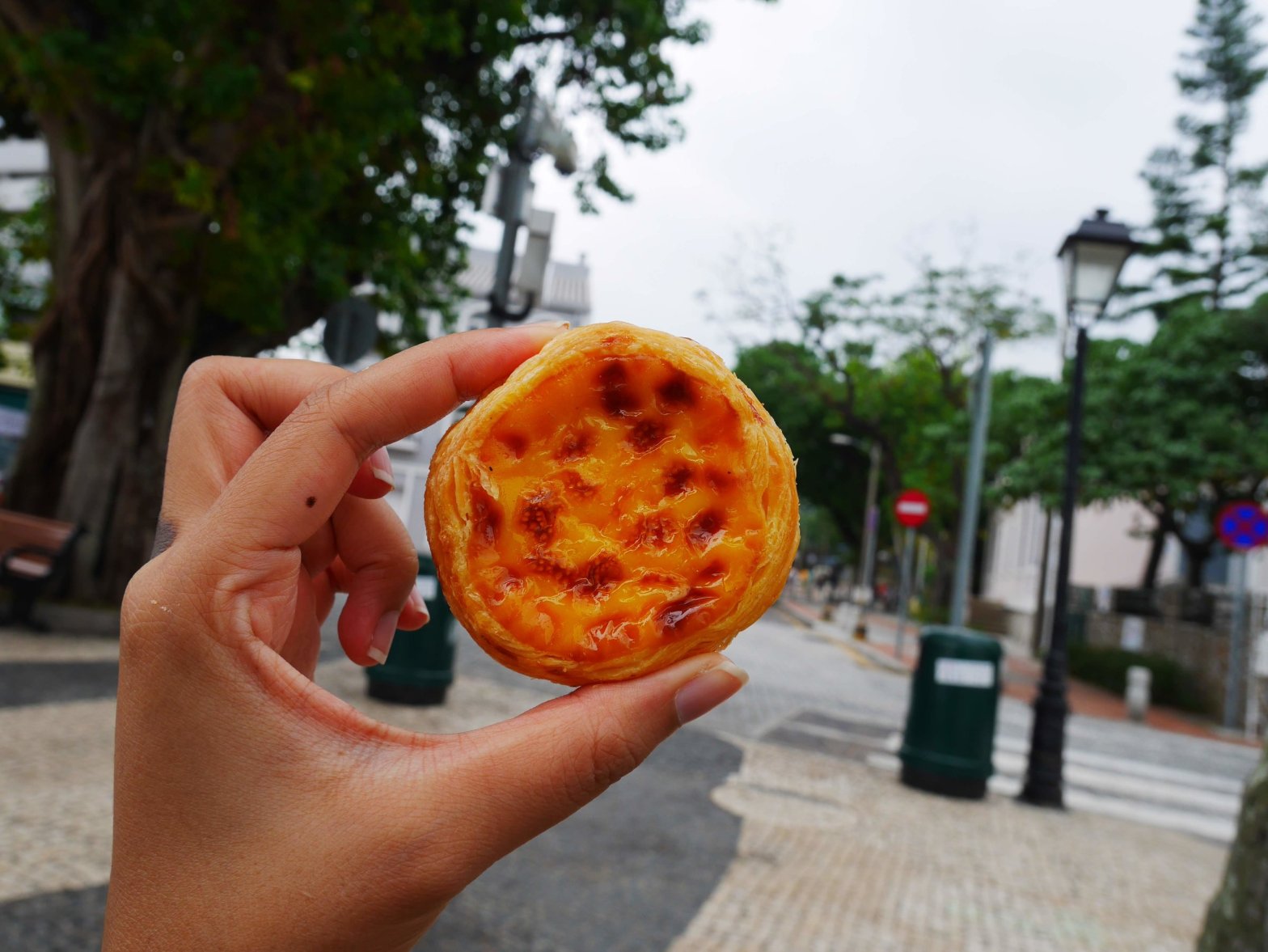
 The Original Portuguese Egg Tart of Macau
The Original Portuguese Egg Tart of Macau

“Every great adventures must start with a full tummy!” that is my motto. This delicious egg tart is A THING that you must try. Although the egg tart may be the official snack of Macau, there’s only one original, and that can be found nowhere but at Lord Stow’s Bakery. It’s only $10 (HKD or MOP) per piece. I could smell it from far away from the moment I hopped off of the bus. You can read more about it here .

Tip: You can eat in Lord strow’s cafe or just buy from this original shop and cross the road to eat on a bench and look over the ocean.

2. Visit Chapel of St. Francis Xavier

The most famous landmark in Macau’s far south is the iconic Chapel of St. Francis Xavier, surrounded by a historic square and plaza. This small chapel once held some of Macau’s most important Catholic relics, many of which have now been moved to the Museum of Sacred Arts or to other churches in the city.

Tip: Although the chapel isn’t always open to visit, don’t miss exploring the surrounding neighborhood. The Chapel of St. Francis Xavier is surrounded by some of the most charming brightly-painted homes and shops in Macau.

3. Visit Old Buddhist Temples

It’s hard to recommend temples to visit in Coloane, as it seems that you’ll run into one on every corner. These small Buddhist and Taoist shrines are tucked away between buildings, or stand in the hearts of the local neighborhoods. Whichever one you visit, you’ll get a small look at local Macanese religion, which is a blend of Buddhism, Taoism, and Confucianism.

4. Exploring old historical town of Macao

I enjoyed walking through this old village. I love the old Portuguese-style architecture combined with Chinese-style building. Many of these buildings also have funky and creative wall art too. It’s colorful, bright, fun, and it looks good in pictures!

Tip: This surprisingly cool side of Macau is a great place for street photography and taking portraits in front of the brightly-painted shops and buildings.

5. Macao Giant Panda Pavilion and Rare animals

This small zoo is very good, and the animals seem to have a good quality of life there. We are so happy to see the pandas playing and actually doing things. Most of the time I have seen them only sleeping, but this time in Macau, The panda walked around and scratched his paws on his tree! There was also a Gibbon who was climbing and singing beautifully. His sign said that he really loves to sing when the weather begins to get a little cooler. They also have many other animals to see such as rare red pandas and snub-nose monkeys. When I was there, there are many parts that still under renovation, however the park and the pandas were awesome to visit. There’s also a small (free) exhibit about how the zoo raises and cares for baby pandas.

Tip: 10 Pataca/person; Free for students (including ISIC card)

Tip2: Don’t miss visiting the small and free Nature and Agrarian Museum which is located within the park.

The Ruins of St. Paul’s – Everything you need to know about Macau’s most famous landmark

You can’t visit Macau without stopping by to see the city’s iconic landmark: the ruins of St. Paul’s Church. This 17th century Jesuit Catholic church appears on both the 5 pataca coin and the 20 pataca banknote, and adorns nearly every promotional tourist brochure. It’s an impressive site; the facade of the ruined Portuguese church stands high on a hill overlooking the old town, a symbol of the half millinium of Portuguese rule over the tiny Chinese peninsula of Macau.

 the ruins of St. Paul’s - the most famous landmark in macau
the ruins of St. Paul’s – the most famous landmark in macau

A Little History of Portugal and Macau

Macau, little more than a tiny peninsula and two tinier islands joined by an artificial land-bridge, was once the headquarters of the Catholic Church in Asia, and one of the most important religious and political sites in the world.

In the early 15th century, the small peninsula of Macau was granted to the Portuguese Empire by the Ming Dynasty of China after Portugal’s famed armada helped fight pirates off the Chinese coast. It remained a colony of Portugal until its return to China in 1999.

 what’s left of St. Paul’s Church in Macau
what’s left of St. Paul’s Church in Macau

The Ruins of St. Paul’s Church, Macau

Today, a plethora of Portuguese vestiges still mark the face of Macau. The most prominent of these is the iconic facade of the Ruins of St. Paul’s Church. Constructed in the 16th century by Portuguese Jesuits, the church was designed by an Italian architect and constructed by exiled Japanese Christians who had fled persecution in their homeland to the Catholic stronghold of Macau. It was, at its time, the largest Christian church in Asia.

The church was destroyed in a typhoon in 1835, leaving only the facade, which has become Macau’s symbol and most famous landmark, standing. Today, the facade of St. Paul’s appears on both Macau’s 5 pataca coin and 20 pataca note.

 behind St. Paul’s Church, Macau
behind St. Paul’s Church, Macau

Visiting the Ruins of St. Paul’s Church in Macau

It’s free to visit the ruins, which are closed only on Tuesdays. Walk up the crowded steps towards what was once the interior of the church, and it’s much quieter and less crowded – most everyone want photos of the facade.

Beneath the ruins of the church lies a crypt. This crypt was re-discovered during preservation efforts in the 1990s. Since renovated, the crypt today holds the relics of numerous 16th century Japanese Catholic martyrs and important Jesuit missionaries who were based out of Macau. As you climb down the steps into the cool dark crypt, the complete silence isbroken only by the soft sounds of recorded Gregorian chant.

In Japan, Christianity was outlawed and persecuted by the Shogunate in the late 14th century. The religion had arrived in Japan with Portuguese traders, and was seen as a threat to the Shogun and the Emperor. Shinto, the state religion of Japan, emphasized the Emperor as the “Son of Heaven”, and a religion that threaten that status quo was seen as dangerous. The Kakure Kirishitan, or “Secret Christians”, had to go underground, hiding their beliefs.

 the Martyr’s Crypt at St. Paul’s Ruins
the Martyr’s Crypt at St. Paul’s Ruins

Most famous of these were the “26 Martyrs of Japan”, twenty-six foreign and Japanese Jesuits and Franciscans who were executed by crucifixion in Nagasaki in 1597. All have been canonized by the Catholic Church. Their remains were interred in a place of honor beneath St. Paul’s in Macau.

 a view of the Ruins of St. Paul’s from the Museum of Macau
a view of the Ruins of St. Paul’s from the Museum of Macau

Visit the Ruins of St. Paul’s every day (except Tuesday) between 9:00am and 6:00pm.

Admission is FREE

Visiting the Kuan Iam Ecumenical Center, Macau (FREE)

Kuan Iam (Guanyin) is the Chinese Goddess of Mercy, venerated both as a Buddhist bodhisattva and a Taoist immortal. One of Macau’s most iconic sites is the 20m tall bronze statue of Kuan Iam that stands just off of the shore at the southern end of Macau Peninsula, looking back serenely across the busy city.

Kuan Iam is a symbol of harmony, love, peace, and mercy; a beloved figure throughout Asia.

 Statue of Kuan Iam in the harbor at Macau, China
Statue of Kuan Iam in the harbor at Macau, China

The Kuan Iam Ecumenical Center is part religious statue, part cultural center, part museum, and part art installation. Designed by Portuguese artist Cristina Rocha Leiria in 1999, the center was built during the handover of Macau from Portugal to China, and was designed to be a celebration of the unity of East and West.

The statue of Kuan Iam herself was designed specifically to have ethnically-neutral features, and the center, built under the patronage of UNESCO, is a celebration of “mutual respect and friendship among all peoples and civilizations” (according to their website).

 inside the Kuan Iam statue, Macau (Guanyin)
inside the Kuan Iam statue, Macau (Guanyin)

It is free to visit the Kuan Iam Ecumenical Center. Inside, there is a small bookshop, a meditation area, a small museum about the construction of the statue, and a library. There is also free wifi!

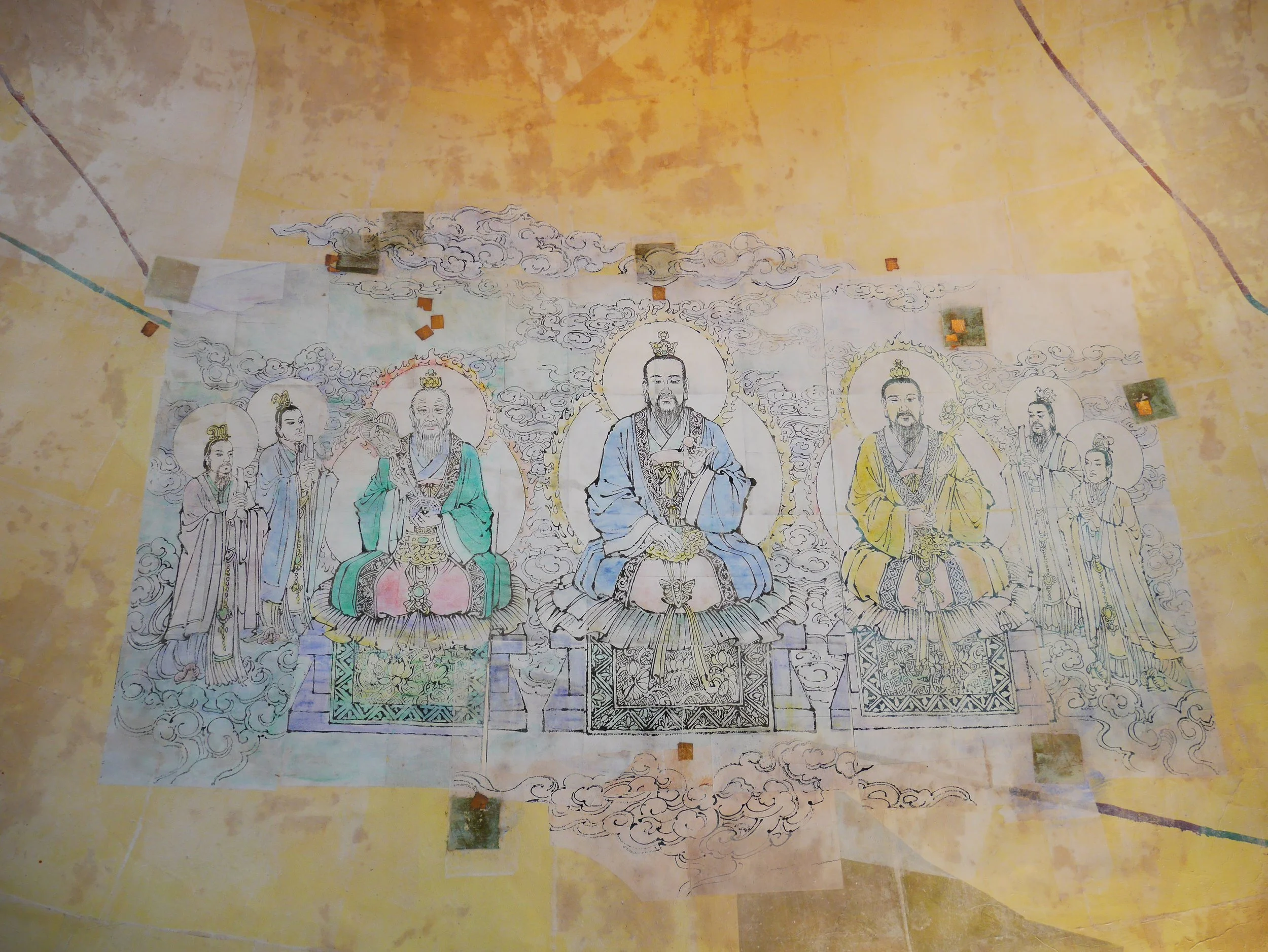
 fresco murals depicting Taoist gods at the Kuan Iam Center in Macau
fresco murals depicting Taoist gods at the Kuan Iam Center in Macau

Every aspect of the statue, from the lotus-shaped base to the fresco murals that cover the domed ceiling, are symbolic of the architect’s purpose to encourage unity.

 looking across the harbor in Macau
looking across the harbor in Macau

On a clear day (which it was not when we visited!), the statue offers great views to the Macau islands, and has a few benches where you can sit and enjoy the harbor.

 tile murals of Yin and Yang outside of the Kuan Iam statue in Macau, China
tile murals of Yin and Yang outside of the Kuan Iam statue in Macau, China

Kuan Iam Ecumenical Center, Macau – Hours and Location

Open from 10:00am – 6:00pm (closed Friday)

Located at Avenida de Sun Yat-sen (Bus stop nearby)

Where to find the ORIGINAL Macau Egg Tart

Famous Portuguese/Macanese Egg Tart, Macau

You can find these iconic yellow egg tarts on every street corner in Macau, and all of them are delicious. BUT, there’s just one original Macau egg tart, and that can be found only at Lord Stow’s Bakery Cafe in Macau.

What is a Macanese Egg Tart?

 Portuguese-style Macanese Egg Tart from Lord Stow’s Bakery Cafe in Macau
Portuguese-style Macanese Egg Tart from Lord Stow’s Bakery Cafe in Macau


Traveling is more fun when you can also be a food adventurer. I love trying new dishes as I travel, as it helps me to experience the culture in a deeper way (and I also just love to eat!). But.. It’s even more fun when visiting a place that has a blend of many cultures like Macau. Macau is one of China’s SAR, or Special Administrative Regions. It was a part of Portugal until 1999, and now enjoys some degree of semi-autonomy under Chinese rule. Macau was a part of Portugal since the late 16th century, so it’s now wonder that Portuguese culture has deeply influenced Macau. You can see it in the architecture, religion, and last but not least, food.

Where to find the ORIGINAL egg tart in Macau

When visiting Macau, don’t overlook visiting Colane, the quiet region south of the casinos. Here, you will find a world- famous bakery shop called Lord Stow’s. You must not pass it by! Here, Englishman Andrew Stow, brought the original Portuguese egg tart into Macau for the first time in 1989. In just a few short decades, the egg tart became an iconic and integral part of Macau’s food culture. Lord Stow’s concept is fresh baked goods, healthy food, and of a high quality, without any preservatives or additives in their pastries. This is the recipe that every egg tart stop in Macau tries to emulate.

 Lord Stow’s Bakery, Macau
Lord Stow’s Bakery, Macau

Lord Stow’s Bakery Cafe

The shop is not hard to find. It has two parts: Lord Stow’s Bakery, and Lord Stow’s Cafe. The bakery is for take-out, and the cafe is where you can sit down and eat in. I decided to take an egg tart to go, but took it just across the road to some park benches where I could sit and look out over the ocean.

The egg tart is fresh and warm, and from the very first bite it’s SO YUMMY! The crust is buttery, flaky, and perfectly baked. The egg custard is smooth and creamy and not overly sweet. I could eat this all day! The price is very reasonable. It’s no wonder that this became such an icon of Macau!

 Lord Stow’s Cafe, Coloane, Macau
Lord Stow’s Cafe, Coloane, Macau

Price : 10 MOP (Macanese Pataca)

Location: Lord Stow’s Bakery (Original shop)

1 Rua do Tassara, Coloane Town Square, Macau

Lord Stow’s has become so popular that you can now find branches throughout Macau and Hong Kong. If you don’t want to go all the way down to Coloane, you can also enjoy an original Lord Stow’s egg tart at the Paresian Casino in Macau.

KFC Thailand “Chiffle” REVIEW (Chicken in an ice cream cone)

KFC Chiffle REVIEW

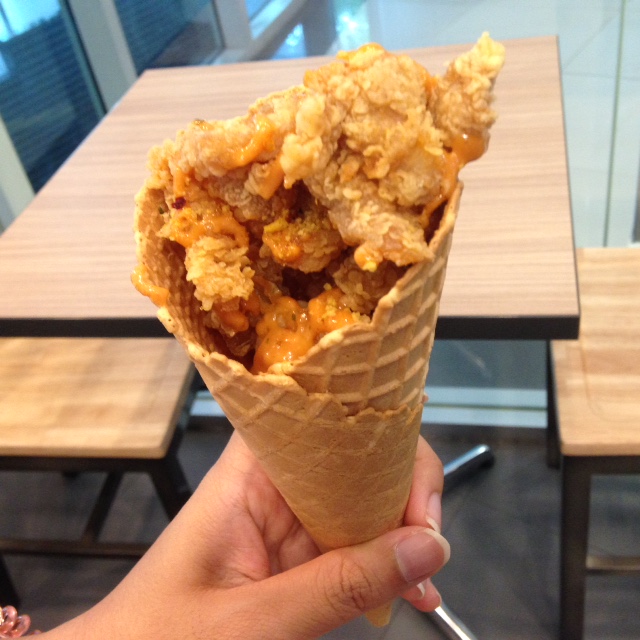
We ordered KFC Thailand’s new “Chiffle”. It seems like a strange concept: “gai pop” (or pop chicken) stuffed into an ice cream cone and covered with spicy sauce. Is it good? Let’s find out!

 KFC Chiffle cone
KFC Chiffle cone

The Chiffle costs 49 Thai baht, and is available at KFC locations throughout Thailand. It’s not KFC Thailand’s first adventure into strange ice cream cone dishes! (See: dark chocolate and spicy chicken powder ice cream).

 Chiffle: fried chicken served in an ice cream cone
Chiffle: fried chicken served in an ice cream cone

The Chiffle is pretty big – it’s a full-sized ice cream cone and it is full of pop chicken (gai pop), which is one of the more popular dishes at KFC Thailand. The little boneless popcorn chicken bites are deep fried and delicious. The whole cone is drizzled in a spicy chicken sauce.

 KFC Thailand - waffle cone with fried chicken
KFC Thailand – waffle cone with fried chicken

Chicken and waffles is a pretty popular dish in the southern United States, and I think it must have been the inspiration for this dish. While southern chicken and waffles is usually sweet – served on a big, thick waffle with a huge piece of juicy fried chicken and topped with maple syrup, the KFC Chiffle is different.

The KFC Chiffle is savory and spicy, not sweet like traditional chicken and waffles. It’s good, but a little bit dry. The cone was kind of crumbly too, and it was easy for the chicken to fall out when you take a bite.

 The “Chiffle”: waffle cone with fried chicken - only at KFC Thailand
The “Chiffle”: waffle cone with fried chicken – only at KFC Thailand

Personally, I think it tastes good. Then again, I’m a southern guy! I would have been happy if they had offered a sweet version topped with maple, which would have been more like American chicken and waffles, but maybe that sort of taste wouldn’t be so popular to the Thai palate.

Is it worth it to try? I guess so. There’s nothing really special about it. The gai pop is the same popcorn chicken that you can always buy at KFC Thailand. The only unusual thing is that it is served in a waffle cone. It’s worth checking out, but I’ll be on the lookout for more creative and unusual offerings in the future.

Design a site like this with WordPress.com
Get started